
Trump’s China visit seen key to easing West Asia tensions, reopening Strait of Hormuz
ADVERTISEMENT
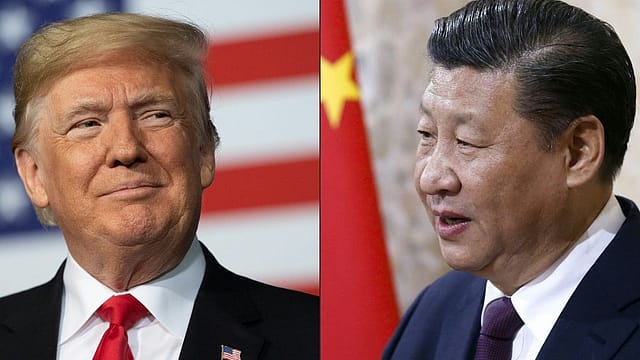
US President Donald Trump is starting his three-day visit to China today, where he is expected to discuss several key issues with Chinese President Xi Jinping, including the Iran war, the Taiwan issue, and trade. The summit is viewed as crucial, given that both countries were engaged in a months-long trade dispute led by US reciprocal tariffs.
Notably, experts say the key purpose of the visit is to seek Beijing’s support to pressurise Iran to end the West Asia war and fully open the Strait of Hormuz.
However, before departing the White House for China, Trump said that he does not need Beijing’s help to end the war.
Speaking to reporters, he said, “I don’t think we need any help with Iran,” adding that the US would win the war “one way or the other.”
“We’re going to have a long talk about it. I think he’s been relatively good, to be honest with you. We have a lot of things to discuss. I wouldn’t say Iran is one of them, to be honest with you, because we have Iran very much under control,” he said.
Trump’s first visit to China in his second term
Donald Trump is scheduled to reach China on Wednesday evening and head to his hotel after a ceremonial welcome. He will attend a state banquet on Thursday and hold a working lunch with Xi Jinping on Friday, before flying back to the United States.
These engagements will mark their first in-person interaction since the leaders of the world’s two largest economies met on the sidelines of the APEC Summit 2025 in Busan in October 2025.
This marks Donald Trump’s second visit to China as president, and his first since beginning his second term on January 20, 2025. Xi Jinping is expected to travel to the US later this year.
Big business deals in focus
Trump is aiming to secure gains in Beijing by finalising agreements for China to purchase more American food and aircraft, noting that he will discuss trade with Xi “more than anything else.”
Highlighting the push, Trump has invited several top US business leaders to join the visit, including Elon Musk and Tim Cook.
“Board of Trade” with China
The Trump administration is also looking to initiate the formation of a “Board of Trade” with China to manage bilateral differences.
Such a mechanism could help avoid a repeat of the trade tensions triggered last year after Trump raised tariffs, prompting China to respond with tighter export controls on rare earth minerals. The standoff eventually resulted in a one-year truce last October.
The issue of Taiwan
The issue of Taiwan is also expected to feature prominently, with Beijing opposing US plans to supply weapons to the self-governing island, which China considers part of its territory.
Trump said on Monday that he would take up with Xi an authorised $11 billion arms package for Taiwan.
At the same time, Taiwan’s position as the world’s leading chipmaker has made it central to the advancement of AI, with US imports from Taiwan surpassing those from China so far this year.