
Our Digital Future and What to Watch Out For
ADVERTISEMENT
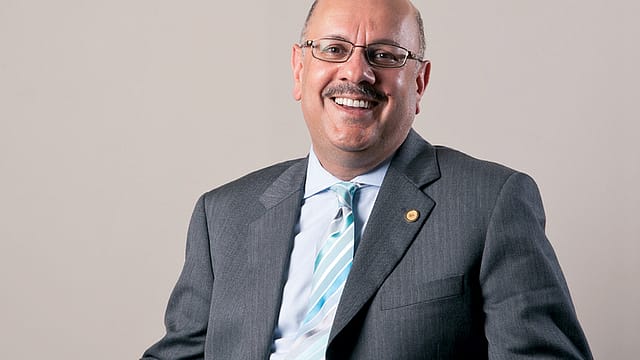
Farnam Jahanian, provost of the Pittsburgh-based Carnegie Mellon University (CMU), was recently in Delhi for a symposium organised by the university. Jahanian spoke to Fortune India on topics ranging from the cities of tomorrow to working with the government. Edited excerpts:
Carnegie Mellon is one of the world’s top universities, especially in science and technology. Which are the areas you are focussing on?
CMU encourages interdisciplinary education and research. In the past few years, we have launched a number of initiatives in brain science, cybersecurity, the science of learning, and energy and sustainability.
India plans to build a hundred smart cities, which people think of as heavily technology-enabled urban centres. What’s your view?
Cities have many interacting systems such as water supply, utilities, and transportation. Can we bring computational and data-enabled approaches to them? Can technology be used to improve the quality of life? That’s what we think smart cities are about. Not just technology, but social science and policy issues also come into play.
There’s a lot of talk about the potential of Big Data for companies. How realistic are the expectations?
I think of Big Data’s potential in three ways. First, the role it will play in developing new products, services, and business models and in creating an environment of data-driven decision-making. Second, it has the capacity to completely transform research and discovery. Third, meeting challenges in sectors that touch our day-to-day lives—health care, transportation, energy, and environment.
Your company Arbor Networks works on Net security. How do you assess the current state of this field?
To get an idea of the future of security challenges, which are many, we just have to follow technology adoption patterns. One of the biggest challenges has to do with mobility and wireless, which have become so pervasive. About 3% of the world’s population had cellphones 20 years ago, today it’s two-thirds. As technologies such as cloud computing become more pervasive, bigger challenges will emerge.
You’ve been director of the CISE (computer, information science, and engineering) section at the National Science Foundation. How was it working with the government?
I have spent most of my career in academia, but I found government service the most rewarding. Many of the advances we see in science, technology, and engineering today are the result of research investments in our universities by the government. That has built the foundation of industries like data analytics.

January 2026
Netflix, which has been in India for a decade, has successfully struck a balance between high-class premium content and pricing that attracts a range of customers. Find out how the U.S. streaming giant evolved in India, plus an exclusive interview with CEO Ted Sarandos. Also read about the Best Investments for 2026, and how rising growth and easing inflation will come in handy for finance minister Nirmala Sitharaman as she prepares Budget 2026.