43% of Indian two-wheeler buyers consider going electric as e-scooter penetration hits 24%: BCG
/ 2 min read
Electric two-wheelers accounted for 9.9% of India’s overall two-wheeler sales in April-August FY27, up from 5.5% in FY24, as consumer acceptance improves and new rider segments emerge.
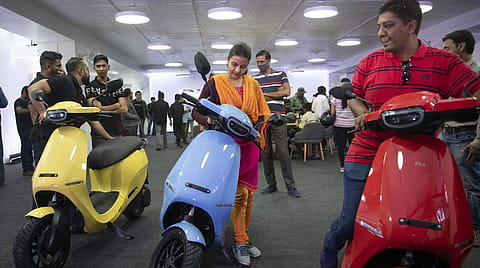
Representational Image
Nearly 43% of Indian two-wheeler buyers are actively considering switching to electric vehicles (EVs), up from 30% in 2024, signalling a gradual shift in consumer preferences as electric mobility gains traction beyond early adopters, according to a new report by Boston Consulting Group (BCG).
The report, Electric in Charge: How India’s electric two-wheelers are moving into the mainstream, found that electric two-wheelers accounted for 9.9% of overall two-wheeler sales in April-August FY27, compared with 5.5% in FY24. Electric scooters have made even greater inroads, with their share rising from 16.8% to 24.1% over the same period. Meanwhile, the proportion of consumers outright rejecting electric two-wheelers fell from 38% in 2024 to 29%.
Electric scooters outpace petrol counterparts
Electric scooters recorded a compound annual growth rate (CAGR) of 54% between FY22 and FY26, growing more than three times faster than petrol scooters, the report said. This expansion has continued despite policy transitions, including the shift away from the Faster Adoption and Manufacturing of Hybrid and Electric Vehicles (FAME) scheme and changes to the goods and services tax (GST) regime.
BCG estimates that around 1.8 lakh Indians purchase their first electric two-wheeler every month. Nearly one in four scooters sold in India is now electric, reflecting the technology’s expanding appeal among mainstream buyers.
“The electric two-wheeler is no longer an experiment for early adopters. It is now a default consideration for a growing share of Indian buyers,” said Natarajan Sankar, managing director and senior partner at BCG.
New consumer segments reshape demand
The report identified 10 distinct consumer segments based on riding needs and travel distances, spanning delivery workers, daily commuters, college students, family travellers and leisure riders. It also identified two emerging groups: full-time quick-commerce and food-delivery workers, and Gen Z riders in non-metro markets.
The quick-commerce market expanded from approximately $750 million in 2022 to $8 billion in 2025, creating a growing pool of delivery riders who have embraced electric two-wheelers. However, younger riders in smaller towns remain cautious, with concerns about rough-road performance acting as a barrier.
Among short-distance work commuters, the share of respondents who considered electric two-wheelers aesthetically appealing increased from 30% to 59%. Those associating them with good pickup rose from 27% to 48%, while perceptions of trusted brands improved from 28% to 46%.
Ownership experience offers opportunity
BCG found that owners’ actual experiences with safety, performance, servicing and battery range were better than public perceptions. Low running and maintenance costs, comfort, manoeuvrability and digital features also received favourable assessments, although rough-road capability, highway suitability and long-term durability remain concerns.
“The race to create the category is now shifting to the race to win the category,” said Saurabh Chhajer, managing director and partner at BCG, emphasising the importance of customer-specific products and trust across servicing, battery assurance, insurance and resale.
The findings draw on a 2026 survey of 1,600 existing two-wheeler owners and prospective buyers across metro and non-metro India, alongside Vahan and Society of Indian Automobile Manufacturers (SIAM) sales data through August 2026.
Follow Fortune India
NEXT STORY