Adani Airports to redevelop Mumbai T1 North Section from Jan; 9% traffic to be shifted
/ 3 min read
The redevelopment of Terminal 1 will also restore all historical slots and provide additional slots for airlines, the company said.
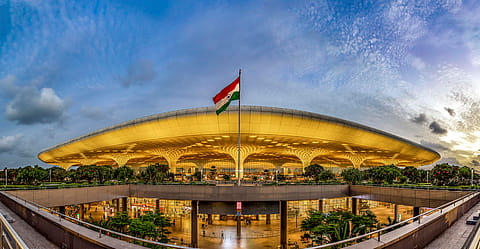
Chhatrapati Shivaji Maharaj International Airport Mumbai
Adani Airports will begin a phased redevelopment of the ageing Terminal 1 at Mumbai airport from January 2027, starting with the North Section of Terminal 1B, citing safety concerns around the nearly 60-year-old facility.
About 5 million passengers a year, or roughly 9% of Mumbai airport's total traffic of around 55 million passengers, will be temporarily affected by the first phase, while the remaining 91% of passenger traffic will continue to operate normally, Adani Airport Holdings Ltd (AAHL) said on Saturday.
Airlines operating from the affected section will have the option of temporarily shifting their services to the newly operational Navi Mumbai International Airport, with AAHL saying it will support the transition.
"91% of Mumbai Airport's passenger traffic will remain unaffected even as we undertake redevelopment of the age-old infrastructure that was in urgent need of repairs. Only the North Section of Terminal 1B, which accounts for around one-third of T1 of Mumbai Airport's capacity, is being demolished in Phase 1 to minimise passenger inconvenience and operational disruption. The transition to Navi Mumbai Airport is temporary and does not represent a permanent shift of Mumbai Airport traffic," said Arun Bansal, CEO, Adani Airport Holdings Limited.
Terminal 1 currently handles about 15 million passengers a year. The redevelopment is expected to raise its capacity by 33% to 20 million passengers annually.
Phased redevelopment minimises disruption
The North Section has been identified for demolition as part of the phased redevelopment, allowing the rest of Terminal 1 to continue operating. The company said the approach is intended to avoid a complete shutdown of the terminal and minimise disruption to passengers and airlines.
"Extensive consultations with airlines on the future of Terminal 1 have been ongoing since 2020, and the proposed redevelopment was also presented before AERA and subsequently incorporated into the approved tariff framework. While we appreciate the concerns expressed by certain airlines, passenger safety must remain paramount, and any further delay in commencing this process could adversely impact the safety and convenience of millions of travellers," Bansal said.
The company said safety concerns around Terminal 1 had persisted for years, with temporary measures used in the absence of an alternative facility. A fire at Terminal 1 in April this year further highlighted the risks associated with continued operations, it said.
The opening of Navi Mumbai International Airport has now provided an alternative for airlines and passengers, allowing the redevelopment of Mumbai's Terminal 1 to proceed in phases.
"Navi Mumbai International Airport is a modern, fully equipped airport and has the infrastructure and capacity to handle the additional passenger traffic that would be transitioned from Mumbai Airport. Its availability makes it possible to undertake the redevelopment of T1 of Mumbai Airport in phases, instead of shutting down the entire terminal and causing greater disruption to passengers and airlines," Bansal said.
Navi Mumbai airport is offering a 100% discount on landing fees for new international flights as it seeks to attract additional airline operations. It also plans to offer cash vouchers to international passengers to offset the difference in user development fees between Navi Mumbai and Mumbai airports.
{{#most-powerful-women-snapshot-individual.slug}} {{/most-powerful-women-snapshot-individual.slug}} {{^most-powerful-women-snapshot-individual.slug}} {{/most-powerful-women-snapshot-individual.slug}} {{#showRanking}} {{current-rank}} {{/showRanking}} {{#photo.0.url}}
{{name}}
Adani Airports said Mumbai and Navi Mumbai airports will operate as complementary facilities serving the Mumbai Metropolitan Region, where aviation infrastructure has faced capacity constraints amid rising passenger demand.
The redevelopment of Terminal 1 will also restore all historical slots and provide additional slots for airlines, the company said.
Mumbai's two-airport system is expected to become increasingly important as the region's aviation demand grows. Mumbai airport, operated by MIAL, is one of India's busiest airports, while Navi Mumbai provides additional capacity on the city's eastern side and is designed to accommodate traffic as the region's aviation infrastructure expands.
AAHL, a subsidiary of Adani Enterprises Ltd, operates eight airports in India and serves more than 23% of the country's total passenger traffic.
Follow Fortune India
NEXT STORY