AI can remix what exists, but the best idea is still waiting to be created: Prasoon Joshi at FICCI Frames 2026
/ 2 min read
At FICCI Frames, the veteran creator says AI can recombine past work but cannot replace the lived experience and emotional authenticity that give rise to truly original ideas
Credits: Getty Images
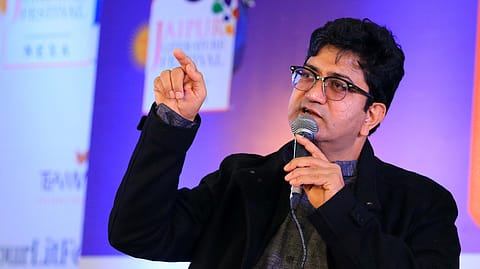
Artificial intelligence may change how creative work is produced, but it cannot yet replicate the most important source of originality, which is human experience and ideas that have never been expressed before, said Prasoon Joshi, poet, lyricist, author and advertising professional, at FICCI Frames 2026.
Joshi argued that while AI can generate creative options based on existing material, human creators retain an advantage because the most original ideas are not part of any existing dataset. “AI works on what has been already expressed. What is data? What has been said is data. But the most beautiful song has not been written yet,” he said.
In commercial creativity, he acknowledged, the role of the creator could increasingly shift towards selecting the right idea from options generated by machines. But he warned that this could also create distance between the creator and the creative process itself.
“Creation is not going to suffer, creator is going to,” Joshi said, arguing that creators could lose some of the joy and richness of the process as technology takes over parts of creation.
For Joshi, originality is closely tied to authenticity, which he believes is becoming increasingly important in an environment flooded with content. He pointed to his own work, including songs such as Lukka Chuppi and O Rangrez, to explain why some ideas endure beyond their initial release. “Purity will beat brain,” he said, contrasting work created with genuine emotional intent against content engineered primarily for immediate impact.
That idea of authenticity, he said, also explains the changing role of social media. While acknowledging that social media has another side, Joshi sees its democratising effect as significant because it has given people from different regions and backgrounds a platform to express themselves without having to conform to established ideas of popular culture.
“One side is fantastic when you are ready to express yourself in your authentic way. There is a place for it,” he said.
He linked this shift to a broader change in how audiences participate in culture. He drew a parallel with folk traditions, where there was historically no strict divide between performer and audience. Social media, he suggested, is bringing some of that participation back by allowing people to create and share rather than remain passive consumers.
At the centre of it all, however, remains the lived experience behind an idea. “There has to be authenticity in what you write or what you share and rest of it is leave it to people, it will find a residence on its own,” he shared.
Follow Fortune India
NEXT STORY