AI, digital infra, and govt policies aiding India's leading hospitals and pharma firms to move towards tech-enabled, quality-led growth: Deloitte
/ 3 min read
The findings AI, digital infrastructure, and supportive government policies as emerging common themes that are transforming the Indian healthcare and pharmaceutical sectors.
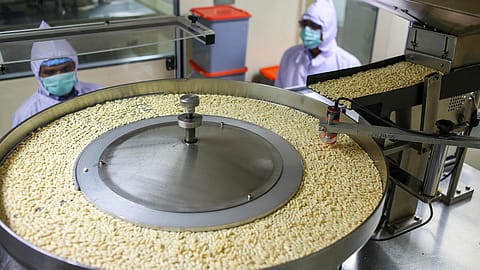
India is the world’s third-largest producer of pharmaceuticals by volume and 11th by value and has the highest number of US FDA-approved manufacturing plants outside the US. | Credits: Sanjay Rawat
India’s hospital chains and pharmaceutical firms are moving beyond volume-led expansion towards a more disciplined, technology-enabled and quality-led growth model, two separate Deloitte India surveys, the India Hospital Survey: FY27 Outlook and the Indian Pharmaceutical Industry Survey: FY27 Outlook, suggest.
The findings from the surveys of CXOs at leading companies identify artificial intelligence (AI), digital infrastructure, and supportive government policies as emerging common themes that are transforming the Indian healthcare and pharmaceutical sectors.
“India’s healthcare and life sciences story is entering a defining decade. Our hospital sector is projected to grow by 10 to 15 percent in FY27, backed by a wider insurance coverage and a decisive shift towards AI-enabled specialised care. On the other hand, India’s pharmaceutical industry, long recognised as the pharmacy of the world, is set to grow by 5 to 15 percent in FY27, driven by strong generics demand, speciality portfolio expansion and continued export growth," Joydeep Ghosh, Partner and Leader, Life Sciences & Health Care, Deloitte South Asia, says. “Together, these trajectories capture the growing potential of India: a nation moving from manufacturing medicines for the world to developing the therapies, technologies and care models the world will increasingly depend on," he adds.
On the hospital side, the 10–15% growth anticipated in FY27 is supported by rising insurance penetration, growing demand for organised healthcare and continued bed expansion, with private equity and internal funding supporting future growth plans. Hospitals are also accelerating their shift towards specialty care and digitally-enabled delivery models, with half of the CXOs identifying robotic surgery and AR/VR as having the strongest business impact, while 83% have integrated Enterprise Resource Planning (ERP) systems with core hospital information systems and 57% report readiness to integrate with the government’s National Health Claims Exchange (NHCX), the survey points out.
In case of pharmaceuticals, the survey suggests that Indian companies are specifically prioritising research on biologics and biosimilars, New Chemical Entities (NCEs) and digital-enabled drug discovery in the near term. “Gene and cell therapy and targeted delivery platforms are part of their longer-term innovation strategy. Moreover, around 55% of the CXOs plan to increase manufacturing capacity by 10 to 30% in the next two to three years to support incremental portfolio growth”, the survey reports say.
According to Deloitte, hospital bed density in India remains at 1.6 per 1,000 people, signalling significant headroom, especially beyond metro markets. “Hospitals are shifting to specialised care (organ transplants, robotic-assisted procedures) and investing in AI, enterprise platforms and integrated data ecosystems, backed by widening insurance coverage, corporate health programmes and steady investor interest. Noting that out-of-pocket healthcare expenditure is down from 62.6% (FY15) to 39.4%(FY22) on rising insurance penetration, the report says the private sector now accounts for approximately 65% of hospital beds.
In pharmaceuticals sector, India’s STEM talent base, growing CDMO capacity and an AI-led R&D ecosystem within GCCs were identified as triggers to position the country as a hub for GLP-1s, oncology, biologics, and cell-and-gene therapies. A looming global patent cliff worth over $200 billion was seen as another opportunity for Indian pharma manufacturers.
India is the world’s third-largest producer of pharmaceuticals by volume and 11th by value and has the highest number of US FDA-approved manufacturing plants outside the United States. The pharma exports have surged approximately 16-fold from $1.9 billion (FY01) to over $31 billion (FY26), reaching more than 190 countries, the Deloitte report points out.
Follow Fortune India
NEXT STORY