Bombay HC denies interim relief to Tata Trusts, allows November 30 Tata Sons board meeting
/ 2 min read
Trusts challenge use of chairman's casting vote in Chandrasekaran's reappointment; court posts matter for January 21
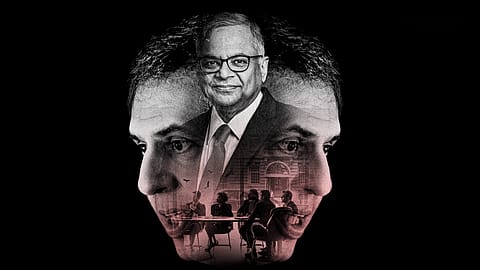
Tata Sons listing conundrum | Credits: Anirban Ghosh
The Bombay High Court on Friday declined to grant interim relief to Tata Trusts in their challenge to N Chandrasekaran's reappointment as Tata Sons chairman, allowing the company's November 30 board meeting to proceed.
Justice Abhay Ahuja said the meeting could go ahead, but would remain subject to the outcome of the petitions. The court also granted Tata Sons and the other respondents time to file their replies. The matter will next be heard on January 21, 2027.
The suits, filed by Sir Dorabji Tata Trust and Ratan Tata Trust, challenge the September 17 Tata Sons board resolution extending Chandrasekaran's tenure for another five years. The dispute centres on the use of the chairman's casting vote after the two directors nominated by Tata Trusts took opposing positions on the proposal.
Noel Tata voted against the reappointment, while fellow nominee Venu Srinivasan supported it. The then acting chairman Harish Manwani subsequently exercised his casting vote to break the deadlock, allowing the resolution to pass.
Dispute over affirmative voting rights
The Trusts have argued that the decision violated Articles 104B and 121 of Tata Sons' Articles of Association, which provide special voting rights to directors nominated by the Trusts.
Their contention is that a majority of the Trust-nominated directors must give an affirmative vote before a matter can proceed to the full board. With only two such nominees, the Trusts maintain that both must support the proposal. They argue that the chairman's casting vote cannot override this requirement.
Appearing for Sir Dorabji Tata Trust, senior advocate Abhishek Manu Singhvi argued that the September 17 decision had effectively undermined the special voting rights provided under the Articles.
"Today it is Noel Tata, tomorrow it may be X. It is about 104B and 121," Singhvi told the court, arguing that the dispute was about compliance with the company's Articles rather than an individual director.
Senior advocate Harish Salve, appearing for Tata Sons, opposed the interim relief, arguing that the Trusts' interpretation could paralyse the company's functioning whenever its two nominees disagreed.
He questioned why one nominee's objection should take precedence over the other's support and argued that the casting-vote provision was necessary to ensure the company could continue taking decisions.
Tata Sons cites RBI deadline
Salve also told the court that Tata Sons had received communications from the Reserve Bank of India seeking a plan on the company's listing, with a response required by December 11. He argued that the November 30 meeting was important to discuss the regulatory requirements and that restraining the board could affect its ability to respond to the RBI.
{{#most-powerful-women-snapshot-individual.slug}} {{/most-powerful-women-snapshot-individual.slug}} {{^most-powerful-women-snapshot-individual.slug}} {{/most-powerful-women-snapshot-individual.slug}} {{#showRanking}} {{current-rank}} {{/showRanking}} {{#photo.0.url}}
{{name}}
The Trusts had sought to prevent the chairman from using his casting vote to override the affirmative voting rights of their nominees. They also argued that the September 17 minutes, which are scheduled for confirmation at the November 30 meeting, should not be used to validate the disputed resolution.
The court, however, declined to grant immediate protection, leaving the dispute over the interpretation of the Articles and the validity of Chandrasekaran's reappointment unresolved.
Follow Fortune India
NEXT STORY