From five-year payback to one: Nothing gets ready to accelerate India retail push
/ 4 min read
Experiential stores, wider product lineup and offline focus set stage for Nothing’s aggressive push in a costlier, more complex smartphone market
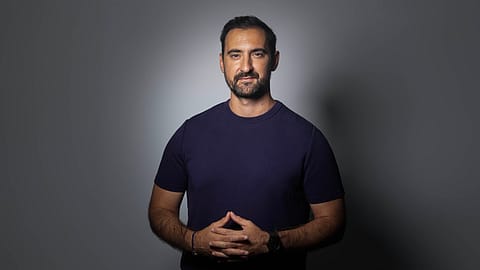
Akis Evangelidis, co-founder of Nothing and president of Nothing India | Credits: Sanjay Rawat
Nothing has taken its own sweet time building physical retail in India.
Its first branded store, in Bengaluru, was meant to test whether an experiential format could work in a market where the company had largely grown online. Six months on, the experiment has delivered; the store has drawn 117,000 visitors, generated close to $3 million in revenue and sold more than 10,000 products.
This is up from $1.3 million and 61,931 visitors in three months of the store opening.
More importantly, the economics have changed the way Nothing thinks about its retail expansion.
The UK-based consumer technology company, founded by former OnePlus co-founder Carl Pei, had initially estimated that it could take nearly five years to recover its investment in the store. It now expects to recover the initial investment in roughly a year, prompting the company to accelerate its plans for India.
“We’ve been slow,” Akis Evangelidis, co-founder of Nothing and president of Nothing India admits. “But we're rethinking our product portfolio and so on, so we had a few other priorities, especially getting ready to double down on next year. But I think, no excuse, next year we should be a lot more aggressive than just launching two stores.”
Nothing plans to open two more branded stores in the first quarter of next year, one in Delhi and another in Mumbai or its vicinity. The company is also evaluating a larger rollout through the rest of the year.
The urgency comes as India becomes increasingly important to the company. India accounts for close to 50% Nothing’s global top line, making the country far more than just another market for the five-year-old brand.
The store that changed the math
Nothing entered India five years ago with a predominantly online strategy and a partnership with Flipkart. At the time, roughly 60% of smartphone sales in India were online and 40% offline. That balance has shifted considerably, with offline retail gaining ground over the past two years.
The company responded by expanding its retail distribution from 5,000 stores to 10,000 and then 15,000 stores this year. But setting up its own branded stores was a different proposition. Nothing was cautious because it was testing a format that had no established playbook for the company.
The Bengaluru store has now given it some answers.
{{#most-powerful-women-snapshot-individual.slug}} {{/most-powerful-women-snapshot-individual.slug}} {{^most-powerful-women-snapshot-individual.slug}} {{/most-powerful-women-snapshot-individual.slug}} {{#showRanking}} {{current-rank}} {{/showRanking}} {{#photo.0.url}}
{{name}}
Nothing had initially modelled sales of around 10 to 15 products a day at the store. Actual sales have been substantially higher, with more than 10,000 products sold in around six months. The store has also been profitable from the beginning.
“The store has been profitable since day one and is expected to break even, including recovering its initial capex, within roughly a year,” Evangelidis says. “So, on top of all the upside from a brand and marketing standpoint, we also make money so it becomes like a free marketing engine.”
The company sees its large-format stores not simply as places to sell smartphones and accessories, but as physical extensions of the brand, where consumers can experience products and participate in the Nothing community.
The Delhi and Mumbai stores are expected to follow a similar experiential model, including spaces for community activities and product experiences. Nothing plans to step up community events around its hardware and software roadmap from October.
The retail push also comes alongside a significant expansion in Nothing’s product portfolio.
The company launched three smartphones in India this year. Next year, it plans to launch at least six, while expanding across more price segments.
“Next year we're going to further expand our product portfolio with some products being more online centric and some more offline centric,” Evangelidis says. “That's how we've seen the more mature brands in the market operating well.”
The distinction is deliberate. Nothing’s online business remains important for early adopters and consumers looking for sharper pricing, particularly during large e-commerce sales. Offline retail, meanwhile, gives the company access to a broader audience that wants to see and experience a product before buying it.
Why the holdup?
The cautious rollout was partly deliberate. Evangelidis says the Bengaluru store involved high design and execution standards, requiring Nothing and its partner to work through a format that had no direct precedent for the company in India or elsewhere.
The broader market has also become more difficult to navigate.
A global memory chip shortage, intensified by AI-led demand, has pushed up component costs. PCB prices have risen by as much as 40%, while traditional DRAM and memory chip costs have increased by more than 120% to 130%. The West Asia conflict has added another layer of pressure to an already difficult cost environment.
For smartphone brands, that is making the festive season less predictable. Memory costs have contributed to higher smartphone prices this year, and Evangelidis does not expect festive demand to drive volumes as strongly as it did in the previous two years.
“The festive season will always be important, but hopefully we will be less and less dependent on it,” he says.
That is also part of the reason Nothing wants a wider product portfolio and a larger physical presence. The company wants to build demand throughout the year rather than concentrate sales around a handful of major online events.
“It was okay this year to be slightly slower given the market condition, but now it has become a norm. I think we know how to handle it and how to navigate,” Evangelidis says. “So next year, hopefully we can be a lot faster.”
Follow Fortune India
NEXT STORY