India’s electronics market to reach ₹10 lakh cr by 2030, premiumisation and smaller cities to drive growth: Report
/ 2 min read
Device upgrades, alongside first-time adoption in underpenetrated markets, will account for a major share of the additional ₹3 lakh crore opportunity, states Croma-Kearney report.
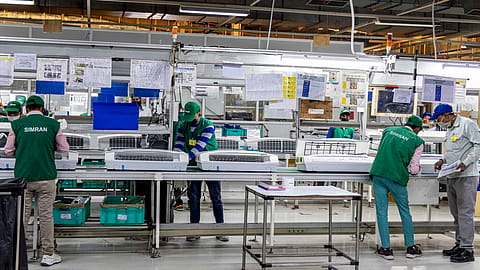
The contribution of non-metro markets to Croma's overall sales increased from 32% in 2022 to 44% in 2025. | Credits: Narendra Bisht
India’s consumer-electronics market is projected to expand to around ₹10 lakh crore by 2030 from ₹7 lakh crore in 2024, with premiumisation, product upgrades and rising demand in smaller cities emerging as key growth drivers, according to a report by Croma and global management consulting firm Kearney.
The report, How India Upgrades, released on November 17 to mark Croma’s 20th anniversary, examines the changing consumption patterns in India’s consumer-electronics market and identifies the trends likely to shape its next growth phase. It estimates that device upgrades, alongside first-time adoption in underpenetrated markets, will account for a major share of the additional ₹3 lakh crore opportunity. “Over the last two decades, we have witnessed India's consumer-electronics market evolve from first-time adoption to being shaped by aspiration, experience and continual upgrading,” said Shibashish Roy, chief executive officer and managing director of Infiniti Retail Ltd., which operates Croma.
“As technology becomes more sophisticated, our role at Croma is to simplify electronics ownership by offering the right products, expert advice, affordability solutions, and after-sales support, enabling them to upgrade with confidence,” he added.
Kaushika Madhavan, chairman of Kearney India, said the industry's future would be shaped not just by the number of devices sold but by how consumers choose to upgrade their lives through technology. Premiumisation, expanding demand in emerging markets and evolving consumer expectations are creating opportunities for innovation and long-term growth, he added.
Smaller cities emerge as key growth drivers
Consumer-electronics demand is increasingly expanding beyond metropolitan markets, with smaller cities recording faster growth. Between 2022 and 2025, Croma's sales grew at a compound annual growth rate (CAGR) of 40% in Tier 3 cities, 30% in Tier 2 cities, and 35% in Tier 1 cities. In comparison, sales in metros grew 13% during the period.
The contribution of non-metro markets to Croma's overall sales increased from 32% in 2022 to 44% in 2025. While metros continue to account for a larger share of absolute demand, the faster growth in smaller cities highlights their increasing importance to the industry's next consumption cycle.
Consumers increasingly opt for premium products
The report also highlights a shift towards higher-priced products and premium features across major electronics categories.
At Croma, the average selling price of smartphones increased 34% between 2021 and 2025. Sales of smartphones priced above ₹50,000 grew at a CAGR of 26% between 2022 and 2025. The shift towards premium features is also evident in the air-conditioning and television segments. Inverter ACs, which accounted for just 9% of the category in 2015, made up 91% in 2025, indicating how a once-premium feature has become the market standard.
Similarly, one in three televisions sold at Croma in 2025 had a screen size of 55 inches or larger, compared with just one in 25 in 2015, reflecting consumers' growing preference for larger screens.
New categories gain traction
Beyond traditional consumer-electronics products, newer categories are also finding greater acceptance among Indian households.
At Croma, dishwashers and dryers together recorded a volume CAGR of 29% between 2021 and 2025. Gaming devices registered 26% growth, while hearables, including headphones and earbuds, grew 23% during the same period. Air fryers recorded a volume CAGR of 22%. The growing adoption of these categories points to an expansion in household spending on convenience, entertainment and lifestyle-oriented technology products.
Follow Fortune India
NEXT STORY