India’s illicit trade hits ₹7.98 lakh crore; digital channels emerge as new enablers: KPMG-FICCI report
/ 2 min read
KPMG-FICCI Study flags tax evasion, counterfeiting, smuggling and digital piracy across six sectors, with illicit networks increasingly exploiting e-commerce, social media and fragmented supply chains
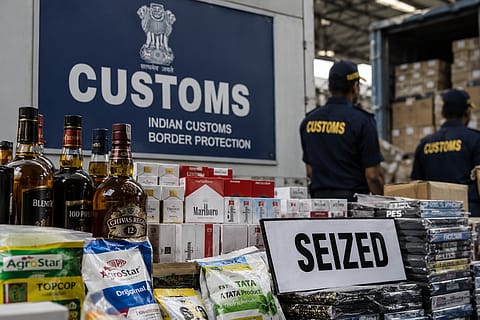
Representational Image
India’s illicit market was estimated at ₹7.98 lakh crore in 2022-23, highlighting the scale of an underground economy that extends across traditional smuggling as well as counterfeiting, tax evasion, unauthorised production and diversion from legitimate supply chains, according to a KPMG in India and FICCI CASCADE Study released recently.
The latest report, titled Illicit Trade in India: Economic Impact, Enforcement Challenges and the Path Forward, examines six sectors — tobacco and cigarettes; alcohol and Indian Made Foreign Liquor (IMFL); agrochemicals and pesticides; FMCG and packaged foods; digital piracy and intellectual property theft; and petroleum and fuel adulteration. The earlier ₹7.98 lakh crore estimate covered five sectors.
illicit networks increasingly use digital channels
The report said illicit networks are increasingly combining physical and digital channels, using e-commerce platforms, social media, courier networks, shell entities, fake invoices, manipulated e-way bills, encrypted communications and technology-enabled financial transactions to move products and facilitate sales.
Sidhartha Gautam, Partner, Forensic Services Leader–Auto and IM Sector, KPMG in India, said, “One of the most important shifts in illicit trade is the convergence of the physical and digital worlds.” He added that counterfeit products can originate in informal manufacturing clusters, move through intermediaries, be marketed digitally and reach consumers through legitimate logistics networks.
₹2.23 lakh crore GST evasion detected in FY25
The fiscal impact is also substantial. The report cited ₹2.23 lakh crore of GST evasion across nearly 30,000 cases in FY2024-25, including ₹58,772 crore of input tax credit fraud. Central Tax formations detected another ₹74,782 crore of ITC fraud across 30,162 cases in FY2025-26.
Between FY2020-21 and FY2024-25, detected GST evasion stood at around ₹7.08 lakh crore, including ₹1.79 lakh crore linked to ITC fraud. Voluntary deposits during the five-year period were just over ₹1.29 lakh crore.
Illicit cigarettes account for 26.1% of consumption
The report said illicit cigarettes accounted for an estimated 26.1% of total cigarette consumption by volume in 2025. It also cited an estimate of 33.2 billion illicit sticks consumed in 2023, while India sold 88 billion legal cigarette sticks in 2024.
Suveer Khanna, Partner and Head, Forensic Services, KPMG in India, said illicit networks “continuously exploit vulnerabilities across borders, supply chains, distribution channels and increasingly digital marketplaces”. He said enforcement needs to become intelligence-led, with data and technology used to identify networks and the economic incentives sustaining illicit activity.
The report said the response should focus on inter-agency intelligence sharing, digital traceability, financial investigation, technology-enabled enforcement and measures to reduce regulatory and price arbitrage.
Follow Fortune India
NEXT STORY