Liquor tax accounts for 19% of states’ own tax revenues; premiumisation drives growth
/ 3 min read
The premium segment grew at a 10.2% CAGR between 2022 and 2025, compared with 1.1% for cheap and 1.4% for regular products, The Economic Value of the Indian Alcoholic Beverage Industry 2026 report shows.
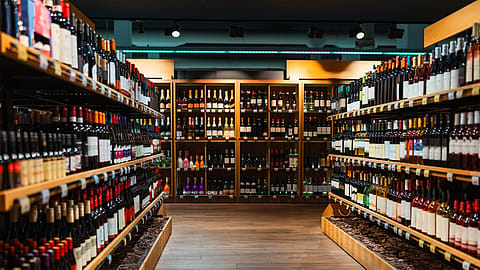
The ISWAI report says the premiumisation trend is also reflected in the rising premiumisation index, which increased from 48.2% in 2022 to 51.7% in 2025. | Credits: Shutterstock
The central and state tax revenues from alcoholic beverages industry jumped sharply to ₹4 lakh crore in 2024-25 from ₹2.4 lakh crores in FY20-21. The sector’s total tax contribution was equivalent to approximately 1.3% of India’s nominal GDP for 2024-25, up from 1.2% in FY21, says Sanjit Padhi, CEO, International Spirits & Wines Association of India (ISWAI).
Citing a just released report The Economic Value of the Indian Alcoholic Beverage Industry 2026, of ISWAI, Padhi says that premiumisation is increasingly becoming a key growth engine for the industry, with consumers increasingly trading up rather than simply consuming more. The premium segment grew at a 10.2% CAGR between 2022 and 2025, compared with 1.1% for cheap and 1.4% for regular products, the report shows.
"India’s Alcobev is an industry of scale, and increasingly, it is an industry of value. The next opportunity is to drive premiumisation, strengthen value chains and build globally competitive Indian businesses," Sanjit Padhi, CEO, ISWAI, said.
In an interaction with Fortune India, Padhi said one of the biggest opportunity for the stakeholders and policy makers to enhance tax revenues without increasing the volume of alcohol consumption is to look at tax efficiency through premiumisation. “For that the states will have to re-look at their excise policies," he says.
The ISWAI report says the premiumisation trend is also reflected in the rising premiumisation index, which increased from 48.2% in 2022 to 51.7% in 2025. The index remains significantly above 2022 levels, underscoring the growing demand for premium beverage categories. It says that well-designed retail environments that provide accessible, safe, and inclusive spaces for all, including women will facilitate adoption of premium products. Haryana, Uttar Pradesh, Telangana (Hyderabad), Andhra Pradesh, and Karnataka (Bengaluru) have been highlighted as some of the leading examples in developing retail infrastructure.
The report also suggests that states design the tax rates in a way that the maximum retail price for alcoholic beverages rises gradually up the pricing ladder across segments. Maharashtra and Karnataka are shown as example of tax rate rationalisation leading to higher revenues. "In Maharashtra, there was a restructuring of premium products, they relooked at the tax structure of premium products almost 3-4 years back and in the first year they got an increment of ₹550 crores," Padhi says.
The impact of Free Trade Agreements (FTAs), especially the one with the UK that saw customs duties on imported liquor – scotch whiskies – getting lowered, however, is not a big factor in driving premiumisation yet, Padhi says.
“The FTA reduces customs duty, which, depending on state to state is hardly 20% of the value chain. Now, if this 20% drops to 15% because of India-UK FTA, the consumer prices will come down only by 10%. Given the fact that the customers of imported liquor are not so price sensitive, the impact in terms of volume is not going to be earth shaking. It will only act as a small input to premiumisation," Padhi points out.
According to the report, alcohol-related revenues account for approximately 19% of the states’ own tax revenues across the 28 states and three Union Territories, with several large states deriving more than 20% of their own tax revenues from the sector. For instance, alcohol revenues accounted for 32 percent of the Telangana’s own tax revenue in 2024-25.
The Other States where the contribution of alcohol related revenues to the state exchequer as percentage of total own tax revenue remained high in 2024-25 include Tamil Nadu (27%), Uttar Pradesh (25%) and 23% each for Kerala, Himachal Pradesh, Arunachal Pradesh, and Chhattisgarh. While it was 21% for Andhra Pradesh and Uttarakhand, it was 20% each for Odisha, Madhya Pradesh, Karnataka, and Punjab.
The industry is estimated to have a market size of ₹6.2 lakh crore in CY2025, equivalent to approximately 1.8% of India’s nominal GDP.
Follow Fortune India
NEXT STORY