Nike targets 3x India growth as sportswear market heads towards $14 billion
/ 3 min read
The sportswear giant plans to tap India's growing $9 billion athletic footwear and apparel market, with a new cricket footwear line ahead of the sport's return to the 2028 Los Angeles Olympics.
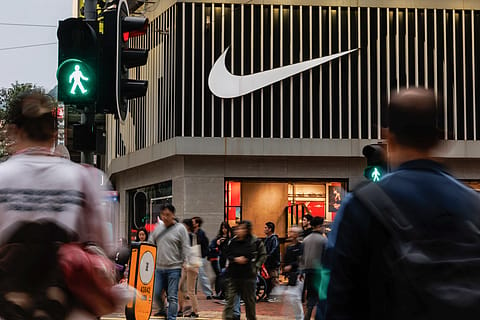
Credits: Getty
Nike is looking to triple its India business over the next five years, sharpening its focus on cricket, running and sportswear as it seeks a larger share of one of the world's fastest growing athletic footwear and apparel markets.
The ambition comes as India's athletic footwear and apparel market, currently estimated at around $9 billion, is projected to grow at more than 10% annually to approximately $14 billion by 2031. For Nike, which has served Indian athletes for over two decades, the opportunity lies in translating this market expansion into a stronger consumer franchise through focused investments in sports, product innovation and partnerships.
"India represents one of our biggest opportunities in the world," said Cathy Sparks, vice president and general manager of Greater China at NIKE, Inc., during the company's Investor Day. "Our ambition is to triple our business in the next five years."
The company plans to concentrate its resources on running, training and sportswear, while placing cricket at the centre of its India strategy. The focus is in line with Nike's strategy of priortising local sporting preferences in a market where cricket commands a far wider consumer following than most other sports.
Cricket takes centre stage in India strategy
From grassroots cricket to professional leagues, Nike plans to engage Indian consumers through product innovation, grassroots programmes and partnerships. A key part of this strategy is its new multi-year partnership with the Mumbai Indians, covering both the men's and women's leagues.
The association gives Nike a platform to connect with consumers across India and beyond, while strengthening its presence in a sport that could offer significant commercial opportunities in the coming years.
Cricket's return to the Olympic Games at the 2028 Los Angeles Olympics, after more than a century, is another opportunity the company is preparing for. Nike plans to introduce a complete cricket footwear line designed around the way the game is played today.
The India push also comes as Nike reworks its global operating structure to direct resources towards markets with greater growth potential. The company has identified 23 priority countries, which together account for almost 90% of its growth opportunity between FY27 and FY31. From FY28, it will move from four operating geographies to three: the Americas, Europe, Middle East and Africa (EMEA), and Asia Pacific and Greater China (APGC).
"We're concentrating our resources where we have the greatest potential to win. We're also changing how we operate — delivering breakthrough products, building deeper local connections and moving faster to capture demand. Together, these actions are designed to return NIKE to sustainable, profitable growth," said Elliott Hill, President and Chief Executive Officer of NIKE, Inc.
Nike has established its 2031 financial framework and is targeting approximately $5 billion in incremental revenue growth, with fiscal 2027 as the base.
Faster product development to support growth
Beyond market-specific investments, Nike is attempting to overhaul its operating engine to respond faster to changing consumer demand, an area where smaller, more focused sportswear brands have been gaining ground.
{{#most-powerful-women-snapshot-individual.slug}} {{/most-powerful-women-snapshot-individual.slug}} {{^most-powerful-women-snapshot-individual.slug}} {{/most-powerful-women-snapshot-individual.slug}} {{#showRanking}} {{current-rank}} {{/showRanking}} {{#photo.0.url}}
{{name}}
Venkatesh Alagirisamy, executive vice president and chief operating officer at NIKE, Inc., pointed to the development of the Nike Vegam Run as an example of the company's efforts to shorten product development cycles. The shoe moved from kickoff to production in just five months, compared with as long as two years previously.
Nike has planned production of 2.5 million pairs of the shoe in the current fiscal year, with the product expected to be rolled out beyond India to EMEA and North America.
"Deep local insights, a small focus team, quick decisions, and just as important, factory partners engaged from day one," Alagirisamy said, explaining the system behind the faster turnaround.
The company makes and delivers approximately 1.3 billion units of footwear, apparel and accessories annually across nearly every country in the world. While that scale remains a competitive advantage, Nike believes faster execution and greater market relevance will be critical to winning back consumer attention and growing market share.
Follow Fortune India
NEXT STORY