Three issues that Tata Sons’ new move could resolve
/ 3 min read
Leadership uncertainty, SP Group’s exit plan, and the funding needs of new businesses are three issues that could now move towards resolution as Tata Sons begins preparing for its public listing, giving another five-year extension to chairman N. Chandrasekaran.
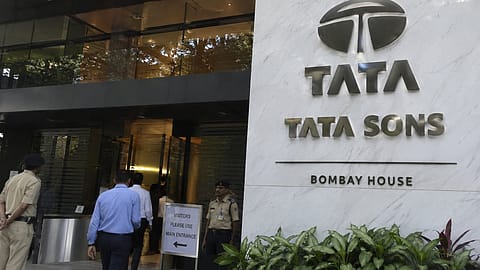
The Tata Trusts had, in July 2025, asked Chandrasekaran to facilitate the SP Group’s exit from Tata Sons while also engaging with the RBI to retain the holding company’s private status.
The Tata Sons board’s decision on September 17 (Thursday) to approve the beginning of the process for an initial public offering (IPO) and give an extension to N. Chandrasekaran for a third term brings together three of the most contentious issues that have confronted the holding company over the past year—leadership uncertainty, the demand for an exit option for the Shapoorji Pallonji (SP) Group’s 18.37% stake, and the continuing funding requirements of Tata Sons’ new businesses.
Chandrasekaran’s current second term was due to end in February 2027. His decision in August not to seek reappointment had opened another leadership transition at the group, even as the Tata Sons board, except Noel Tata, wanted the continuation of Chandrasekaran. The uncertainty had also revived concerns over whether a change at the top could disrupt the group’s strategy at a time when Tata Sons is building businesses in aviation, semiconductors, digital commerce and batteries.
The September 17 decision effectively removes that immediate uncertainty. The board approved a five-year extension for Chandrasekaran, despite the opposition of Tata Trusts chairman Noel Tata. According to sources, Trusts vice chairman Venu Srinivasan countered Noel Tata’s veto, allowing the issue to go to a board vote. Srinivasan, along with directors Harish Manwani, Anita Marangoly George, and CFO Saurabh Agrawal, had earlier supported Chandrasekaran’s continuation.
The leadership question has been closely connected with the listing issue. With the Reserve Bank of India rejecting Tata Sons’ application to surrender its core investment company registration, the holding company remains within the upper-layer NBFC framework. It strengthened the case for continuity under Chandrasekaran as the group prepared for the next phase.
An exit route for SP Group
The second issue is the long-standing exit plan of the Shapoorji Pallonji Group, which owns an 18.37% stake in Tata Sons.
The SP Group has been seeking to monetise its holding as it works to reduce its debt burden and has supported the public listing of Tata Sons. A public issue provides a potential mechanism through which the minority shareholder can partially dilute its holding and raise funds.
The Tata Trusts had, in July 2025, asked Chandrasekaran to facilitate the SP Group’s exit from Tata Sons while also engaging with the RBI to retain the holding company’s private status. The two objectives subsequently came into conflict with the broader debate over whether Tata Sons should remain unlisted.
The IPO decision now changes that equation. A listed Tata Sons would provide a public market for its shares, creating a clearer route for the SP Group to monetise its 18.37% holding. The listing could therefore address an issue that has remained unresolved for years between the two principal shareholders.
Funding Tata’s new businesses is the third issue—it is capital. Tata Sons has been investing heavily in businesses that are still in their build-out or turnaround phase, including Air India, Tata Digital and Tata Electronics.
At the May 26 Tata Sons board meeting, the CEOs of these three businesses presented their capital expenditure and loss-funding requirements. The presentations highlighted the scale of the funding challenge facing the holding company. Tata Sons’ unlisted ventures had reported combined net losses of more than ₹10,900 crore in FY25, while losses have risen to nearly ₹30,000 crore in FY26, with Air India and Tata Digital accounting for a substantial part of the drag.
Air India alone has required significant financial support as Tata Group works to rebuild the airline. Tata Electronics, meanwhile, is pursuing large semiconductor investments, while Tata Digital continues to build Tata Neu and the group’s digital ecosystem.
{{#most-powerful-women-snapshot-individual.slug}} {{/most-powerful-women-snapshot-individual.slug}} {{^most-powerful-women-snapshot-individual.slug}} {{/most-powerful-women-snapshot-individual.slug}} {{#showRanking}} {{current-rank}} {{/showRanking}} {{#photo.0.url}}
{{name}}
The funding requirement had also become part of the disagreement between Noel Tata and the Tata Sons board. Noel had raised concerns over the performance and capital allocation of the new businesses, while other directors argued that these ventures required time, capital and stability.
A public Tata Sons can potentially provide a different capital framework for the group. The holding company would have access to public-market capital and greater flexibility in deciding how much of its earnings should be distributed as dividends and how much should be retained for investments.
The financial relationship with Tata Trusts could also change. Dividend releases were earlier dependent on the requirements of the Trusts for their philanthropic activities. With Tata Sons moving towards a listing, decisions on dividend distribution and retention of capital could increasingly rest with the Tata Sons board, allowing it to deploy profits towards new ventures.
Thus, the September 17 decisions are not merely about retaining Chandrasekaran or starting an IPO process. Together, they provide a framework to address the leadership vacuum, create a potential exit mechanism for the SP Group and strengthen Tata Sons’ ability to fund the next generation of Tata businesses.
Follow Fortune India
NEXT STORY