Toing’s ₹400-crore annualised loss raises questions about Swiggy’s affordability bet
/ 2 min read
Swiggy gives Toing another two quarters to prove its business model
THIS STORY FEATURES
Credits: Toing
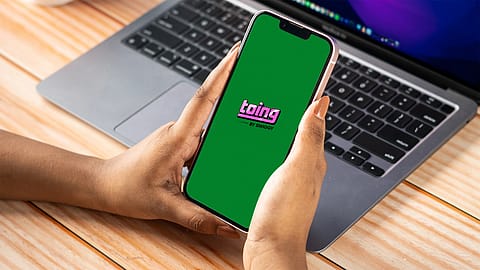
Swiggy is giving its value-focused food delivery platform Toing more time to prove its business model, even as the venture’s annualised losses are estimated at around ₹400 crore against revenue of about ₹500 crore. The company believes the platform can bring more consumers into food delivery, but profitability remains a work in progress.
During Swiggy’s Q2 FY27 earnings call, an analyst from BNP Paribas asked whether Toing’s losses had peaked and at what revenue level the business could break even. Sriharsha Majety, managing director and group chief executive officer of Swiggy, said investments would remain range-bound in the near term as the company assessed the platform’s performance and the potential for operating leverage.
When the analyst asked whether the strategy was to hold losses around current levels while growing revenue, Majety replied, “That's the template.”
There is uncertainty surrounding Toing, which is designed to attract price-sensitive consumers through a more affordable food delivery proposition. Swiggy has positioned it as a way to expand the overall market rather than simply shift existing customers from its core platform.
Another two quarters to prove the model
The company has identified some encouraging early signs. Rahul Bothra, Swiggy’s chief financial officer, said Toing was showing frequency growth and bringing new users onto the platform. Some early cities had also achieved positive unit economics for repeat users.
The challenge, however, is that affordability leaves little room for error. Bothra pointed out that Toing’s average basket sizes are a fraction of those on the main Swiggy platform, making it harder to cover delivery costs and generate revenue at sufficient scale.
“It requires significant density. It requires the cost to serve to match the revenue, which is also a fraction of the main platform,” he said.
Swiggy is relying on its existing technology and delivery infrastructure to keep incremental costs low. Management said most of Toing’s spending goes towards customer acquisition and activation, rather than building an entirely new operational structure. This also gives the company the flexibility to increase or reduce investment as it learns more about the business.
There are signs that the platform could be expanding food delivery’s reach. Rohit Kapoor, chief executive of Swiggy’s food marketplace, said two out of three Toing users were new to the platform. Bothra added that users ordering through both apps placed 25% more orders than those using only one.
Majety said the company needed another quarter or two before it could determine whether the experiment had worked. The key metrics include repeat-user economics, customer acquisition costs as the platform expands and the ability to reduce delivery costs.
Swiggy believes Toing could help lift overall food marketplace growth from the existing 18% to 20% range to 25% to 30%. But the company is yet to establish whether that incremental growth can translate into sustainable profits.
{{#most-powerful-women-snapshot-individual.slug}} {{/most-powerful-women-snapshot-individual.slug}} {{^most-powerful-women-snapshot-individual.slug}} {{/most-powerful-women-snapshot-individual.slug}} {{#showRanking}} {{current-rank}} {{/showRanking}} {{#photo.0.url}}
{{name}}
Until the economics become clearer, Toing remains a potentially valuable growth engine with an unproven path to profitability.
Overall, Swiggy reported a consolidated net loss of ₹922 crore in Q2 FY27, compared with ₹791 crore in the previous quarter and ₹1,092 crore in the year-ago period. Revenue from operations, however, grew 36.1% year-on-year to ₹7,571 crore. While the core food delivery business remained profitable at an adjusted EBITDA of ₹341 crore, Instamart continued to weigh on the company's overall profitability, reporting an adjusted EBITDA loss of ₹895 crore during the quarter.

Follow Fortune India
NEXT STORY