US tariff threat: Why India's Make in India and PLI schemes are under scrutiny?
/ 3 min read
The proposed action raises questions about the competitiveness of Indian exports in the US market, particularly when several Asian economies face lower proposed tariff rates.
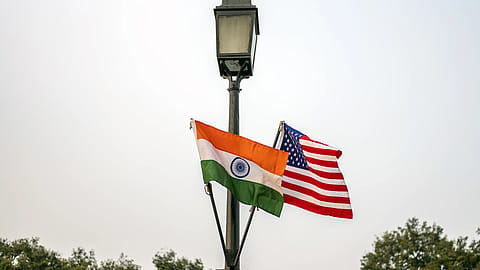
India faces a proposed additional tariff of up to 25%, higher than the rates proposed for several competing Asian manufacturing destinations. | Credits: Getty Images
The US has proposed additional tariffs of up to 25% on Indian goods, bringing the country's flagship manufacturing and self-reliance initiatives, including Make in India, Production Linked Incentive (PLI) schemes and Atmanirbhar Bharat, under scrutiny. The proposed tariff rate may be reduced to 17% if India reaches a bilateral trade agreement with Washington that addresses the concerns raised in the investigation.
In its 189-page report released on Wednesday under Section 301 of the Trade Act of 1974, the Office of the US Trade Representative (USTR) has specifically identified these programmes as part of India's industrial policies that, according to Washington, contribute to structural excess capacity and excess production in the manufacturing sector.
The proposed action raises questions about the competitiveness of Indian exports in the US market, particularly when several Asian economies face lower proposed tariff rates. However, the actual impact on Indian exporters could be lower than the headline rate, given exemptions for certain product categories and the possibility of a negotiated trade agreement.
What has the US objected to in India's manufacturing policies?
The USTR report identifies India's manufacturing and industrial support programmes, including Make in India, PLI schemes, and Atmanirbhar Bharat, as policies that contribute to excess manufacturing capacity and production.
These initiatives are central to India's strategy of strengthening domestic manufacturing, attracting investments, reducing import dependence, and positioning the country as a global production hub. The US investigation, however, examines whether such government-backed initiatives and other industrial policies create structural imbalances in manufacturing and affect trade with the US.
How do India's proposed tariffs compare with those of Asian peers?
India faces a proposed additional tariff of up to 25%, higher than the rates proposed for several competing Asian manufacturing destinations.
According to an Emkay Global report, the proposed rates for Bangladesh, Indonesia, Malaysia, and Thailand are 18% while Japan, South Korea, and Taiwan face rates of 15%.
India's proposed tariff can, however, be reduced to 17% if the two countries reach a bilateral trade agreement addressing the findings of the investigation. The higher proposed rate might affect India's relative competitiveness in the US market, particularly in sectors where Indian exporters compete directly with manufacturers from other Asian economies.
However, the effective tariff burden could be lower than the headline rate because electronics, pharmaceuticals and energy products have been exempted, along with goods already covered under Section 232 of the US Trade Expansion Act.
Will the proposed tariffs affect Indian exports immediately?
The impact is unlikely to be immediate. Emkay Global expects the proposed tariffs to take effect no earlier than late January 2027, leaving exporters some time to prepare for the potential changes. This may encourage Indian exporters to frontload shipments to the US before the proposed duties come into force.
India's exports to the US are already running at around $8.4 billion a month in the year-to-date period of FY27, according to the brokerage. Export growth could receive a temporary boost as businesses accelerate shipments ahead of the proposed tariff implementation.
{{#most-powerful-women-snapshot-individual.slug}} {{/most-powerful-women-snapshot-individual.slug}} {{^most-powerful-women-snapshot-individual.slug}} {{/most-powerful-women-snapshot-individual.slug}} {{#showRanking}} {{current-rank}} {{/showRanking}} {{#photo.0.url}}
{{name}}
Diversification of export destinations may provide some cushion against the proposed US tariffs.
Emkay Global points to India's experience during the previous round of higher US tariffs in 2025. Between September 2025 and March 2026, India's exports to the US declined 10% when tariffs of up to 50% were in place. However, exports to the rest of the world increased 3% during the same period.
Exports to markets outside the US already account for around 70% of India's total exports, according to the report. Further diversification may help Indian exporters reduce their dependence on the US market and limit the impact of higher duties. Despite the proposed tariffs and the ongoing West Asia conflict, Emkay Global believes India's external sector remains on a relatively strong footing.
India's merchandise exports grew 22% in the first seven months of FY27, while the brokerage expects total export growth to exceed 15% for the full financial year. It has retained its FY27 current account deficit estimate at 1.4% of GDP, below the 1.5% mark.
Can the US moderate its proposed tariffs?
The final tariff structure remains subject to developments in the bilateral trade negotiations and the US investigation process. According to the brokerage, growing domestic opposition to tariffs in the US and public hearings scheduled for January 2027 could leave room for some moderation.
Higher import duties may also add to inflationary pressures in the US by increasing the cost of imported goods. This can complicate the Federal Reserve's interest-rate outlook, particularly if domestic economic growth remains strong.
Follow Fortune India
NEXT STORY