“We are in hand-to-hand combat,” says Karan Virwani of WeWork India
/ 4 min read
From crisis at WeWork Global to market leadership at home, Karan Virwani bets on India’s flex-work boom and a full-stack model to stay ahead in an increasingly brutal co-working battle.
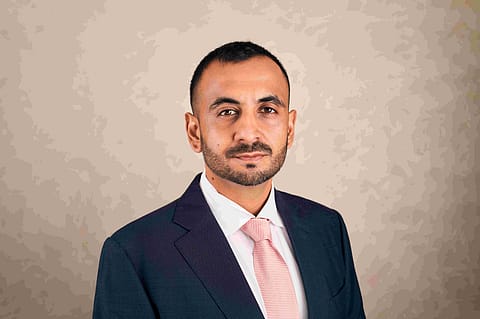
Karan Virwani, MD & CEO of WeWork India | Credits: Fortune India
It hasn’t been the easiest ride for Karan Virwani at WeWork India.
A few years after Virwani agreed with WeWork to set up WeWork India in Asia’s fastest-growing economy, WeWork ran into serious turmoil. The New York-headquartered company, once valued at as much as $47 billion, faced public wrath over corporate governance issues, forcing it to shelve its IPO before eventually filing for bankruptcy.
But Virwani has hung around and has since doubled down on WeWork India’s play, where the company claims to have become the market leader. It pays WeWork Global a revenue share. “Right now, tailwinds are in our favor. The market is moving in our favour, and we are financially healthy,” Virwani tells Fortune India. Last year, WeWork India listed on the bourses and now operates 79 centres across 9 cities in India.
The company focuses on leasing buildings, completing fit-outs, and transforming these spaces into fully managed, modern, tech-enabled, and productive offices for its members. In an interview with Fortune India, Karan Virwani talks about how he rode the global WeWork crisis, India’s co-working sector, and building WeWork for India—edited excerpts.
Q. You had quite a successful public listing, in contrast to the crisis at WeWork Global. How confident were you of that?
Awfis went public, and they had a great listing. So that gave us some confidence that maybe the India story is different. The market might view it differently. We are profitable. We don't need the money. We made the business model work. So, let's attempt to go public. That was the idea. Since then, we have been compounding this growth. Today, we are the largest in revenue and profitability. We have cornered the GCC multinational market. We have two or three revenue streams working.
Q. What would you think is WeWork India’s biggest market in the country?
Bangalore is the most mature and largest in size today. Hyderabad, Chennai, and Pune are the fastest-growing.
Q. Are you seeing a lot of traction from Tier 2 and Tier 3 cities?
We don't necessarily like classifying it as Tier one, Tier 2. What we are looking for is depth of demand and good supply. I think that happens in any city where Grade A landlords and Grade A developers start building these types of assets; that's a good indication that a destination is being created.
I think our economies of scale, efficiencies, and network effect come when I can go deep into a market quickly. We never entered Chennai for 7 years of our existence. Then we entered, and now we have almost 4 or 5 large locations. We have done some large deals over there. I think there are pockets which we are watching, like GIFT City or Lucknow.
{{#most-powerful-women-snapshot-individual.slug}} {{/most-powerful-women-snapshot-individual.slug}} {{^most-powerful-women-snapshot-individual.slug}} {{/most-powerful-women-snapshot-individual.slug}} {{#showRanking}} {{current-rank}} {{/showRanking}} {{#photo.0.url}}
{{name}}
Q. How is the Indian co-working space shaping up?
We're looking at the business as the backbone infrastructure layer for businesses as they scale. So, workspace is where we started, and I think it will remain core. But we are trying to figure out other adjacencies. We just launched our member services platform, a B2B marketplace of services companies use. We bring the best partners when negotiating at scale and pass that pricing benefit on to our members. We are trying to figure out nonlinear ways of growth.
Rivet is one example of how we can go beyond WeWork locations and help companies set up their office when they're considering traditional offices. We have invested in our aggregator platform, and own 40% of a company called My HQ. It provides workspace data and insights that help you plan your office, headcount, and growth strategy. So, I think there are lots of avenues we could explore. Technology is a large layer that we are building on top.
Q. Competition must also be getting tough then?
Competition is intense. We are in hand-to-hand combat all the time, specifically with listed peers. Most other operators have moved to managed office only. We still try to serve the entire ecosystem from a single desk, up to managed office. So,o we are probably the only full-stack operator across different products. So, while I think competition is heavier, it is a lot more commoditized. The market is so big, and I think it will play out like hotels or even real estate developers, where you will have five large pan-India players and some small operators here and there. You will have different niches in terms of pricing, product, and all those different things.
Q. There is a lot of action with GCC’s in India, with the country becoming a hub of sorts. Does that work in your favour?
So essentially, we are pretty much like a default workspace partner. They don't find that kind of talent density anywhere else in the world. So, this is the only place where I can hire hundreds of people all at once. So when you are entering a country, or as you are trying to establish that, being light and having a light entry point where you can start at 12 seats, you can ramp up as and when you need it. We are already in marquee locations, so you get access to those, and it makes it easier for you to attract talent.
So they are using us as a point of entry, and I don't think a lot of mid-size GCCs are going to hire thousands of employees. They are not going to be an Amazon, or they are not looking to be that large-scale in terms of GCC. So they don't necessarily want to take a large campus setup. We have also seen some older businesses with large footprints that aren't necessarily renewing everything. They are moving 20% to 30% to a more flexible offering so that they have that flexibility.
You will obviously always have a large campus for a large global business, but I think it is shrinking to Fortune 100 or Fortune 200-type businesses. Today, flex has become the largest acquirer of space. Flex operators like us have taken 27% of all incremental space. For the first time, we have crossed IT&ITES as a segment within commercial real estate that drove the entire market up until now. So that shows you that it is not just a WeWork story. I think it is happening across the market
Follow Fortune India
NEXT STORY