DGFT to set up central processing unit for faceless trade facilitation system
/ 2 min read
The commerce ministry creates Central Processing Department to enable paperless, jurisdiction-free processing of trade applications; system proposed for rollout in October 2026
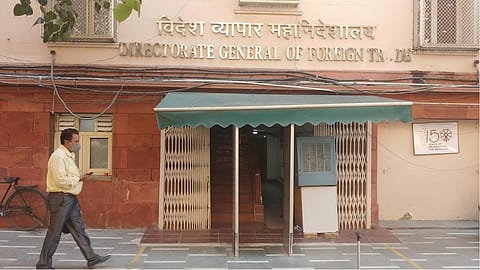
The DGFT headquarters in New Delhi. The commerce ministry is setting up a Central Processing Department to implement a faceless, paperless and jurisdiction-free trade facilitation system. | Credits: centralvista.gov.in
The commerce ministry has decided to set up a Central Processing Department (CPD) in the Directorate General of Foreign Trade (DGFT) to implement a faceless trade facilitation system, a move aimed at making it easier for exporters and importers to process trade-related applications.
According to an office memorandum issued by the DGFT, the CPD will function as a central unit for processing such applications and will be located in the central licensing area in Delhi. The system is proposed to be dedicated to the nation during the second fortnight of October 2026.
Central unit to process trade-related applications
The faceless trade facilitation system is a key government initiative aimed at enabling faceless, paperless and jurisdiction-free processing of trade-related applications. By centralising the processing function, the system is expected to reduce the time taken to deal with applications while bringing greater transparency and consistency to the process.
For exporters and importers, trade-related approvals and applications form an important part of the regulatory process involved in conducting cross-border business. A system that allows applications to be processed without being tied to a particular jurisdiction is intended to simplify these interactions and reduce procedural friction.
The move also represents an effort to make greater use of digital processes in foreign trade administration. Shifting towards paperless processing can reduce dependence on physical documentation, while faceless processing is designed to minimise the need for applicants to interact with individual offices or officials for routine regulatory matters.
53 DGFT officers posted to new department
As many as 53 DGFT officers from Delhi and its regional centres have been posted or transferred to the new department, according to the memorandum.
The officers include five joint DGFTs, 10 Deputy DGFTs and seven assistant DGFTs. Their deployment will provide the central unit with personnel across different levels of the DGFT's administrative structure as it prepares for the proposed rollout.
The creation of the CPD is part of the broader effort to streamline the administration of India's foreign trade framework and make regulatory processes more responsive to businesses. For exporters and importers, faster processing and greater predictability in handling applications can be particularly important when trade transactions depend on timely regulatory clearances.
Faceless system aims to improve ease of doing business
The proposed system is expected to bring trade-related applications under a common processing mechanism rather than requiring businesses to navigate different jurisdictions. This could help make the application process more standardised while improving transparency in decision-making.
The government has increasingly focused on reducing procedural hurdles for businesses engaged in international trade, with digitalisation forming an important part of efforts to improve ease of doing business. The proposed CPD is intended to support that objective by providing a dedicated central mechanism for processing applications.
The DGFT memorandum said the faceless trade facilitation system is proposed to be dedicated to the nation in the second fortnight of October 2026. The department's functioning and the transition to the new system will therefore be important steps in the government's effort to simplify the interface between foreign trade businesses and the regulatory machinery.
Follow Fortune India
NEXT STORY