European carmakers to turn to India as global manufacturing hub: Piyush Goyal
/ 2 min read
The commerce and industry minister said stringent regulations in Europe could undermine the region’s cost competitiveness, positioning India as a potential base for global vehicle production.
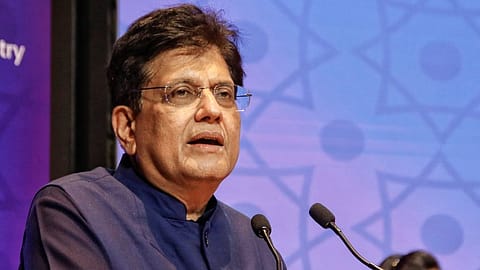
Piyush Goyal, Union Commerce and Industry Minister.
India could emerge as a global hub for automobile manufacturing, with European carmakers increasingly looking at the country as a production base amid regulatory pressures in their home market, Commerce and Industry Minister Piyush Goyal said on Monday.
Speaking at The Dilli Dialogue in New Delhi, Goyal argued that stringent regulations in Europe could make vehicle manufacturing in the region less competitive, creating an opportunity for India to attract global automakers and expand its manufacturing footprint.
“Finally, India is going to become the global hub for car manufacturing,” Goyal said, adding that European manufacturers would increasingly prefer to manufacture in India.
Europe’s regulatory burden could reshape manufacturing economics
Goyal’s remarks highlight how manufacturing costs and regulatory requirements could influence automakers’ global production strategies. However, the minister did not identify specific European regulations or provide details of any proposed investments by European carmakers.
Automakers worldwide are navigating evolving emissions requirements, the transition towards electric vehicles and the need to manage production costs. Decisions on where to manufacture vehicles also depend on factors such as labour and logistics expenses, supplier networks, regulatory compliance and access to major consumer markets.
India seeks to strengthen its global automotive footprint
India has sought to strengthen its position as a manufacturing destination through production-linked incentives, investments in supply chains and policies aimed at expanding exports. Its large domestic vehicle market also offers manufacturers an opportunity to combine local sales with production for overseas markets.
A stronger export-oriented manufacturing ecosystem could attract investments across the automotive value chain, including vehicle components, electric-vehicle technologies and advanced manufacturing. However, companies will need to assess India’s competitiveness against established manufacturing centres in Europe and elsewhere.
Investment commitments will determine the scale of the opportunity
While Goyal expressed confidence that European automakers would increasingly choose India, his remarks did not include investment estimates, timelines or commitments from individual manufacturers.
The extent to which India benefits from this opportunity will depend on automakers’ investment decisions, the evolution of trade arrangements and the country’s ability to offer a competitive manufacturing environment.
For India, the opportunity extends beyond expanding domestic vehicle production to strengthening its position in global automotive supply chains and export markets.
Follow Fortune India
NEXT STORY