Escalation of West Asia war, impact of El Niño to determine future RBI rate action
/ 3 min read
RBI’s MPC likely to keep interest rates on hold on August 5, despite rising CPI inflation.
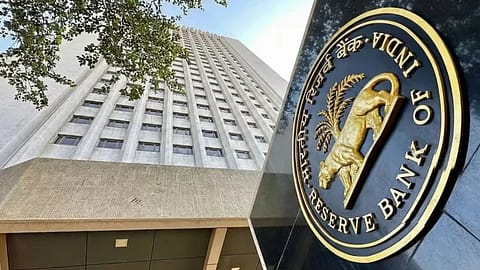
The inflation rate based on India's consumer price index (CPI), at 4.38% in June 2026, is above the RBI's medium-term headline inflation rate of 4% (with a tolerance band of +/- 2%). | Credits: File Photo
The Reserve Bank of India's (RBI) Monetary Policy Committee (MPC) is expected to focus more on the impact of the escalating conflict in West Asia, its implications for the currency market, erratic monsoon patterns, and the potential effects of El Niño in the coming months, rather than solely on the trajectory of food inflation. Economists expect RBI Governor Sanjay Malhotra-led MPC to keep interest rates on hold at its August 5 policy meeting and maintain the status quo for the rest of the calendar year.
The inflation rate based on India's consumer price index (CPI), at 4.38% in June 2026, is above the RBI's medium-term headline inflation rate of 4% (with a tolerance band of +/- 2%).
"We are not expecting a rate change in the upcoming policy. The RBI may underline the upside pressures on inflation but they are unlikely to change the inflation or the GDP forecast in this meeting," Dipti Deshpande, senior director and principal economist at ratings agency Crisil told Fortune India.
Brent crude prices have slid 4.6% to $81.4 per bbl on July 31 from $85.36 when the last RBI policy was announced on June 5. But in the past month, brent oil prices have risen by 12.2% due to the sharp escalation in the war. The Indian rupee had also touched 96.8 to the US dollar on July 23, before recovering to 95.4 on July 31.
Deshpande forecasts the next rate action to be in the form of a hike in the March ended quarter of FY27. "They want to be cautious, because all the pressures on inflation are coming in from the supply side –be it energy and commodity prices and the monsoon. But the domestic demand is holding up," Deshpande said.
"Usually, central banks do not tend to react to supply side pressures. If these pressures last for two months, then it will have an impact on inflation," she added. A persistence in inflationary pressures will alter inflation expectations.
On June 5, the bi-monthly data of the RBI's Inflation Expectations Survey of Households (IESH) for May 2026 showed that the current median inflation perception of households rose by 60 basis points to 7.8% from 7.2% in March 2026.
If the IESH were to increase, then the expectation on inflation will rise and indicate to the RBI that inflation has got more entrenched. "The RBI will want to see if the inflation expectations persist," she said.
Sakshi Gupta, principal economist and vice-president with HDFC Bank, agrees with Dipti, on rates remaining unchanged at the upcoming policy. "While headline inflation is going up due to fuel costs, we feel it is too early at this stage for a rate hike. It could be a wait and watch policy to see how the second round of elevated energy prices and the monsoon play out," Gupta told Fortune India.
Anubhuti Sahay, head of India Economics Research at Standard Shcratered Bank is also calling for a hold in interest rates. "There will be more clarity on the impact of El Nino by then. Also there would be a clearer indication of how much oil prices could move.
Crisil's Deshpande also pointed out to a Crisil study on Deficient Rainfall Impact Parameter (DRIP), an indicator which they have tracked for nearly 25 years, measuring the vulnerability of crops and states to rainfall deficiency while accounting for irrigation availability.
{{#most-powerful-women-snapshot-individual.slug}} {{/most-powerful-women-snapshot-individual.slug}} {{^most-powerful-women-snapshot-individual.slug}} {{/most-powerful-women-snapshot-individual.slug}} {{#showRanking}} {{current-rank}} {{/showRanking}} {{#photo.0.url}}
{{name}}
"Among the key kharif growing states, DRIP scores for the season ending July 28 point toward greater stress in Karnataka, Rajasthan, Madhya Pradesh, Andhra Pradesh, and Telangana, and somewhat milder stress in Bihar and Uttar Pradesh," the report said. The indicator highlights highest stress levels for tur, coarse cereals (jowar and bajra), maize, oilseeds (soybean and groundnut), rice and cotton.
"The relationship between deficient monsoon and kharif (monsoon crop) output is fairly direct and linear, but the relationship between traditional monsoon and higher food inflation has weakened in recent years, due to various government measures," Deshpande said.
Follow Fortune India
NEXT STORY