Air India's new CEO faces a turbulent runway
/ 4 min read
Tewolde Gebremariam has his task cut out as he assumes charge as the CEO and MD of Air India, which has been trying to revamp its identity.
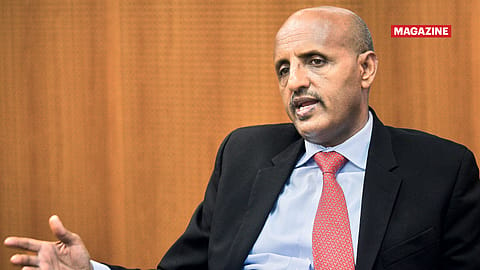
Air India believes Tewolde Gebremariam has the magic potion to break its bad spell. | Credits: Getty Images
This story belongs to the Fortune India Magazine september-2026-indias-top-100-billionaires issue.
IT WAS ALREADY the toughest job in aviation. Years of underinvestment and bureaucratic high-handedness had turned Air India into something of a wreck even before its “homecoming” to the Tata group. Amid a lacklustre turnaround, a deadly crash, spiralling losses, and diminishing market share, questions are being raised on the airline’s viability. And with Noel Tata — who has been questioning the airline’s strategy — in the driver’s seat at the Tata group, the Air India CEO’s job has only gotten harder.
But when Tewolde Gebremariam takes Air India’s corner office, there could be some parallels to draw from his tenure at Ethiopian Airlines. After all, he was the longest-serving CEO of the Ethiopian carrier. “His (Gebremariam’s) unique strength lies in managing complex operational landscapes, driving cultural transformation, building competitive global hubs, and developing world-class MRO (Maintenance, Repair, and Overhaul) and aviation training infrastructure,” Air India stated on August 5 announcing the appointment.
At the helm of Ethiopian Airlines — where he joined as a traffic officer in 1985 and climbed the ranks to become CEO — the 61-year-old grew the carrier’s annual revenues from $1 billion to $5 billion, with a net profit of $1 billion in 2022 when he stepped down. Passenger traffic grew from 3 million to 12 million, and cargo tonnage rose from 160 tonnes to 760 tonnes. Foreign destinations doubled to 128 and the workforce grew from 6,300 to 17,000 employees. Gebremariam also led the company through the nasty Boeing 737 MAX crash, killing all 157 people on board.
Air India desperately needs these credentials now. Consider this: In January 2022, at the time of the Tata merger, it had a 22.3% and 25.26% share in the domestic and international market, respectively, through airlines such as AirAsia India, Vistara, Air India, and Air India Express. By September 2022, Air India put in place a turnaround plan called Vihaan.AI (vihaan in Sanskrit means “the dawn of a new era”) to focus on network and fleet growth, develop a fully revamped customer proposition, improve reliability and on-time performance, and assume the numero uno position. A target was set: to increase domestic market share to 30% and significantly expand international operations.
Four years later, the story so far reads like an Odyssean journey. Despite spending billions on the revamp and identity, the group’s domestic market share has risen only to 23.9%, while international share has dipped to 19.72%. Rival IndiGo’s foreign market share rose from 16% to 20% during the same period. On the domestic front, IndiGo dominates over 67% of the skies, up from 55%.
But Air India believes Gebremariam has the magic potion to break its bad spell. “He has strong experience in expanding international long-haul networks and building world-class hub operations, an unrelenting commitment to safety standards, engineering quality, and operational reliability,” Air India’s statement reads.
Experts, however, feel Air India’s challenge is its execution consistency. “The new CEO needs to improve operational reliability, complete the integration of different organisational cultures, deliver a consistent customer experience, and make the international expansion work economically. After years of investment and restructuring, Tata will increasingly expect the airline to demonstrate a credible path towards profitability,” says Alok Anand, chairman of Acumen Aviation, an aircraft asset management and leasing company.
More Stories from this Issue
In FY26, at ₹22,238 crore, the airline more than doubled its combined net loss of ₹10,859 crore from the previous fiscal, despite pulling in ₹71,870 crore in total revenues. Add to it the repeated strikes on the brand value, including a pilot being reportedly held with a positive drug test after the airline ran into severe turbulence, injuring passengers. Meanwhile, neither the airline nor the government has been able to explain the London-bound AI-171 aircraft’s crash last year that killed 260 people.
That’s not to say that it’s only been bad. The group signed a deal to acquire as many as 470 aircraft — 34 A350-1000, six A350-900, 20 Boeing 787 Dreamliners, 10 Boeing 777X widebody, 140 Airbus A320neo, 70 Airbus A321neo, and 190 Boeing 737MAX narrowbody — worth $70 billion, even as it brought AirAsia India, Vistara, and Air India Express under the Air India umbrella.
Yet, not many people will be fully satisfied with the turnaround, says Jitender Bhargava, a former executive director at Air India. “Could they have achieved more? The answer is an emphatic yes. Since June 2025, their international operations have only contracted.” Air India cannot become an endlessly funded prestige project, says Anand. “But equally, it would be a mistake to retreat just when India is becoming one of the world’s most important aviation markets.” The next phase, he adds, needs much greater discipline. More focus on profitable routes than market share, better utilisation of existing assets, stronger cash generation, and clear returns on new investment: that’s his pill for Air India’s woes. “The first phase was about rebuilding; this next phase will be to prove it makes money.”
The next 3-5 years will be critical, Bhargava emphasises. “Aircraft will come in large numbers, and there will be a big need for cost control. There will be huge demand to grow the network while cutting operational losses. The promoters have given a long rope, and in a price-sensitive market like India, a new CEO will also have the task to generate non-aeronautical revenues.” Gebremariam has his task cut out.
{{#most-powerful-women-snapshot-individual.slug}} {{/most-powerful-women-snapshot-individual.slug}} {{^most-powerful-women-snapshot-individual.slug}} {{/most-powerful-women-snapshot-individual.slug}} {{#showRanking}} {{current-rank}} {{/showRanking}} {{#photo.0.url}}
{{name}}
“[Campbell] Wilson (the former CEO) inherited an extraordinarily difficult job: rebuilding Air India while integrating Vistara and transforming the fleet, technology, and organisation,” Anand says. “But some issues remain unresolved. Wilson was the transformation CEO. The new CEO will be an execution one. The strategy is broadly there; the challenge is making it work every day.” Will Gebremariam be Air India’s Athena? Time will tell.
Follow Fortune India
Sign in to read full story
To access our exclusive magazine content, sign in to your Fortune India account.
Sign In NowNEXT STORY