India's Top 100 Billionaires 2026: Dilip Shanghvi's formula for success
/ 6 min read
No.6 on Fortune India's 2026 study of India's top 100 billionaires with a net worth of ₹2,55,594 crore, Shanghvi is turning his attention to the longer-term priorities that will shape Sun Pharma’s next chapter.
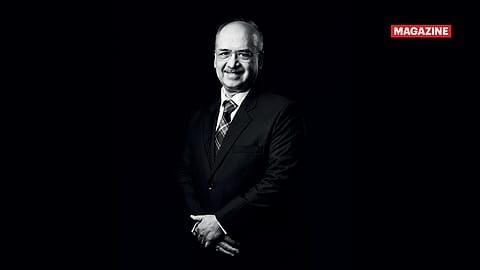
Dilip Shanghvi, executive chairman, Sun Pharmaceutical Industries. | Credits: Padmini B
This story belongs to the Fortune India Magazine september-2026-indias-top-100-billionaires issue.
SUNOLOGY — a portmanteau of sun and ideology — is the North Star of Sun Pharmaceutical Industries Ltd. It is rooted in humility, integrity, passion, and innovation, the four words that describe Dilip Shanghvi, the man behind India’s largest pharmaceutical company. Shanghvi ranks sixth with a net worth of ₹2,55,594 crore ($26.84 billion), according to Fortune India’s study of India’s Top 100 Billionaires.
In September last year, when Shanghvi stepped down as the managing director of Sun Pharma, few in the industry had doubts about his next role. After all, Shanghvi had spent over four decades building Sun Pharma into a global pharma manufacturing powerhouse from the ground up, using a string of over two dozen strategic acquisitions of brands, business divisions, and companies.
His decision to step away from the day-to-day management of the company was, therefore, widely seen as a move that would free him to focus more closely on the strategic priorities needed to drive Sun Pharma’s next phase of long-term growth.
The logic was straightforward. Shanghvi had relinquished only the role as the MD; he remained the executive chairman. Sun Pharma had also publicly stated that Shanghvi would focus on strengthening its specialty portfolio and provide insights to shape the company’s long-term vision.
That view was vindicated in less than a year. On April 26, Sun announced the biggest acquisition in the history of the Indian pharmaceutical industry, of U.S.-listed Organon & Co., in an all-cash deal valued at $11.75 billion, including debt. A global leader in women’s health, the Organon acquisition significantly strengthens Sun Pharma’s specialty portfolio while also underscoring its long-term ambition to be a global player in chosen specialties.
Once the transaction is complete, Sun Pharma is expected to be ranked among the Top 10 global players in biosimilars. Considering that biologic medicines accounted for nearly 42% of new drug launches over the past five years globally, Sun’s biosimilar push is coming at the right time.
“The acquisition of Organon & Co. strengthens our position as a global pharmaceutical company with a favourable portfolio mix, while expanding our footprint across key international markets. The combination of capabilities will enable us to become an increasingly important stakeholder across global healthcare ecosystems,” Shanghvi said in his message to shareholders recently. “We believe this acquisition positions Sun Pharma well to pursue sustained growth while continuing to invest in innovation, quality medicines, and improved patient outcomes.”
More Stories from this Issue
The genesis of Sun Pharma
From the onset, Shanghvi has ensured that neither his personality nor his wealth overshadows the business he built. He has consistently preferred to let Sun Pharma speak for itself, routinely declining requests for interviews centred on his stature as one of India’s wealthiest persons.
This time was no different. Yet, his business acumen and strategic instincts are evident in virtually every milestone Sun Pharma has achieved since Shanghvi started the company in 1983 with just five psychiatric products, including Lithosan, a drug used to treat bipolar disorder.
As the son of a wholesale drug distributor in Kolkata, he had learnt the basics of the pharmaceutical trade from his father’s business before he ventured into manufacturing medicines after setting up Sun Pharma. It was perhaps unsurprising that from the very beginning Shanghvi focussed on high-margin niche therapeutic segments where competition is limited. Beginning with psychiatry, Sun later expanded into specialised areas such as cardiology and gastroenterology.
“With the addition of the women’s health business of Organon, Sun Pharma will (now) be among a handful of innovative companies with a presence in four or more therapy areas globally, adding to our presence in dermatology, ophthalmology and onco-dermatology,” he said in his message to shareholders.
{{#most-powerful-women-snapshot-individual.slug}} {{/most-powerful-women-snapshot-individual.slug}} {{^most-powerful-women-snapshot-individual.slug}} {{/most-powerful-women-snapshot-individual.slug}} {{#showRanking}} {{current-rank}} {{/showRanking}} {{#photo.0.url}}
{{name}}
Shanghvi is known for his ability to turn challenging acquisitions into successful businesses. When Sun Pharma acquired Ranbaxy Laboratories for $4 billion in an all-cash deal in 2014, the company was already facing serious scrutiny from the USFDA (U.S. Food and Drug Administration), including investigations triggered by whistle-blower complaints and regulatory inspections.
His acquisition of Israel-based Taro Pharmaceutical Industries was no less challenging, with the deal becoming entangled in legal battles that dragged on for more than a decade.
Today, Shanghvi’s increasingly innovation-focussed company has a presence in 100 countries, with 40 manufacturing facilities across the globe and 29 products in its ‘innovative medicine’ portfolio.
Sun Pharma is also India’s largest pharmaceutical company by domestic revenue, commanding an 8.4% market share and holding a leadership position across 11 different doctor categories based on prescription volumes.
Sun Pharma’s FY26 performance reflects the strength of its broad-based growth strategy across businesses and geographies. The company’s global consolidated revenues grew 11.9% year-on-year to ₹58,200 crore, while Ebitda increased 16.1% to ₹17,700 crore. Its net profit grew 5% to ₹11,500 crore. While growth was relatively muted in the first quarter of FY27, stock market analysts continue to be bullish on the company’s prospects.
“Q1FY27 performance reinforces that its long-term growth engine remains intact,” said analysts associated with Deven Choksey Research in an investor note. “The outlook for Sun Pharma remains constructive, supported by the continued strength of its India formulations business, expanding specialty portfolio, and disciplined investment in innovation,” they added.
Shanghvi acknowledges the changing operating environment facing the global pharmaceutical industry in his message to shareholders. The growing complexity of product development, heightened regulatory expectations, increasing demand for differentiated therapies, greater emphasis on investing in local pharmaceutical infrastructure, and pressure for lower drug pricing across markets, etc., are among the forces reshaping the industry, he points out. These shifts, he said, continue to shape Sun Pharma’s resolve to stay nimble and responsive in a fast-changing environment.
“We stay committed to building a business that combines scale with differentiation — strengthening our presence across markets, deepening capabilities in select therapy areas, and steadily increasing the contribution of branded and innovative medicines businesses within our portfolio,” Shanghvi noted.
Focus on innovative products
Today, Sun Pharma is the 13th-largest generics company in the U.S. market. But what is special about its U.S. business performance in FY26 was that, for the first time, innovative medicines contributed a higher share of its sales in that country than generics. Shanghvi sees this as evidence of the company’s evolution into a more balanced business, with innovative medicines accounting for an increasing share of revenue each year.
In fact, the innovative medicines business accounted for 22% of the consolidated sales in FY26. Shanghvi expects this evolution to create a more balanced business than the company had a few years ago, with less dependence on any single geography or sale of commoditised, low-margin opportunities. “A key strategic priority for us over the past several years has been the development of our innovative medicines business. This year (FY26) we brought two new treatments to market, namely LEQSELVI and UNLOXCYT, adding further to our offerings across our focus therapy areas,” he said.
While LEQSELVI is an FDA-approved prescription medicine for adults with severe alopecia areata, offering hope for those who have struggled with hair loss, even after trying other treatments, UNLOXCYT (cosibelimab-ipdl) is a prescription medicine used to treat adults with a type of skin cancer called cutaneous squamous cell carcinoma (CSCC). One of the key products in this segment, ILUMYA, a prescription medicine used to treat adults with moderate to severe plaque psoriasis, is now marketed in more than 35 countries, reflecting the company’s expanding commercial footprint for innovative medicines. In FY26, ILUMYA recorded a 16.7% growth in sales.
Meanwhile, Sun Pharma’s India sales too grew 14% to ₹19,300 crore and contributed around 33% of consolidated revenues in FY26. It improved its market share and outperformed the industry in volume-led growth. India growth was supported by strong execution across chronic therapies, new product launches, deeper doctor engagement, field-force expansion, and improving market reach.
“Our approach in this business has remained selective and focussed, with emphasis on therapy areas where we believe we can build depth and long-term capabilities. Today, we market 29 innovative medicines globally, supported by dedicated commercial infrastructure in the U.S. and select international markets,” the Sun Pharma chief said. “Our innovation strategy continues to balance long-term investments with near-term business priorities by focussing on bringing new treatments to market with clear clinical distinction and commercial potential. During FY26, R&D investments remained at 6.1% of sales, with increasing focus on innovative programmes.”
According to him, the company remains rooted in its guided purpose and a clear long-term vision. “The direction we have pursued over time is reflected in a more diversified business with stronger capabilities across markets and therapy areas. We remain focussed on strengthening the quality of growth, advancing innovation with discipline, and building long-term resilience across the organisation,” Shanghvi said. “I remain confident that Sun Pharma’s best years lie ahead.”
That confidence can come only from a place of trust in “Sunology”, which he painstakingly built over the years.
Follow Fortune India
Sign in to read full story
To access our exclusive magazine content, sign in to your Fortune India account.
Sign In NowNEXT STORY