Mahindra Last Mile Mobility eyes IPO in 18 months; plans expansion into new products: Chairman Jejurikar
/ 2 min read
He clarified that the 18-month timeline is broad and the company has not finalised a listing date, as it does not want the management to get distracted by the process and effort involved in an IPO.
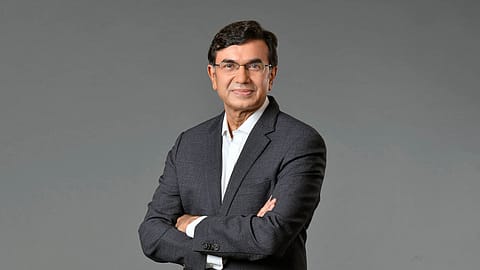
Rajesh Jejurikar, executive director and CEO (Auto and Farm Sector), M&M.
Mahindra Last Mile Mobility Ltd (MLMML) is looking at a public listing in about 18 months to unlock value and fund its next phase of growth, including expansion into new product segments and capacity augmentation, even as it explores potential opportunities in overseas markets, according to the company's Chairman Rajesh Jejurikar.
In an interview to PTI, Jejurikar, also the Executive Director and CEO of Mahindra & Mahindra's Auto and Farm Sectors, said Mahindra Last Mile Mobility, which already has a valuation of around $1 billion, has two investors on board, with a third expected to come in shortly.
He, however, clarified that the 18-month timeline is broad and the company has not finalised a listing date, as it does not want the management to get distracted by the process and effort involved in an initial public offering (IPO).
"The funds would be used, of course, partly for value unlocking, but mainly for driving growth in new segments and new products, and also for capacity expansion," he said.
"Mahindra would continue participating in this journey as well. Certainly the idea is not to reduce our stake significantly, and hence to be a part of this growth story," Jejurikar said.
On expansion plans, he said MLMML was looking at opportunities across electric three and four-wheelers in both passenger and cargo segments, while retaining its focus on last-mile transportation within cities rather than intercity mobility.
"I won't get into the specifics of what kind of products, but you're right: three- and four-wheeler electric products, passenger and cargo," he said.
The company is also looking at potential overseas markets, with the Earthshot Prize recognition expected to help it forge global partnerships, particularly in Southeast Asia and Africa, and possibly some Western countries.
Jejurikar, however, said international expansion would take time as each market would require an assessment of product suitability, business potential and the level of electric vehicle penetration, apart from building distribution, spare-parts and service ecosystems.
He said the company had received some enquiries following the award but had not yet undertaken detailed work on its global strategy.
The company will not deploy the one million pounds received as part of the Earthshot Prize towards business expansion. Instead, the amount will be used to support women who want to become drivers and promote women's empowerment, he said.
{{#most-powerful-women-snapshot-individual.slug}} {{/most-powerful-women-snapshot-individual.slug}} {{^most-powerful-women-snapshot-individual.slug}} {{/most-powerful-women-snapshot-individual.slug}} {{#showRanking}} {{current-rank}} {{/showRanking}} {{#photo.0.url}}
{{name}}
On demand trends, Jejurikar said passenger electric three-wheelers had so far driven growth, but cargo vehicles were expected to pick up.
"So far, passenger has been very strong, but now we believe that cargo will pick up as well," he said.
Jejurikar said vehicle-price incentives under the FAME and PM E-DRIVE schemes were no longer available for the category, with the production-linked incentive (PLI) scheme being the only remaining support.
He said higher volumes would help optimise material costs, while customers recognising the economic benefits of electric vehicles would provide some headroom for pricing.
"Typically, that comes through a combination of things: as you build volume and scale, you are able to optimise material costs. Plus, customers start seeing value and return from using an electric vehicle, and that gives a little headroom on pricing as well," he said.
Follow Fortune India
NEXT STORY