Crop loans to cash flow credit: The rise of non-bank finance in Indian agriculture
/ 4 min read
Institutional agriculture credit increased from about ₹46,268 crore in 1999-2000 to ₹7.11 lakh crore in 2013-14, and further to ₹25.48 lakh crore in 2023-24.
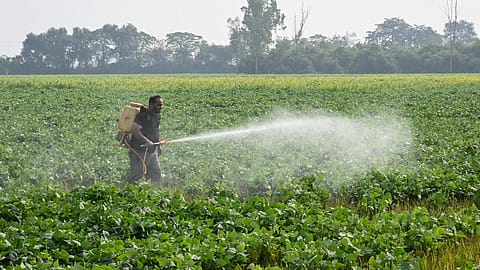
Traditional crop loans are seasonal and often linked to land ownership. But rural income today is more diversified | Credits: Getty Images
India’s agriculture credit story has entered a new phase. For decades, farm finance was viewed largely through the lens of public sector banks, cooperative banks, regional rural banks and Kisan Credit Cards. While that architecture remains central, the interesting shift is the rise of non-bank credit—NBFCs, NBFC-MFIs, agri-fintechs, FPO-linked lenders, warehouse receipt financiers, embedded finance platforms and supply-chain credit providers. They are not replacing banks. They are filling the gaps that banks have historically struggled with (viz. small-ticket lending, informal-income borrowers, tenant farmers, allied-sector entrepreneurs, post-harvest needs and rural value-chain finance).
The scale of credit growth has been remarkable. Institutional agriculture credit increased from about ₹46,268 crore in 1999-2000 to ₹7.11 lakh crore in 2013-14, and further to ₹25.48 lakh crore in 2023-24. For 2024-25, the government set a ground-level agriculture credit target of ₹27.5 lakh crore, including a dedicated ₹4.20 lakh crore sub-target for allied activities such as dairy, poultry, fisheries, sheep, goat, piggery and animal husbandry.
Before 2014, the primary challenge was to expand institutional credit itself. The policy system focussed on pushing banks to increase flow, scaling Kisan Credit Cards, strengthening cooperative and RRB lending, and reducing dependence on informal moneylenders. The government’s 2004 farm credit package aimed to double agriculture credit in three years, and credit flow grew from ₹86,981 crore in 2003-04 to ₹4.68 lakh crore in 2010-11, eventually reaching ₹7.11 lakh crore in 2013-14. After 2014, the story shifted from mere expansion to diversification and delivery efficiency. Credit targets increased from ₹8 lakh crore in 2014-15 to ₹27.5 lakh crore in 2024-25, while actual disbursement reached ₹25.48 lakh crore in 2023-24. The system also began paying greater attention to allied activities, term lending and last-mile credit. A PIB release noted that ground-level credit nearly doubled from ₹7.30 lakh crore in 2013-14 to ₹13.92 lakh crore in 2019-20, while the share of term loans rose from 24.95% to 40.5% over the same period, an important indicator because term loans support capital formation, productivity and asset creation.
This is where non-bank finance becomes critical. Traditional crop loans are seasonal and often linked to land ownership. But rural income today is more diversified. A farmer may earn from paddy, milk, poultry, tractor services, fisheries, horticulture, small trading and government transfers. NBFCs, MFIs and fintech-NBFCs are better placed to underwrite such cash flows through local knowledge, digital data, repayment history, milk-pouring records, procurement data, input-purchase behaviour and group guarantees. RBI’s priority sector framework also recognises bank lending to NBFCs and MFIs for on lending and co-lending by banks and NBFCs to priority sectors, giving regulatory legitimacy to partnership models.
The biggest opportunity lies in allied sectors. Dairy, fisheries, poultry and animal husbandry often generate more regular cash flows than seasonal crop farming, making them attractive for cash-flow-based lending. The extension of concessional Kisan Credit Card benefits to animal husbandry and fisheries farmers for short-term working capital has widened the formal credit perimeter beyond crop cultivation. With the 2024-25 agriculture credit target carrying a dedicated ₹4.20 lakh crore sub-target for allied activities, the policy signal is clear: future rural credit growth will increasingly come from the broader rural livelihood economy, not only from crop production. Microfinance is another major pillar of non-bank rural credit. The SHG-bank linkage programme, promoted by NABARD, has become one of the world’s largest financial inclusion platforms, with deep rural and women-led outreach. The Bharat Microfinance Report 2024 noted that SHG-bank linkage and JLG financing models together had an outstanding portfolio of over ₹7 lakh crore in microfinance loans, underscoring the importance of small-ticket, collateral-free lending in rural India.
Agri-fintechs are now adding a new layer. Credit is being embedded into input purchase, farm equipment rental, produce procurement, warehouse receipts, dairy collection, commodity trading and FPO operations. This can reduce transaction costs and improve underwriting because repayment is linked to actual commercial flows. But the model also brings conduct and data risks. RBI’s Digital Lending Directions, 2025 put sharper obligations on regulated entities around lending service providers, borrower disclosures, creditworthiness assessment, data use, grievance redressal and digital lending apps.
The challenges are real. Access remains uneven across regions and borrower types. RBI research has highlighted gaps such as inadequate access for small and marginal farmers, limited medium- and long-term lending, and wide regional disparities in agricultural credit. Over-indebtedness is another risk, particularly when borrowers access loans from banks, MFIs, NBFCs, input dealers and informal sources simultaneously. Climate volatility (unseasonal rains, heat stress, crop disease, livestock outbreaks and commodity price shocks) can quickly impair repayment capacity. The next phase of agriculture credit must therefore be judged not only by volume, but by quality. India has already moved from credit scarcity to credit scale. The next challenge is to move from credit scale to credit intelligence. That means better borrower-level data, responsible co-lending, stronger credit bureau usage, climate-risk analytics, integration with insurance, FPO-level underwriting, post-harvest finance and longer-tenor investment credit.
Non-bank credit can be transformative if it stays anchored in responsible lending. It can reach farmers who lack collateral, support women-led rural enterprises, finance allied activities, unlock warehouse-based liquidity and enable FPOs to become commercially viable. But unchecked credit expansion can create borrower stress. The right model is not bank versus non-bank. It is bank plus non-bank plus digital plus value chain.
India’s agriculture finance story since 2000 shows two distinct phases: rapid formalisation before 2014 and large-scale diversification after 2014. The next decade will require a third phase: resilient, inclusive and income linked rural finance. If done well, non-bank credit will not merely fund agriculture; it will finance the transformation of rural India.
(The author is partner, strategy & transactions, EY LLP. Views are personal.)
Follow Fortune India
NEXT STORY