Digital Carbon Markets: Bringing India’s MSMEs and communities into the climate economy
/ 3 min read
SMEs contribute over 30% of GDP, nearly 35% of manufacturing output, and close to half of all exports.
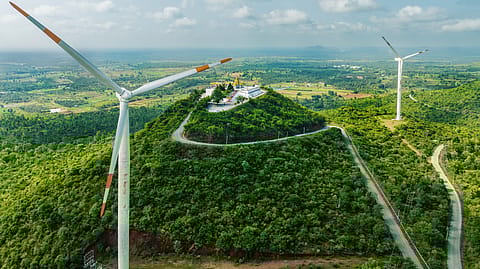
Digital carbon market platforms like the Global Carbon Council (GCC) and TERI’s clean energy carbon marketplace are lowering the entry barrier. | Credits: Getty Images
India has set bold climate goals: net-zero by 2070, scaling clean energy, and pushing electric vehicles. But the path to getting there has largely been paved by big players: large industries, massive government programmes, and corporate decarbonisation drives.
Left out of this picture are India’s small businesses and local communities, despite punching well above their weight economically. SMEs contribute over 30% of GDP, nearly 35% of manufacturing output, and close to half of all exports. Yet when it comes to carbon markets and climate finance, they remain largely on the sidelines.
This can be pinned to the structure of traditional carbon markets, that weren’t built for them. The process of measuring, reporting, and verifying emissions (MRV) is expensive and technically complex. Accessing carbon credits requires upfront investment, specialised knowledge, and connections to buyers that most small businesses simply don’t have. For SMEs in particular, emissions are spread across thousands of small operations, making them hard to aggregate. And more often than not, the cost of participating exceeds any financial return.
Add to that a general lack of awareness, and it’s easy to see why sustainability takes a back seat when day-to-day survival is the priority.
But that’s beginning to change. Digital carbon market platforms like the Global Carbon Council (GCC) and TERI’s clean energy carbon marketplace are lowering the entry barrier.They’re making it possible for small enterprises and local communities to meaningfully participate in climate finance for the first time.
By aggregating smaller projects, simplifying the process, and lowering transaction fees, they make engagement more attainable than ever before. It’s similar to how financial services, commerce, and mobility were revolutionised by online platforms; climate finance is now becoming similarly accessible.
The process is becoming increasingly simplified: small business, co-operative, or community implements sustainable practice (energy-efficient technology, renewables, clean cooking, water management, etc.); digitally verified reductions in emissions are recorded; credits generated are listed on an online exchange for purchase by businesses or individuals wanting to reduce their climate footprint. That complex and time-consuming process previously carried out by various mediators can now be executed via seamless digital platforms.
The opportunity is twofold meaningful for businesses as well. Unlike earlier, it is not limited to the environmental benefits offered, and a new avenue to facilitate access to green finance specifically for small businesses.
Engaging in carbon markets will support ESG compliance, especially as supply chains scrutinise climate performance, turning sustainability from compliance into a value opportunity. For communities, carbon-friendly solutions from clean cooking to distributed renewables, watershed management to improved water harvesting can contribute to environmental gains while creating sustained long-term value.
Instead of being dependent on one-time development funds, such initiatives can be continuously supported by market finance rewarding eco-friendly actions.
India’s policy direction also helps boost additional momentum. The Carbon Credit Trading Scheme (CCTS) signifies its intention to develop a robust local carbon market framework in alignment with global developments, which will build better conditions for future broad-based participation. The focus on integrity and transparency lays foundations for more widespread market involvement.
{{#most-powerful-women-snapshot-individual.slug}} {{/most-powerful-women-snapshot-individual.slug}} {{^most-powerful-women-snapshot-individual.slug}} {{/most-powerful-women-snapshot-individual.slug}} {{#showRanking}} {{current-rank}} {{/showRanking}} {{#photo.0.url}}
{{name}}
Internationally, Article 6 of the Paris Agreement presents a similar avenue for international collaboration and the transfer of verified emission reductions to help countries reach their climate goals. This could boost international climate finance and generate demand for high-quality Indian carbon credits provided that strict standards are upheld, ensuring this is a pathway for local climate action to reach global markets.
Nonetheless, there is work to be done. Awareness regarding the monetisation of carbon among SMEs is low. While standardisation is under development, it is crucial because it builds trust and buyer assurance, wherein linkages between supply generators and buyers remain embryonic. This is where digital infrastructure has a pivotal role to essay.
Like its success in creating digital public infrastructure, India can harness the power of technology to expand market reach, boost transparency, and facilitate a wider group’s participation in carbon markets. In short, a compelling business case exists. SMEs receive additional revenue and market competitiveness; corporates receive locally generated, transparent, traceably certified credits and ways to reduce their emissions impact, specifically Scope 3; while India gains immense value from distributed sustainability and develops a new class of carbon-related financial assets.
Three essential factors: traceability and integrity, value creation, and a connected marketplace with robust quality standards must be at the forefront of this initiative. Consistent and long-term policies will be critical to sustaining it.
India boasts a powerful network of entrepreneurs (SMEs) and communities uniquely equipped to create and contribute to the large-scale decarbonisation India requires.
Digital carbon markets can play a vital role in ensuring these diverse efforts are valued and monetised, thus creating a truly local carbon economy. It is likely that the future of carbon markets may lie less in the hands of large organisations and boardrooms than in the millions of small enterprises and communities driving change digitally.
(The author is , CEO, EcoGuard Global. Views are personal.)
Follow Fortune India
NEXT STORY