India’s next commerce opportunity is hiding in the ₹100 basket
/ 4 min read
The next set of commerce companies will start with her: how she earns, how she spends, and what she values.
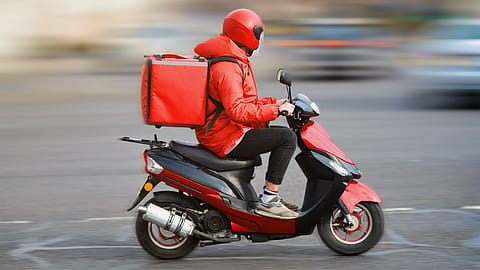
Indian quick commerce is built around one customer persona. He lives in a big city, earns a monthly salary, is willing to pay a premium for convenience, and shops in predictable cycles. His basket is large enough to make free delivery work.
So the industry built what he needs: a free delivery threshold he can clear, sale events timed to payday, nudges to bulk up the monthly basket, and 10-minute delivery for the evening he cannot face another errand.
The business model is built around him. You can see it in the metric the industry watches most closely, Average Order Value. Everybody runs bundling programmes designed to make his cart bigger. Blinkit is still opening more than 70% of new stores in the top 10 cities, and Swiggy says three in four of its new users come from metros.
They have served him well and been rewarded for it by customers and markets. The more interesting question is who comes online next. And that is where the model begins to diverge. The next customer is more likely a she, not a he, and her income, consumption and frequency are different.
Data from the Periodic Labour Force Survey shows only one in four of the Indian workforce draws a monthly salary. The rest earn weekly, spend weekly, and save in small amounts daily. In the smaller cities, the person deciding how that money is spent is usually the woman of the house. The payment may still be made by the man, but the decision is squarely hers, and not just on groceries but clothes, appliances, in most homes the two-wheeler or the car too.
She is careful with money, not poor. Villages with as few as 2,000 people have multiple homes with air conditioners and LED televisions. What she wants is curation, because she has no interest in working through 5 million listings to find the biscuits she buys. The kirana owner already knows what she buys, a form of curation nobody has built online, and worth more to her than infinite selection. She wants convenience too, but only when it is priced for value. She may make three trips to the kirana in a week rather than pay ₹40 to have one small basket delivered.
Her behaviour is where the current model runs into trouble. A kirana transaction runs ₹100 to ₹200, which is how she has always bought. Quick commerce has pushed its average order to ₹600 to ₹700, because the economics demanded it. At ₹600 a platform earns about ₹120 from margin, commissions and the delivery fee, against ₹60 to ₹90 to pick, pack, and deliver. Halve the basket, take away the delivery fee she will not pay, and the order is underwater before it leaves the store.
The easy reading is that demand outside the metros is thin, and the dashboard supports it. Nine in 10 new stores now open in cities they already serve. The top eight metros account for about 85% of all quick commerce sales, and the 90-odd smaller cities split the rest. Several platforms have decided, sensibly, to concentrate on higher value customers.
But a dashboard measures demand for one model, and that model was designed for somebody else.
The need for a new dashboard
Give her what she actually wants, and the model works. Meesho, where nearly 90% of buyers live outside the top cities, added voice-based search, and conversion rose more than 20% while returns fell. Instead of typing two words into a search bar, she can now ask for a blue kurti to wear to college every day.
Which is why it is worth starting from first principles. Three decisions follow from who she is, and the order matters.
{{#most-powerful-women-snapshot-individual.slug}} {{/most-powerful-women-snapshot-individual.slug}} {{^most-powerful-women-snapshot-individual.slug}} {{/most-powerful-women-snapshot-individual.slug}} {{#showRanking}} {{current-rank}} {{/showRanking}} {{#photo.0.url}}
{{name}}
The first is where to play, and the answer is necessity rather than discretion. She has to buy vegetables, milk, staples. The T-shirts and the innerwear and the chargers get added over time, once the habit exists, but they cannot be the reason she arrives.
The second follows from the first, and it is frequency. Necessity gets you in the door; frequency is what makes her keep the app on her phone. If frequency is low, every month starts with a hunt for new customers, and you end up recruiting millions of them just to keep the model standing. This model was never viable. The only thing that made it seem so was cheap capital.
The third is the hardest, and it decides whether the first two matter. If ticket sizes are low, the only way to make money is to be the lowest cost operator in the category. In my experience two things get a company there: the supply chain, and the choices made early. Take Sumosave for example. Value commerce isn’t necessarily discount commerce. It is about engineering costs out of the business. It doesn’t compete with national chains for expensive commercial real estate, but opens small, company-owned stores in residential areas. It relies on a localised supply chain as each store sits close to a warehouse, which cuts out the transport costs.
Vishal Mega Mart, with the large majority of its stores outside the biggest cities, is the clearest example of building a model around cost discipline. Roughly three-quarters of its revenue comes from private labels. Those products sell at a steep discount to the national brands on the same shelf, often made by the same contract manufacturers. Vishal reported an operating margin of 10.4% last quarter. DMart, with a heavier mix of branded FMCG, reported 8%.
None of this is a new pattern. Every six or seven years, Indian consumer internet produces a new commerce wave. In 2015 it was Flipkart and Amazon. Then food delivery. Then quick commerce. Not one of those winners was a cheaper copy of the last. Zudio is not a cheaper Zara and Meesho is not a cheaper Flipkart.
The next set of commerce companies will start with her: how she earns, how she spends, and what she values. They will look unfamiliar for the same reason the winners of previous waves did: they won’t be cheaper versions of what came before. They’ll be built differently from the start.
(The author is Partner, Lightspeed. Views are personal)
Follow Fortune India
NEXT STORY