The E20 fuel gamble needs serious engineering
/ 3 min read
The transition deserves the same careful engineering as the engines expected to run on it.
Credits: Shutterstock
Yesterday my niece asked me whether I would use the new green fuel proposed by the government in my high-end cars. Having been used to a reassuring constant of filling the tank, turning the key, and driving, I was quite taken aback at first. Then I said it was not my problem, but of the car makers. But is it?
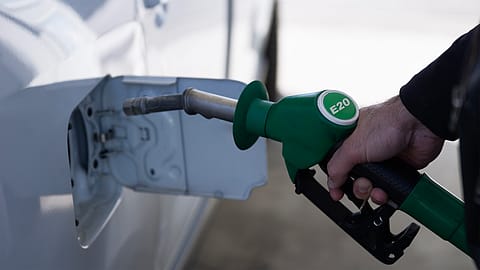
The E20 petrol—a blend containing 20% ethanol and 80% petrol—has rapidly become the country’s standard. Overnight, millions of motorists found themselves asking the question my niece asked me: “Is my car ready for this experiment?”
The government’s answer has been an emphatic yes. The many motorist experts I asked remain unconvinced.
The E20 programme is not irrational. In fact, it is economically and strategically compelling.
India imports nearly 85% of its crude oil requirements. Every 1% reduction in petrol consumption translates into billions of dollars saved in forex. Ethanol, largely produced from sugarcane, maize and surplus food grains, also provides an additional income stream for farmers while reducing dependence on global volatility. Ethanol blending has dramatically risen from 1.5% in 2014 to 20% today, making India one of the fastest adopters of biofuels globally.
Environmentally, ethanol arrives wearing an impressive green cape. Its oxygen-rich chemistry helps engines burn fuel more completely, reducing carbon monoxide and some hydrocarbon emissions. It also has a higher octane rating than petrol, which future E20-ready engines can exploit for better combustion. If we cannot electrify our entire vehicle fleet overnight, ethanol offers a useful bridge to a cleaner road ahead.
That, however, is only half the story. The other half begins inside engines manufactured long before E20 was conceived. Chemically, ethanol differs significantly from petrol. It absorbs moisture, acts as a solvent and can be more aggressive towards certain rubber seals, plastic fuel lines, gaskets and older metallic components. In vehicles specifically engineered for E20, manufacturers use ethanol-resistant materials, not the existing ones.
The government maintains that extensive testing by the Automotive Research Association of India (ARAI), IOC and the Society of Indian Automobile Manufacturers found no widespread compatibility problems or engine damage under prescribed conditions. However, the government has acknowledged that certain BS-III era vehicles may require replacement of rubber hoses and gaskets because prolonged exposure to higher ethanol concentrations can affect these components.
While all new petrol vehicles manufactured in recent years have been certified for E20 compatibility, millions of older two-wheelers and cars remain on roads. Parliament was recently informed that the government has not conducted an assessment of exactly how many vehicles are fully E20-compatible.
Mileage presents another concern. Ethanol contains roughly one-third less energy per litre than petrol. Consequently, E20 generally delivers lower fuel economy, down 3%. For an individual, this may appear modest. Across crores of petrol vehicles, however, even small efficiency losses translate into significant additional fuel purchases over time. Whether lower oil imports offset increased domestic fuel consumption becomes a complex economic calculation.
There is another overlooked dimension: Water. Producing ethanol from sugarcane is resource-intensive. Sugarcane occupies barely 2-3% of India’s cultivated land yet consumes a disproportionately large share of irrigation water. Expanding ethanol production through sugarcane in already water-stressed states raises sustainability questions.
{{#most-powerful-women-snapshot-individual.slug}} {{/most-powerful-women-snapshot-individual.slug}} {{^most-powerful-women-snapshot-individual.slug}} {{/most-powerful-women-snapshot-individual.slug}} {{#showRanking}} {{current-rank}} {{/showRanking}} {{#photo.0.url}}
{{name}}
The government has sought to diversify feedstocks using maize, damaged food grains and agricultural residues, but sugar continues to dominate ethanol production. The long-term environmental success of ethanol therefore depends on what India chooses to ferment.
The way forward should combine environmental ambition with consumer pragmatism.
First, every manufacturer should publish simple, model-wise compatibility lists explaining precisely which vehicles are fully compatible, which require minor modifications, and which deserve additional inspection.
Second, owners of older vehicles should be offered free replacement kits for vulnerable rubber components where necessary.
Third, fuel stations should continue offering limited E10 supplies for genuinely incompatible legacy vehicles during a longer transition period, as originally envisaged in India’s ethanol roadmap.
Fourth, ethanol production must increasingly shift towards second-generation biofuels derived from agricultural waste rather than expanding water-intensive sugarcane cultivation.
Finally, policymakers should keep in mind a basic principle of public trust. Consumers object to uncertainty, not change.
India deserves credit for pursuing cleaner fuels while reducing oil imports and strengthening rural incomes. But public confidence must be earned through transparent science, clear communication and acknowledging that not every engine on our roads was born ready for E20.
My niece’s question is very valid. The transition deserves the same careful engineering as the engines expected to run on it.
(Muneer is a Fortune 500 advisor, startup investor and co-founder of the non-profit Medici Institute for Innovation. Views are personal.)
Follow Fortune India
NEXT STORY