RBI Governor urges states to adopt prudent borrowing, quality spending for fiscal stability
/ 2 min read
Sanjay Malhotra calls for efficient cash management, wider adoption of the Unified Lending Interface and use of programmable CBDC for direct benefit transfers.
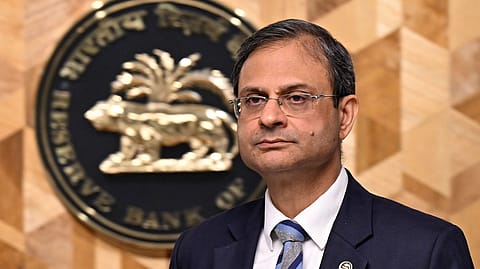
Sanjay Malhotra, Governor, RBI | Credits: Getty Images
Reserve Bank of India (RBI) Governor Sanjay Malhotra on Tuesday urged state governments to adopt prudent borrowing strategies, improve the quality of public expenditure and strengthen cash management practices to safeguard their long-term fiscal health. The remarks come amid the importance of balancing development spending with sustainable public finances.
Addressing the 36th Conference of State Finance Secretaries in Mumbai, Malhotra also called on states to make effective use of the State Level Bankers’ Committee (SLBC) forum to improve coordination between state administrations and the banking system. The conference was attended by finance secretaries from 27 states and three Union Territories, along with senior officials from the Union Finance Ministry, the Controller General of Accounts and the Comptroller and Auditor General of India, the RBI said in a statement.
RBI flags borrowing, cash management priorities
Malhotra emphasised that states need to focus not only on the scale of expenditure but also on its quality to ensure sustainable fiscal outcomes over the long term. Prudent borrowing and efficient cash management were identified as important elements of sound state finances.
The conference reviewed several aspects of state government financing, including market borrowings, short-term financial accommodation provided by the RBI and the adoption of a Benchmark Issuance Strategy by states.
These issues are central to how state governments plan their borrowing requirements, manage temporary cash-flow mismatches and approach debt issuance. The discussions also highlighted the importance of strengthening financial management practices across states.
States urged to adopt ULI, programmable CBDC
The RBI Governor encouraged state governments to onboard the Unified Lending Interface (ULI) and use Programmable Central Bank Digital Currency (P-CBDC) for direct benefit transfers (DBT).
The push towards ULI and programmable CBDC signals the central bank’s interest in expanding the use of digital financial infrastructure in public administration. Programmable CBDC could support transfers designed around specified conditions, while DBT mechanisms are used to route eligible benefits directly to beneficiaries.
The RBI did not provide specific adoption targets or timelines for states to implement these initiatives in the statement.
RBI releases cash and debt management compendium
During the conference, Malhotra released a booklet titled Compendium on Cash and Debt Management for State Governments. The publication brings together relevant concepts, operational processes and good practices in cash and debt management in a concise and accessible format.
The compendium is intended to provide state officials with a reference for managing government cash balances and borrowing more efficiently.
The RBI’s recommendations place fiscal discipline, expenditure quality and improved financial management at the centre of state-level economic planning, alongside the adoption of digital tools for public finance and benefit delivery.
Follow Fortune India
NEXT STORY