Gold losing sheen despite geopolitical tensions, China's record buying; Here is all you need to know
/ 2 min read
Despite the dip, analysts expect domestic bullion prices to trade in a range with a slightly positive bias next week, supported by a weakening rupee and persistent investment demand.
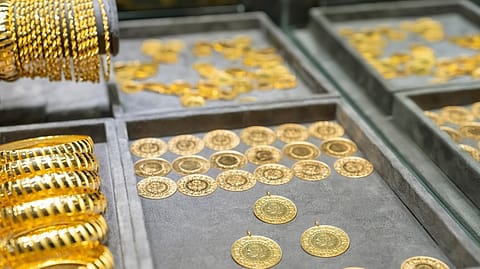
Domestic gold prices have shown a marginal decline across major Indian cities, with both 24-karat and 22-karat gold rates easing on Monday. | Credits: Bermek
Gold prices in India declined marginally on Monday (October 12) while silver also edged lower, as investors assessed geopolitical developments, currency movements, and expectations around the US Federal Reserve’s interest-rate trajectory. Despite the dip, analysts expect domestic bullion prices to trade in a range with a slightly positive bias next week, supported by a weakening rupee and persistent investment demand.
US President Donald Trump’s remarks that Washington was considering joining Saudi Arabia in military action against Iran-backed Houthi rebels have added to geopolitical uncertainty, according to media reports. Developments in the region remain a key factor for precious metals, which tend to attract safe-haven demand during periods of heightened global risk.
China’s gold buying supports investment demand
Central bank purchases remain another important driver of gold prices. The People’s Bank of China added around 23 tonnes of gold to its reserves in September, marking its biggest monthly purchase in nearly three years, according to data from the State Administration of Foreign Exchange.
The purchase extended China’s gold-buying streak to its longest since at least 2015, signalling continued official-sector demand for the precious metal. Sustained central bank buying can support gold prices by strengthening demand and diversifying reserves away from traditional assets.
However, domestic gold prices have shown a marginal decline across major Indian cities, with both 24-karat and 22-karat gold rates easing on Monday. Silver prices also fell in the domestic bullion market.
Rupee weakness, global cues to determine price direction
Currency movements are expected to play a crucial role in determining domestic bullion prices. A weaker rupee makes dollar-denominated gold more expensive for Indian buyers, potentially cushioning local prices against declines in international markets.
Analysts expect gold and silver to trade within a range, with a slightly positive bias next week. Inflation data from India, China, and the US will be closely watched for clues on the outlook for interest rates and investment demand.
China’s trade data and speeches by Federal Reserve officials will also be monitored for indications of the US central bank’s next policy move. Any shift in expectations around the timing of interest-rate changes could influence the dollar, bond yields and the appeal of non-yielding assets such as gold.
Gold futures gain nearly 1% last week
On the Multi Commodity Exchange (MCX), gold futures for December delivery rose by ₹1,109, or nearly 1%, last week to settle at around ₹1.51 lakh per 10 grams. Silver futures, however, ended the week marginally lower, declining by ₹122 to ₹2.25 lakh per kilogram.
The divergent weekly performance highlights the role of shifting investor sentiment and demand patterns across precious metals.
Going forward, the interplay of currency movements, US interest-rate expectations, geopolitical developments and central bank purchases is likely to determine whether bullion extends its recent recovery or remains range-bound. While a weaker rupee and geopolitical risks could lend support to domestic prices, inflation readings and signals from the Federal Reserve may trigger fresh volatility.
Follow Fortune India
NEXT STORY