New MDR might impact small merchants operating on tight margins
/ 2 min read
Short runway to explain changes to merchants a concern
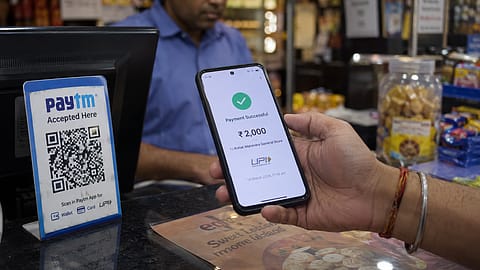
Representational Image
Industry experts said the new merchant discount rate (MDR) framework announced by the National Payments Corporation of India (NPCI) for select UPI (Person-to-Merchant) transactions might hurt small merchants operating on tight margins.
Kunal Jhunjhunwala, founder of Airpay, an integrated omni-channel financial services platform and payment gateway, said larger businesses will likely absorb the 0.4% charge with little friction, but merchants operating on tight margins could feel the impact.
“Larger businesses will likely absorb this 0.4% charge with little friction, but for merchants operating on tight margins, even a small percentage can change how they think about accepting digital payments.”
“The bigger challenge, though, is timing. Fintechs now have roughly a month to explain the new cost to merchants, help them get comfortable with it, and make the backend changes needed to support it. That's a short runway for a change with this much reach,” he told Fortune India.
The RBI, meanwhile, said the introduction of MDR on large-value UPI transactions above ₹2,000 was an important step towards strengthening the long-term sustainability of India's digital payments ecosystem.
The central bank said a fair and appropriate distribution of MDR across ecosystem participants would support continued investment in technology, infrastructure and acceptance networks, helping widen UPI acceptance and deepen the customer base.
Importantly, all UPI transactions, including P2P and P2M, will remain free for users, the RBI said. P2M UPI transactions below ₹2,000 will also continue to remain free for merchants, while MDR may be levied on merchants for eligible transactions above the threshold.
The MDR will be shared among payment ecosystem participants, including banks, payment service providers and UPI application providers.
Payments Council of India Managing Director and CEO Vishwas Patel said sustainability must not come at the cost of financial inclusion.
“The continued zero-MDR protection for eligible small and micro merchants, along with support for expanding digital acceptance in Tier 3–6 centres, will help preserve UPI’s accessibility,” he said in a statement to Fortune India.
“The UPI ecosystem needs a viable economic foundation to support continued investment and innovation, while ensuring that consumers and small merchants continue to benefit from affordable digital payments,” Patel added.
{{#most-powerful-women-snapshot-individual.slug}} {{/most-powerful-women-snapshot-individual.slug}} {{^most-powerful-women-snapshot-individual.slug}} {{/most-powerful-women-snapshot-individual.slug}} {{#showRanking}} {{current-rank}} {{/showRanking}} {{#photo.0.url}}
{{name}}
“The continued growth of UPI requires banks, fintech companies, payment aggregators and other ecosystem participants to make sustained investments in infrastructure, cybersecurity, fraud prevention, technology and customer service,” Patel said.
“The introduction of 0.4% MDR on P2M transactions above ₹2,000, with a ₹300 cap on transactions of ₹75,000 and above, is an important step towards a viable economic model while keeping UPI free for consumers,” Patel added.
Jhunjhunwala said the more important question now is whether that revenue is shared fairly across all the players involved.
“Fintechs, in particular, have driven digital payments deep into the merchant base, often in segments banks found harder to reach, and have invested heavily in the technology and infrastructure that made that possible. That contribution needs to be recognised in how the model is structured, not treated as a footnote.”
Follow Fortune India
NEXT STORY