Space-tech startups set record, raise $200 million across 53 rounds in 2025, says Tracxn Report
Tracxn data shows India’s private SpaceTech ecosystem surging on policy reforms, with seed and late-stage funding booming and Bengaluru, Hyderabad and Chennai emerging as key hubs.
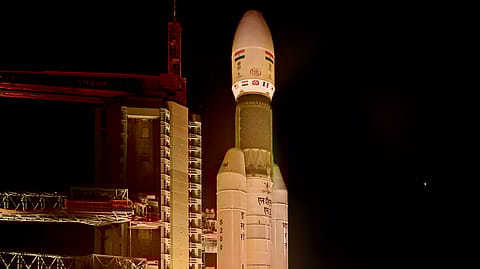
India’s space-tech start-ups have raised $ 200 million across 53 rounds in 2025, with the momentum continuing in 2026, the latest data analysed by Tracxn, the global market intelligence platform says. The funding in Indian space-tech was just $43 million across 12 rounds five years ago (in 2021).
A record five funding rounds—Skyroot Aerospace ($50 million Series C), Digantara ($50 million Series B), EtherealX ($21 million Series A), Bellatrix Aerospace ($20 million Series A), and AgniKul Cosmos ($17 million Series C)—collectively contributed $158 million, accounting for more than half of the capital raised across 2025 and 2026, the data compiled by Tracxn shows.
“Seed-stage funding increased from $7 million in 2022 to $62 million in 2025, while late-stage funding emerged for the first time, reaching $17 million in 2025 and $53 million in 2026 YTD. The investor base has also expanded from domestic venture capital firms and angel investors to sovereign wealth funds and global institutional investors”, the analysis indicates.
The India SpaceTech report, a comprehensive analysis of India’s private SpaceTech ecosystem released by Tracxn maps $871 maillino raised across 241 funding rounds through July 2026, covering companies across launch vehicles, satellite manufacturing, propulsion systems, space situational awareness, earth observation, and downstream analytics.
The ecosystem spans 285 companies, of which 274 remain active and 72 have received institutional equity funding, across launch vehicles, satellite manufacturing, propulsion systems, space situational awareness, earth observation, and downstream analytics. The central finding is that India's private SpaceTech ecosystem has been shaped by policy reforms, with government-led regulatory changes enabling private participation, attracting institutional capital, and supporting the emergence of India's first SpaceTech unicorn and privately developed orbital launch vehicle.
The top 10 funded companies have collectively raised more than $548 million, led by Skyroot Aerospace ($150 million), Pixxel ($96 million), AgniKul Cosmos ($76 million), Digantara ($67 million), and Bellatrix Aerospace ($34 million). Skyroot became India's first SpaceTech unicorn following its $50 million Series C in May 2026, while Pixxel, AgniKul Cosmos, and Digantara have also attracted significant funding.
Bengaluru leads with $495 million across 106 rounds, followed by Hyderabad ($205 million) and Chennai ($80 million). Together, these three cities account for the majority of equity funding raised by India's private SpaceTech ecosystem, the report says.