Don't see US acting against tech companies based on their domicile: TCS
/ 2 min read
TCS chief executive and managing director K Krithivasan said companies are "deeply ingrained" in the US' technology ecosystem and provide an important service.
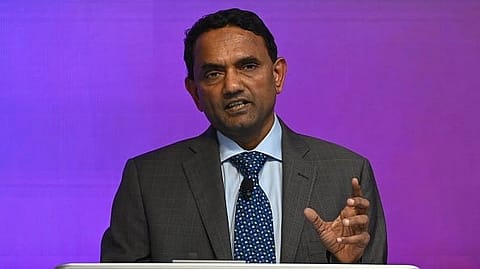
K Krithivasan, CEO and MD, TCS. | Credits: Getty Images
India's largest IT services company TCS feels that the US is unlikely to target tech companies based on their domicile and actions like last week's decision to suspend a green card application programme are driven by local sensitivities around jobs.
TCS chief executive and managing director K Krithivasan said companies are "deeply ingrained" in the US' technology ecosystem and provide an important service.
"I do not think the governments will really look at it from a domicile perspective. I think what the governments have been looking at is from an employment perspective," Krithivasan said.
Sensitivities around local job creation may be leading the governments to take actions like the one against the eight companies including TCS, Krithivasan said, stressing that the last week's decision has no material impact for the largest Indian IT services company.
TCS, which has been sending staff to the US when clients demand so, applied for only 10 or so green cards last year, he said, adding that the overall H1-B visa applications were less than 300.
Many of the H1-B applications consisted of people already in the US, he said, making it clear that there was no fresh employee sent to the country from India.
When quizzed about the mid-term polls in November and how the company looks at it, Krithivasan said TCS has a long-term strategy in the US, its biggest market by revenues, and the election outcome will not lead to any change in it.
As part of the efforts to be involved in every geography that it operates in, the TCS focus is on local hires, he said, adding that over half of the over 30,000 people it employs in the US are locals.
To a question on whether the promise to add another 15,000 people in the US over the next five years spelt out earlier involves adding only US citizens, its chief operating officer Arathi Subramanian said the company hires diverse talent who fulfil the skill requirements but made it clear that nationality of a person is not important.
"We have this deep experience of integrating into the geography and benefit from the diversity," she said, conceding that there may be people of Indian origin, including those born in the US or who have migrated earlier.
After the US suspended eight tech firms, including prominent Indian ones, from a key green card programme, industry body Nasscom said immigration and skilled talent mobility are "two distinct issues" that should not be viewed through the same lens.
{{#most-powerful-women-snapshot-individual.slug}} {{/most-powerful-women-snapshot-individual.slug}} {{^most-powerful-women-snapshot-individual.slug}} {{/most-powerful-women-snapshot-individual.slug}} {{#showRanking}} {{current-rank}} {{/showRanking}} {{#photo.0.url}}
{{name}}
The latest action comes amid mounting challenges for Indian IT companies in the US, including tighter scrutiny of work visas and higher costs for H-1B applicants. The latest development in the US -- the biggest market for the USD 300-billion Indian IT industry -- adds to uncertainty for tech outsourcers that rely on the cross-border movement of skilled professionals.
Follow Fortune India
NEXT STORY