Elon Musk came with the vision; his executives came with the spreadsheet, Here's how SpaceX's first earnings call went
/ 3 min read
Musk sketches a trillion‑dollar future as Shotwell and Johnsen ground investors in launch cadence, Starlink metrics and AI infrastructure
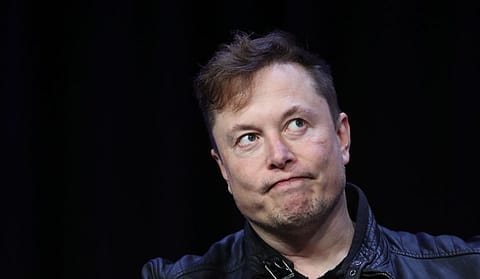
Credits: Getty Images
SpaceX’s first earnings call as a public company often felt like two conversations unfolding at once.
While CEO Elon Musk painted a future of Moon factories, daily Starship launches, AI supercomputing and a trillion-dollar business, President and COO Gwynne Shotwell and CFO Bret Johnsen repeatedly steered analysts through subscriber growth, government contracts, capital expenditure and return on investment.
The result was an earnings call that offered investors both Musk’s long-term vision and the operational roadmap his leadership team believes will get the company there.
Starship: “One flight a day” and factories on the Moon
Musk opened the call by calling Starship “a ridiculously profound difference” from today’s launch capabilities. “Right now we deliver… roughly 2,500 tons a year to orbit via Falcon,” he said. “With Starship… our aspirations… are to deliver well over 1 million tons to orbit per year, and probably ultimately 10 million tons per year.”
He said SpaceX could “possibly catch the ship as soon as the next flight,” attempt to catch both stages this year and, “probably a year from now, we will be doing at least one flight a day, possibly more.”
Shotwell, meanwhile, focused on what SpaceX has already achieved. The company completed 78 launches and delivered 1,041 tons of payload to orbit in the first half of the year while reaching “our highest Falcon cadence” and standing “on the precipice of operationalizing Starship.”
The contrast surfaced again during Morgan Stanley’s question on robotics. Shotwell initially spoke about AI-powered robotics dramatically increasing demand for connectivity. Musk jumped in.
“You can think of our satellites as being robots,” he said.
And then the answer quickly expanded beyond satellites. “We are going to land a lot of tonnage on the Moon. We’re going to build the factories on the Moon,” Musk said, adding that humanity could eventually scale toward a “Kardashev 2 scale civilization.”
As Musk wrapped up, Shotwell smiled and asked, “Did that get that for you, Adam? Maybe he’s done.”
Starlink: “People are really underestimating Starlink”
Musk argued investors still don’t fully appreciate Starlink’s opportunity. “I think people are really underestimating Starlink here. This is a big deal,” he said. “It’s not out of the question that at some point, Starlink will deliver a majority of the world’s internet… It’s less than 10 years.”
{{#most-powerful-women-snapshot-individual.slug}} {{/most-powerful-women-snapshot-individual.slug}} {{^most-powerful-women-snapshot-individual.slug}} {{/most-powerful-women-snapshot-individual.slug}} {{#showRanking}} {{current-rank}} {{/showRanking}} {{#photo.0.url}}
{{name}}
Shotwell followed with the numbers behind that ambition. Starlink added more than 1.7 million subscribers during the quarter, its best quarter of customer additions to date, while holding average revenue per user steady at $66 a month. The constellation now has roughly 10,200 operational satellites, with about 9,600 broadband satellites delivering roughly 800 terabits per second of downlink capacity.
She also pointed to expanding enterprise and government demand, citing more than $6 billion in U.S. government contracts during the quarter and partnerships with American Airlines, Southwest, Virgin Atlantic, Iberia and Aer Lingus.
“We believe revenue from these markets have the potential to reach a scale at least comparable but likely exceed our consumer business,” Shotwell said.
Musk took the idea one step further. “I would expect enterprise revenue to substantially exceed consumer revenue.”
AI: From 10 GW to 20 GW
AI emerged as another area where Musk’s ambitions stretched beyond analysts’ questions.
Johnsen said SpaceX ended the quarter with 1.4 gigawatts of compute capacity and expects to finish the year with more than two gigawatts. AI infrastructure accounted for $15.8 billion of the company’s $18.4 billion quarterly capital expenditure, while new cloud services agreements were generating “less than a one-year payback.”
When an analyst asked whether the company had line of sight to “closer to 10 gigawatts” of compute by the end of 2027, Musk immediately raised the target. “Our tentative target is to actually have 20 gigawatts at the power and cooling level online by the end of next year,” he said, adding that SpaceX would “probably have… something close to 15 gigawatts” even if some projects slipped.
He also said the company had decided to build “exclusively on Nvidia” because it believes the Vera Rubin architecture is “the best AI computer.”
The trillion-dollar ambition
Johnsen closed one answer by explaining why SpaceX believes it can reach “$100 billion of ARR” by the end of the year, pointing to momentum across launch services, Starlink and AI cloud infrastructure.
Musk immediately extended the timeline further into the future. “Our internal projections for reaching $1 trillion in revenue… have moved up from 2031 to 2030,” he said. “There’s a non-zero chance of that being in 2029.”
By the end of the call, investors had heard detailed updates on subscriber growth, launch cadence, AI infrastructure, margins and capital allocation.
They had also heard about Starlink carrying most of the world’s internet traffic, robots building factories on the Moon and a company that believes a trillion dollars in annual revenue could arrive sooner than expected.
Follow Fortune India
NEXT STORY