KPMG suggests Indian businesses to strengthen cyber defences amid rapid AI adoption
/ 3 min read
Legacy technology infrastructure presents persistent cybersecurity challenges amid rapid AI adoption.
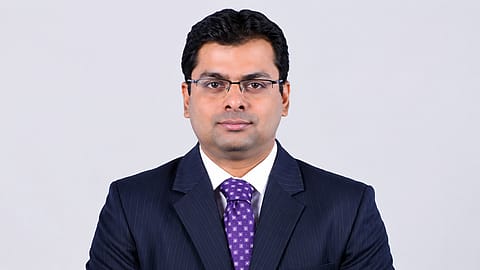
Purushothaman KG, National AI Leader and Head – Technology Transformation, KPMG India. | Credits: KPMG India
Cybersecurity threats are not limited to the IT infrastructure of Indian companies but can also severely affect the operational technology (OT) that powers their manufacturing operations, warns Purushothaman KG, National AI Leader and Head – Technology Transformation, KPMG India.
Traditional technology systems built on legacy architecture are vulnerable, and this has been proven time and again over the last one-and-a-half to two years. The recent incident involving the PHP vulnerability is a case in point, he points out.
In an interaction with Fortune India, Purushothaman said several traditional systems that rely on software are being impacted.
“Firstly, every organisation has to realise that its architecture needs to stand the test of time and be scalable enough to accommodate technologies like AI and the way they are being implemented. An important guardrail, a new concept being discussed in the AI world, is to create the right harness that safeguards the organisation against various threats. This could involve policies, revisiting the architecture, identifying vulnerable models, examining how they are being used, and addressing data privacy issues and PII (personally identifiable information). How strong the harness you build is very critical,” he said.
Stating that India's Digital Personal Data Protection (DPDP) Rules are very comprehensive, he said the challenge lies in moving away from traditional thinking and implementing them properly.
“We have to be open enough to conduct an assessment to see whether any of the existing databases or architecture contain information that violates any of these principles. Companies should not look at this just as an ordinary compliance exercise,” he said.
According to Purushothaman, the threat is real, and organisations have to revisit whether their architecture is scalable enough to withstand such an impact.
“Even if they are using generative AI in some areas, they are still opening up their IT infrastructure to the outside environment. So they have to secure it. Even a small application that you develop will have packages that could be vulnerable. So you need to be very careful when implementing some of these guardrails. Where do you host the models? Is it on a cloud infrastructure or a private cloud infrastructure? Which data centre is being used? How secure is the data centre infrastructure? Is it a Tier 3 or Tier 4 infrastructure? These kinds of things are very important,” he explained.
The threat, however, is not slowing down AI adoption among Indian companies, he said.
“The pace at which AI is going to proliferate is only going to increase. Since October 2020, globally, 149 models have been released by frontier model companies, and many of them are open source. Chinese models are also easily available,” Purushothaman said.
“Our CEO survey clearly says that more than 73% of Indian CEOs want to use AI. All of them want to run it not as a separate project but embed it as part of their digital journey. While using AI, are they following security by design? Are they putting guardrails in place? Are they deploying all the AI-related security scanners? Is the harness being used to access the models secure? These are the things every company should do as it starts its AI transformation journey,” he added.
{{#most-powerful-women-snapshot-individual.slug}} {{/most-powerful-women-snapshot-individual.slug}} {{^most-powerful-women-snapshot-individual.slug}} {{/most-powerful-women-snapshot-individual.slug}} {{#showRanking}} {{current-rank}} {{/showRanking}} {{#photo.0.url}}
{{name}}
Purushothaman also said the risk is uniform, whether in India or globally. Regulations are also, to a large extent, becoming aligned when it comes to security infrastructure.
“From a compliance requirement perspective, we are very close to Europe and, in many cases, we are also very robust and proactive,” he said.
Follow Fortune India
NEXT STORY