Meta’s legal battles refuse to let up, from US courtrooms to scrutiny in India
/ 3 min read
Costly court defeats and sweeping teen-safety mandates in the US, coupled with rising regulatory heat in India, are turning Meta’s legal woes into a global headache for the social media giant.
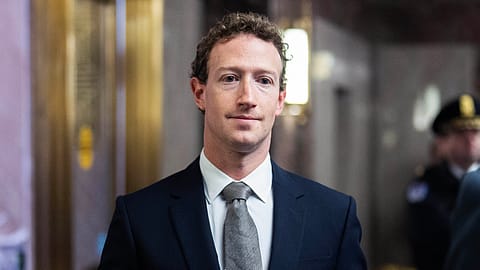
Mark Zuckerberg, Meta CEO | Credits: Getty Images
Meta Platforms’ legal troubles are proving to be an increasingly expensive affair.
A New Mexico state court has ordered the social media giant to pay $567 million into a teen mental health fund and implement sweeping changes to how Facebook and Instagram operate for young users. The latest order comes on top of a $375 million jury verdict handed down earlier this year, taking Meta’s total liability in the case to $942 million.
The ruling is the latest in a string of legal setbacks for the company, which has spent the past several years battling lawsuits and regulatory action over youth safety, privacy, competition, and content moderation. This time, however, the legal pressure is also beginning to show up on Meta’s balance sheet.
In its second-quarter earnings, Meta disclosed that it had recorded $2.4 billion in legal charges, contributing to a sharp rise in expenses during the quarter. Total costs and expenses climbed 55% year-on-year to $42.03 billion, while net profit fell 14% to $15.85 billion, despite revenue rising 28% to $60.8 billion. The company also raised the lower end of its full-year expense guidance to reflect the legal charge. Analysts said the sizeable legal provision was one of the biggest factors weighing on the company’s quarterly profitability.
The New Mexico case was brought by Attorney General Raúl Torrez, who accused Meta of designing Facebook and Instagram in ways that encouraged excessive use among teenagers while failing to adequately protect minors from sexual exploitation.
Judge Bryan Biedscheid ruled that Meta had created a “public nuisance” by harming children’s wellbeing. According to foreign media reports, the court found that the company’s platform design contributed to risks faced by young users and ordered Meta to introduce stronger safeguards.
Besides the financial penalty, the court directed the company to implement a series of product changes, including limits on notifications and usage for minors, stronger restrictions on interactions between adults and young users, and additional safeguards around AI chatbot features used by children, according to foreign media reports.
Meta has said it will challenge the ruling.
“We will appeal this decision,” the company said in a statement. Meta added that it has “invested billions of dollars to help keep teens safe online” and argued that parts of the court’s order are “technologically infeasible” and conflict with legal protections available to internet platforms under US law.
Legal experts quoted by foreign media said the judgment is significant because it goes beyond awarding damages and instead compels Meta to change aspects of how its platforms are designed for young users. The outcome could influence similar lawsuits pending against the company elsewhere in the United States.
India adds to the scrutiny
The latest courtroom setback comes as Meta is also facing increased regulatory attention in India over content moderation and platform safety.
{{#most-powerful-women-snapshot-individual.slug}} {{/most-powerful-women-snapshot-individual.slug}} {{^most-powerful-women-snapshot-individual.slug}} {{/most-powerful-women-snapshot-individual.slug}} {{#showRanking}} {{current-rank}} {{/showRanking}} {{#photo.0.url}}
{{name}}
Earlier this week, Meta’s Chief Global Affairs Officer Joel Kaplan apologised to Union IT Minister Ashwini Vaishnaw after Facebook mistakenly restricted a post by Prime Minister Narendra Modi.
“I apologised to the minister on behalf of Meta for the error restricting PM Modi’s post,” Kaplan said, with the company attributing the incident to an operational error.
The apology followed discussions between Meta executives and senior government officials, during which authorities also raised concerns over child sexual abuse material (CSAM), deepfake content and other operational lapses on the company’s platforms, according to Reuters and local media reports.
The meeting came after the Indian government sought an explanation from Meta over advertisements promoting child sexual abuse material on Instagram. The government also flagged concerns around deepfake content and online safety, adding to the growing scrutiny of large social media platforms operating in the country.
NEXT STORY