Nothing to launch its first AI-native product in December; Carl Pei says device will not have a screen
/ 3 min read
Nothing to Unveil Screen-Free AI Tool in December, Aiming to Revolutionize Productivity
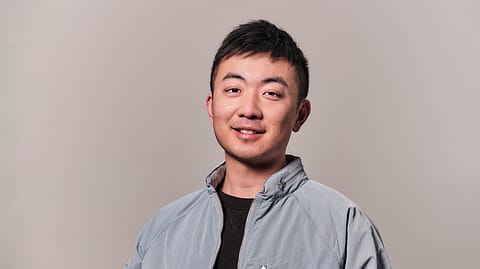
Carl Pei, CEO of Nothing
Nothing is set to launch its first AI-native product in December 2026, CEO Carl Pei announced in a post on X on November 4. The upcoming product will be a screen-free device designed to make artificial intelligence more useful in everyday workflows. Pei said the product is being built as a dedicated tool rather than an application, although he did not reveal its name, design, pricing or specific features.
“Our first AI-native product ships next month. It’s a tool, but one built with the personality and care that have come to define a Nothing product. It has no new screen, and it couldn’t have been an app,” Pei wrote.
The announcement comes as Nothing looks to expand beyond smartphones and audio products into AI-powered hardware. The company has been discussing its plans to build AI-native devices and an operating system designed around artificial intelligence.
The teaser offers little information about the device’s form factor. However, Pei’s accompanying post, titled ‘Toolmakers’, provides some insight into the thinking behind the product and Nothing’s broader AI strategy.
Carl Pei says AI’s next big opportunity lies in productivity
Pei believes the industry is currently focusing too much on finding a single device that could become the equivalent of the iPhone for artificial intelligence. He pointed to products such as AI pendants, pins, smart glasses and companion devices that companies are developing to bring AI into everyday life. “The whole industry is hunting for its iPhone moment: the pendant, the pin, the glasses, the companion, some magical consumer device that makes AI part of everyone’s life. I admire the boldness, but I read this moment differently,” he wrote.
According to Pei, the adoption of AI will follow a trajectory similar to that of personal computers and smartphones, where workplace applications helped drive initial adoption before the technology became part of everyday consumer life.
He argued that personal computers first became useful through tools such as spreadsheets and word processors, while smartphones gained traction through practical applications before becoming central to entertainment and communication. “Product-market fit for AI will come in productivity first, in the tools people rely on to get real things done, and that’s where the real opportunity is today,” Pei wrote.
He added that the eventual AI equivalent of the iPhone could still be a few years away and would emerge from the development of tools that people use regularly.
A key part of Pei’s argument is what he describes as the ‘context gap’ in existing AI systems. While AI models have become increasingly capable, they often lack access to the information and context needed to perform tasks effectively. He said that even when users connect their inboxes, calendars and messaging platforms to AI agents, important information from everyday interactions can still be missed.
“Think about the last time someone said something worth keeping: an idea over coffee, a throwaway comment that unblocks your whole week. What did you do? ‘Hold on, let me write that down.’ Out comes the phone, and by the time you look up, the moment has moved on without you,” he wrote.
“The intelligence is already here, and the context is what’s missing. Close it, and everything AI can already do gets dramatically more useful.”
{{#most-powerful-women-snapshot-individual.slug}} {{/most-powerful-women-snapshot-individual.slug}} {{^most-powerful-women-snapshot-individual.slug}} {{/most-powerful-women-snapshot-individual.slug}} {{#showRanking}} {{current-rank}} {{/showRanking}} {{#photo.0.url}}
{{name}}
Pei believes the next generation of AI tools will need to move beyond chat interfaces and become more proactive. Instead of requiring users to provide instructions for every task, these tools could handle routine work and allow people to focus on creative and strategic activities. “Today, you work with your AI. Tomorrow, it will work for you,” he said, arguing that AI could eventually change how individuals collaborate with each other, how organisations interact with people and how humans work alongside intelligent agents.
For Nothing, the December launch will be its first step towards translating this approach into a dedicated hardware product. The company has not yet disclosed whether the device will be a wearable, an audio product or another category of hardware.
Nothing had previously outlined plans to develop AI-native devices alongside an operating system designed around AI. The upcoming product will be its first concrete offering under that strategy. The launch also comes amid growing interest in dedicated AI hardware. Products such as the Humane AI Pin and Friend AI pendant have attempted to bring AI assistants beyond smartphones, while other technology companies are exploring smart glasses and voice-enabled devices.
However, Pei cautioned against expecting one device to immediately transform the AI industry. “Looking for the iPhone of AI today is a dead end,” he wrote.
Nothing is expected to share more details about its first AI-native product ahead of its December launch.
Follow Fortune India
NEXT STORY