Semicon India 2026: India works to cut customs, regulatory delays for semiconductor industry
/ 2 min read
Around 85% of cargo does not undergo documentary assessment or physical examination, Department of Revenue official Anupam Prakash said while the figure rises above 95% in certain cases under the trusted-trader framework and can cross 99% in some others
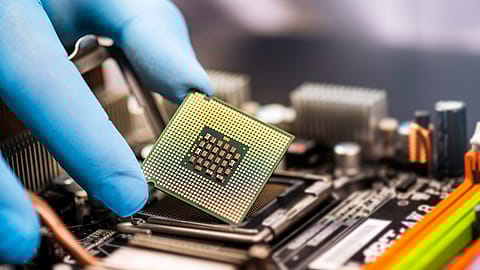
The use of AI-enabled scanning could allow consignments where the images do not indicate a risk to be cleared without additional intervention. (Representative image) | Credits: Getty Images
The government is working to reduce the regulatory and customs bottlenecks faced by semiconductor companies as India builds out its domestic chip manufacturing ecosystem, officials said at Semicon India 2026 in New Delhi.
Anupam Prakash, Joint Secretary (Customs), Department of Revenue, said a large majority of import consignments are already being cleared through facilitation mechanisms. Around 85% of cargo does not undergo documentary assessment or physical examination, he said, while the figure rises above 95% in certain cases under the trusted-trader framework and can cross 99% in some others. “If we see the data around 85% of the cargo is facilitated,” Prakash said.
He said companies could further reduce clearance times by filing an advance and complete Bill of Entry. Customs has also introduced automatic clearance for certain consignments where regulatory requirements from other government agencies have to be met, he said.
Prakash added that container scanning would be rolled out in phases over the next two years. The use of AI-enabled scanning could allow consignments where the images do not indicate a risk to be cleared without additional intervention.
DPIIT, Commerce focus on easing regulatory burden
Dr. Sumeet Jarangl, Joint Secretary, DPIIT, said one challenge for semiconductor companies is that regulatory requirements are distributed across several government departments.
“The lack of understanding is not only in the private ecosystem, but also in the various government departments,” Jarangl said.
DPIIT is working on a mechanism to map the regulatory requirements and the departments responsible for them for specific components and products, he said. The move is intended to give semiconductor and other deep-tech companies greater clarity on the approvals applicable to their operations.
Manish Chadha, Joint Secretary, Department of Commerce, outlined changes to the SEZ framework, including revisions to land requirements and provisions governing domestic sales. He also said rules around foreign-exchange calculations had been changed for semiconductor manufacturing and services, including treatment of equipment supplied through leasing or similar arrangements.
Gujarat is also developing supporting infrastructure around its semiconductor manufacturing clusters. Neha Kumari, Mission Director, Gujarat State Electronics Mission, said a 200-bed hospital is being built at Dholera and is expected to be ready by December. A school is under construction, while accommodation facilities, a fire station, food court, residential and commercial developments and a hotel are also being developed.
Kaynes highlights approval turnaround
Raghu Panicker, CEO of Kaynes Semicon, said the company’s experience in Gujarat demonstrated the impact of direct coordination between industry and government departments.
{{#most-powerful-women-snapshot-individual.slug}} {{/most-powerful-women-snapshot-individual.slug}} {{^most-powerful-women-snapshot-individual.slug}} {{/most-powerful-women-snapshot-individual.slug}} {{#showRanking}} {{current-rank}} {{/showRanking}} {{#photo.0.url}}
{{name}}
Kaynes began shipping its first samples within 10 months of starting construction at its Sanand facility, he said. The company also obtained a DGFT licence in two days, despite initially expecting the process to take several weeks.
Panicker cited several instances involving customs, equipment clearances, and local-level issues where government officials stepped in to resolve bottlenecks. “The perception changes once you start interacting with the government,” he said.
Follow Fortune India
NEXT STORY