US-China trade truce extended to January 2027 as Trump-Xi summit puts bigger deal in focus
/ 2 min read
Washington and Beijing extend the Busan Agreement by two months, with tariffs, rare earths, agricultural purchases and technology cooperation likely to dominate the Trump-Xi talks.
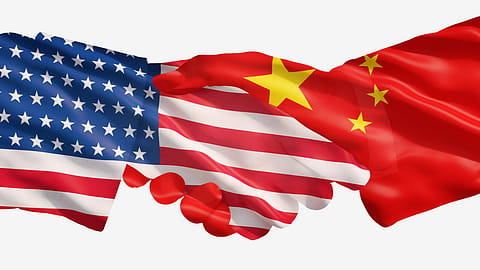
US President Donald Trump and Chinese President Xi Jinping as Washington and Beijing seek a broader economic deal after extending their trade truce to January 2027.
The US and China have agreed to extend their bilateral trade truce by two months to January 10, 2027, giving the world’s two largest economies more time to negotiate a broader economic agreement. The extension comes ahead of US President Donald Trump’s meeting with Chinese President Xi Jinping on Thursday, with businesses watching for greater clarity on tariffs, critical minerals and market access.
US Treasury Secretary Scott Bessent said Washington and Beijing had agreed to extend the “Busan Agreement”, which was due to expire on November 10. “That is going to be extended until 10 January to give us more time to see what we can do on the economic front,” Bessent said in an interview with Fox News on September 23.
US-China tariff truce began in Busan
The agreement was forged in October 2025 on the sidelines of the Asia-Pacific Economic Cooperation (APEC) Leaders’ Summit in Busan, South Korea. It effectively paused further tariff increases and retaliatory trade measures between the two countries.
Under the arrangement, Washington reduced its overall tariff on Chinese imports to 47% from around 57%. Beijing, meanwhile, agreed to restore rare-earth supplies and suspend additional export restrictions on critical minerals to the US. China also committed to buying 25 million tonnes of US soybeans and increasing purchases of other American agricultural products.
Bessent said his latest discussions with Chinese Vice Premier He Lifeng focused on whether Washington and Beijing could move beyond a series of smaller agreements towards a wider economic arrangement.
Soybeans, rare earths remain sticking points
Implementation of existing commitments remains an issue. According to Bessent, China is meeting its 25-million-tonne soybean purchase commitment but remains below the target of $17 billion in purchases of other US agricultural products. Washington has also raised concerns over delays in Chinese shipments of rare-earth materials covered by earlier agreements.
“We met today to see if we could do a bigger deal as opposed to just a series of smaller things,” Bessent said.
He added that Washington was open to either extending the current arrangement or pursuing a larger agreement. “We are fine with both, and we are going to do what is best for the American people,” he said.
In a post on X following the meeting, Bessent said Washington was seeking “meaningful commitments” covering American workers, farmers and businesses, while pursuing “strategic stability” based on “reciprocity and fairness”.
Xi arrived in the US on September 23, with Chinese state media saying he expected “fruitful results” from his meeting with Trump. The talks are expected to cover tariffs, agricultural purchases, financial services, artificial intelligence and broader economic cooperation.
Follow Fortune India
NEXT STORY