
Audi India mulling local production of electric car, aims to double market share in 3-5 years
ADVERTISEMENT
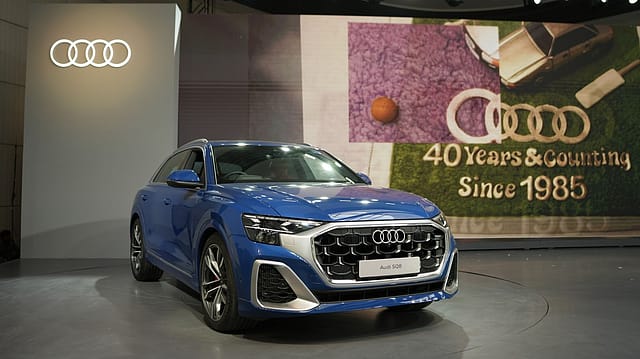
Audi India is considering local manufacturing of a battery electric vehicle (BEV), with the luxury carmaker betting on a three-pillar strategy to double its market share in the segment over the next three to five years to 15-16%, a top company executive said.
Audi India Brand Director Balbir Singh Dhillon outlined its strategy for India, centred on three key areas: customer centricity, new product introductions, and network expansion, to double its market share in the luxury car segment from around 8%.
The German automaker is also looking to leverage the proposed India-EU free trade agreement (FTA) to bring more models to India to test market demand, while expanding its dealership network, particularly in tier-II and tier-III cities.
"We are contemplating a locally made BEV electric car with a decision expected in the next couple of months," Dhillon said.
Elaborating, he said, "So we intend to double our market share in the next three to five years. Customer centricity, new products, and network expansion-put together, we believe should give us doubling of our market share in the next three to five years."
The proposed India-EU FTA could enable Audi to introduce more models in India at more competitive import duties and test their sales potential before considering local manufacturing, Dhillon said.
"FTA will help us bring more models to India for testing the volumes," he said.
Dhillon said the company would continue to rely on local manufacturing for its core portfolio, while imports could help expand the range of vehicles available to Indian customers.
He also pointed to the potential for the proposed EU-India free trade agreement (FTA) to create export opportunities for the wider Indian automotive industry.
"We will also get an opportunity to export the car, not Audi per se, but the Indian automotive industry, and you know we are opening up 95% of the markets on both sides..
Audi plans to focus most of its dealership network expansion on tier-II and tier-III cities going forward, including entering new towns and converting some existing facilities into new-car showrooms.
"So most of the development that we will do in the next year to increase our network will be in tier-two and tier-three cities. We will enter new towns...We will convert some of our facilities, which already are there, into new car showrooms," Dhillon said.