
CAFE 3 norms notified: Carmakers face 16.7% tighter CO₂ target at 78.9 g/km by FY32; lighter cars get more headroom
ADVERTISEMENT
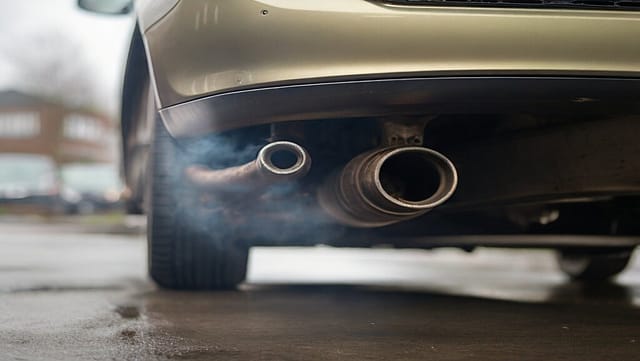
The government has notified the third phase of the Corporate Average Fuel Economy (CAFE-3) norms, tightening fuel-efficiency and carbon-emission requirements for passenger vehicles from April 1, 2027. The regulations will remain in force until March 31, 2032, setting progressively tighter fleet-average targets for carmakers.
To be sure, the new norms will apply to new Passenger Vehicles (PVs) manufactured or imported for sale in India. According to the ministry of power, the framework has been finalised as a technology-neutral and flexible regulatory regime following consultations with automobile manufacturers, industry associations, academia and other stakeholders.
Under the new framework, the annual average fuel-consumption benchmark will tighten from 3.996 litres per 100 km in FY2028 to 3.3273 litres per 100 km in FY2032, an improvement of around 16.7% over the five-year period. The corresponding CO₂ benchmark will decline from 94.76 grams per km to 78.90 grams per km.
The Ministry of Power said in a statement that the year-on-year tightening is aimed at driving "progressive improvements" in fuel economy.
Revised weight curve gives lighter cars more headroom
The final framework removes the separate 3 g/km concession for petrol cars weighing below 909 kg that featured in the earlier draft. However, the government has revised the underlying target curve, flattening it to create a more balanced, weight-sensitive framework.
The Ministry of Power said in a statement that the revised target line provides relatively softer targets for lighter vehicles, while requiring greater fuel-efficiency improvements from heavier vehicles. The reference weight has also been raised 13.6%, from 1,082 kg to 1,229 kg, reflecting the changing weight profile of India's passenger-vehicle fleet.
The framework has also expanded the list of recognised fuel-conservation technologies from four to 12. Carmakers can claim a concession of 1 g CO₂/km for each eligible technology, subject to a maximum of 9 g CO₂/km. The government has said the framework also promotes technologies such as solar-reflective paints, advanced glazing and high-efficiency air-conditioning to improve fuel efficiency.
EVs, hybrids and cleaner fuels get compliance benefits
Battery electric vehicles (BEVs), range-extended electric vehicles (REEVs), plug-in hybrid electric vehicles (PHEVs), strong hybrid electric vehicles (SHEVs) and flex-fuel vehicles will receive volume derogation factors, or “super credits”, in fleet-average calculations. BEVs and REEVs will receive a 3x compliance factor.
The Ministry of Power said in a statement that renewable and low-carbon fuels, including ethanol-blended petrol, biofuels and compressed biogas (CBG), will be recognised through a Carbon Neutrality Factor (CNF), giving manufacturers another route to improve fleet-level CAFE performance.
Carmakers can meet their obligations through specified two-year and three-year compliance blocks. Manufacturers that outperform their targets can generate and carry forward credits, while those facing a shortfall can use eligible carry-forward provisions, trade credits with other manufacturers or purchase credits through the Bureau of Energy Efficiency's buyout mechanism.
The norms will also introduce reporting under both the Modified Indian Driving Cycle (MIDC) and the Worldwide Harmonized Light Vehicles Test Procedure (WLTP). The government said the dual approach will facilitate India's gradual transition towards globally harmonised vehicle-testing practices. Manufacturers with annual sales below 1,000 units will remain exempt from fleet-average obligations.
Industry welcomes pragmatic framework
Society of Indian Automobile Manufacturers (SIAM) President Shenu Agarwal welcomed the notification, saying CAFE-III provides a structured roadmap with aggressive annual targets for the next five years alongside a market-based compliance mechanism. He said the framework would help reduce fuel consumption from the new passenger-vehicle fleet while allowing the industry to pursue different technology pathways and provide consumers with multiple choices.
Agarwal also said the regulatory framework provides predictability for automakers to plan investments and accelerate innovation. He thanked the government for its detailed and transparent consultation process in framing the regulation.
Mahindra & Mahindra also welcomed the notification. Velusamy R, President – Automotive Business, Mahindra & Mahindra, said the framework strikes a balance between environmental requirements, industry feasibility and energy security.
“The targets are appropriately ambitious and provide a clear trajectory through 2031-32,” he said, welcoming the compliance blocks, technology credits, cleaner-fuel benefits and super credits for EVs and other advanced technologies.
Tata Motors Passenger Vehicles MD & CEO Shailesh Chandra said the CAFE-III framework was an important step towards cleaner and sustainable mobility.
“The continued recognition of zero-emission technologies reinforces the critical role of electrification in achieving India’s long-term decarbonisation objectives,” stated Chandra. He added that the clarity and predictability provided by the framework would enable the industry to plan investments, accelerate innovation and offer customers cleaner mobility solutions.
According to the ministry of power, the new framework combines tighter fleet-average targets with multiple technology incentives and credit-based compliance options, giving carmakers greater flexibility as they transition towards cleaner and more fuel-efficient vehicle portfolios.