
Govt notifies E100 flex-fuel rules, expands emission certification framework for ethanol vehicles
ADVERTISEMENT
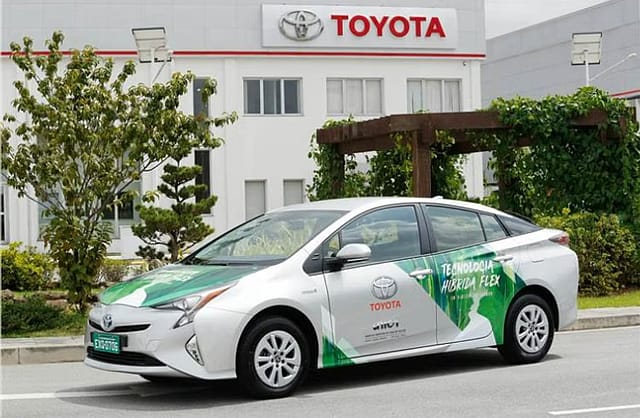
The government has notified amendments to the Central Motor Vehicles Rules (CMVR), 1989, to facilitate the adoption of flex-fuel vehicles capable of running on high-ethanol blends, including E85 and E100. The changes, announced by the Ministry of Road Transport and Highways (MoRTH) on Monday, update emission certification provisions and explicitly include E100 alongside E85, creating a clearer regulatory framework for compatible vehicles.
The notification comes as India seeks to reduce its dependence on imported crude oil by promoting domestically produced ethanol. However, the ministry has clarified that the new provisions do not make existing petrol vehicles compatible with higher ethanol blends or require owners to modify their vehicles.
E85 contains up to 85% ethanol by volume, while E100 consists predominantly of ethanol. Flex-fuel vehicles are engineered to operate on different petrol-ethanol mixtures within the range approved by the manufacturer.
E100 added to emission certification rules
Under the amended provisions, vehicles certified to run on E85, E100 or other approved high-ethanol fuels must comply with the emission and safety requirements applicable to their respective categories.
Flex-fuel technology, already used in countries such as Brazil and the United States, relies on specially designed fuel-system components, compatible materials and engine controls that adjust operation according to fuel composition. The technology allows motorists to choose among approved fuel blends without requiring separate fuel tanks.
The regulatory change follows the government’s broader push towards ethanol blending, including the rollout of E20 petrol, which contains 20% ethanol and 80% petrol. In June 2026, Maruti Suzuki India introduced the Wagon R Flex Fuel, designed to operate on blends ranging from E20 to E100.
Existing petrol vehicles excluded from E85, E100
MoRTH has stressed that E85 and E100 are intended exclusively for vehicles specifically designed and certified to use them. Compatibility with E10 or E20 petrol does not establish suitability for higher ethanol concentrations.
The ministry has advised motorists to check their vehicle’s fuel-compatibility sticker and consult the manufacturer’s owner’s manual before selecting a fuel. The notification does not require existing vehicle owners to switch to higher ethanol blends or retrofit their vehicles.
The amendments also update biodiesel-related provisions and make technical corrections, with the rules taking effect from the date of publication in the Official Gazette.
Ethanol push targets oil imports and emissions
Greater use of domestically produced ethanol could reduce crude oil import dependence and help lower certain exhaust pollutants. The overall impact on greenhouse gas emissions, however, depends on the feedstock and production process used to manufacture ethanol.
The notification strengthens the regulatory basis for higher-ethanol fuels, while leaving adoption dependent on vehicle certification, fuel availability and consumer choice.