
Hyundai Motor India Q2 FY27 net profit falls 24% to ₹1,196 crore; revenue rises 18.5% to ₹20,696 crore
ADVERTISEMENT
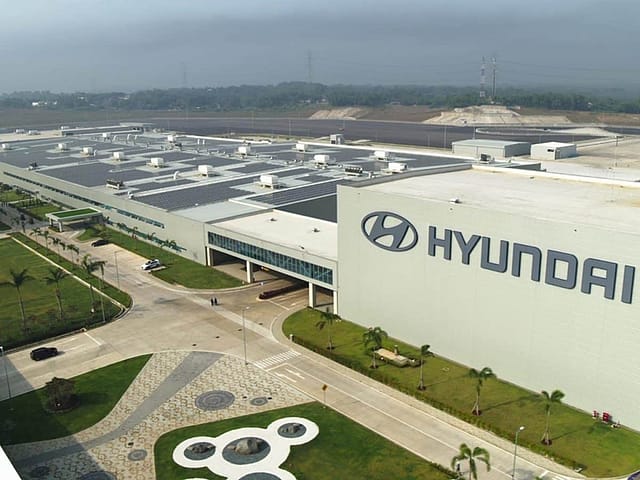
Hyundai Motor India reported a 23.9% year-on-year decline in consolidated net profit to ₹1,196.2 crore in the second quarter of FY27, even as revenue from operations rose 18.5% to ₹20,696.1 crore, crossing the ₹20,000 crore milestone for the first time since the company’s inception.
The automaker’s EBITDA fell to ₹1,974.5 crore in Q2 FY27 from ₹2,428.9 crore in the corresponding quarter last year. EBITDA margin contracted to 9.5% from 13.9%, although it improved sequentially from 9.3% in Q1 FY27. Net profit stood at ₹1,572.3 crore in Q2 FY26.
Hyundai attributed the pressure on profitability to elevated commodity costs. However, operating leverage, a healthier sales mix and cost-reduction initiatives helped the company improve its EBITDA margin sequentially.
The company recorded its highest-ever quarterly total sales of 219,072 units, up 15% year-on-year and 23% quarter-on-quarter. Domestic volumes grew 19% both year-on-year and sequentially, while rural penetration reached a record 26.6%. CNG vehicles accounted for a record 19.1% of the company’s sales during the quarter.
Exports grew 4% year-on-year and 38% sequentially despite geopolitical challenges, Hyundai said. The company’s export volumes include completely built units (CBUs) and completely knocked-down (CKD) units.
For the first half of FY27, consolidated revenue rose to ₹37,030.7 crore from ₹33,873.7 crore a year earlier. However, net profit declined to ₹2,084.8 crore from ₹2,941.5 crore, while EBITDA margin fell to 9.4% from 13.6%.
Hyundai prepares for mass-market EV launch
Commenting on the results, Managing Director and Chief Executive Officer Tarun Garg said Q2 FY27 was a milestone quarter for the company, driven by record volumes and quarterly revenue exceeding ₹20,000 crore for the first time. He added that elevated commodity costs had weighed on profitability.
“Looking ahead, we see H2 as a period of accelerated momentum for us,” Garg said, adding that the launch of the Bayon marked the beginning of Hyundai’s “golden product cycle”.
The company is also preparing to launch a dedicated mass-market electric vehicle in Q4 FY27. Garg said macroeconomic uncertainties and cost pressures remained, while Hyundai would focus on strengthening its position across key segments and delivering sustainable growth and profitability.
The performance of the second half will be crucial as Hyundai seeks to sustain its sales momentum, manage commodity-cost pressures and translate higher volumes into stronger earnings.