
India auto sales surge 21% to 23.44 million units in January-September 2026; Tata, Mahindra battle for PV market share: SIAM
ADVERTISEMENT
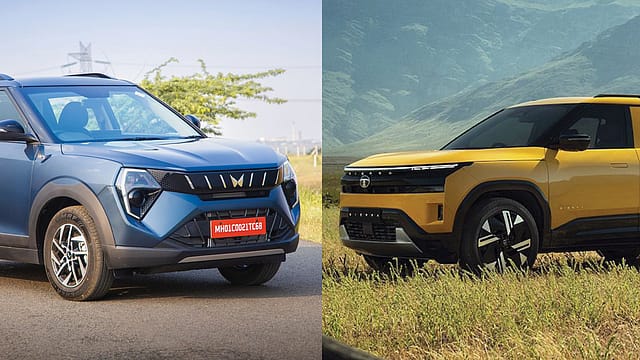
India’s automobile industry recorded a 21% year-on-year increase in domestic sales during January–September 2026, with total volumes across passenger vehicles, two-wheelers, three-wheelers and commercial vehicles reaching 23.44 million units, compared with 19.37 million units in the corresponding period last year, according to data shared by the Society of Indian Automobile Manufacturers (SIAM).
The domestic auto industry added around 4.07 million vehicles over the nine-month period, reflecting stronger demand following GST 2.0, improved affordability and sustained economic activity.
Passenger Vehicle (PV) sales increased 22.9% to 3.95 million units, while two-wheeler volumes rose 20.3% to 17.86 million units. Commercial vehicle sales climbed 22.1% to 0.90 million units, and three-wheeler volumes grew 26.4% to 0.73 million units, SIAM data showed.
To be sure, these figures are compiled from SIAM’s calendar-year and financial-year-period sales data. The industry body’s latest release also showed that all four segments recorded their highest-ever second-quarter sales in July–September 2026.
Tata, Mahindra intensify fight for second spot
The passenger vehicle market is witnessing a sharper contest beyond market leader Maruti Suzuki. An independent compilation of domestic dispatches puts Tata Motors at 5,75,583 units during January–September 2026, followed by Mahindra & Mahindra at 5,41,942 units and Hyundai Motor India at 4,71,724 units.
Notably, Tata’s volumes increased 40.3% year-on-year (YoY), compared with 21.3% growth for Mahindra and 10.9% for Hyundai, intensifying competition for the second position.
According to industry players, the broader shift towards utility vehicles remains central to the market’s expansion. SIAM data show that utility vehicles accounted for 68% of passenger vehicle sales in the July–September quarter, with volumes rising 34.2% to 9,19,068 units. Passenger car sales grew 24.9% to 3,98,631 units, while van sales increased 15.3% to 42,988 units.
Scooters outpace motorcycles as freight demand supports CVs
Two-wheelers remain the largest segment by volume, accounting for the bulk of domestic automobile sales. Within the category, scooter sales grew 27.7% to 26,61,039 units during the September quarter, significantly outpacing motorcycle sales growth of 7.4% to 36,19,853 units. The divergence points to stronger scooter demand, even as motorcycles continue to account for the larger absolute volume.
Commercial vehicle sales rose 28.7% to 3,09,063 units in Q2 FY2026-27. Medium and heavy commercial vehicle sales grew 37% to 1,21,171 units, while light commercial vehicle sales increased 23.8% to 1,87,892 units. The performance reflects infrastructure spending, freight movement, fleet expansion and replacement demand. Three-wheelers also recorded 23.6% quarterly growth, with goods carrier sales expanding 33.8% to 39,913 units.
September sustains momentum; SIAM flags global risks
September passenger vehicle dispatches rose 21.8% to 4,54,574 units, while two-wheeler sales increased 13.5% to 24,63,103 units. Three-wheeler volumes climbed 16% to 98,162 units, indicating that demand remained broad-based towards the end of the third quarter.
Commenting on the latest performance, Shenu Agarwal, President, SIAM, said, “The Indian automotive industry delivered a strong performance in the first half of FY2026-27, following a robust second quarter and a strong September 2026.”
Agarwal cited improved affordability following GST 2.0, resilient rural and urban demand, healthy freight movement and infrastructure-led economic activity as key supports. SIAM expects festive demand, new product launches and fleet replacement to sustain growth in the second half, while warning that inflationary pressures, potential interest-rate increases and geopolitical uncertainty could weigh on the outlook.