
Volvo weighs plug-in hybrids for India, but 40% tax poses hurdle; plans one EV launch annually
ADVERTISEMENT
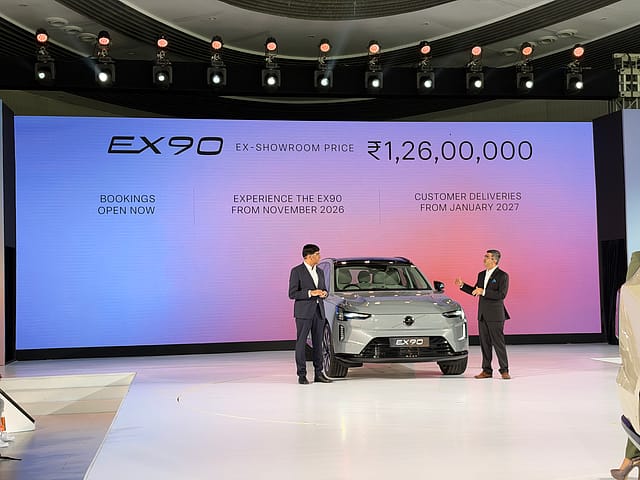
Volvo Car India is evaluating the introduction of plug-in hybrid electric vehicles (PHEVs) in the country, but the steep tax differential with pure electric vehicles remains a key obstacle, Managing Director Jyoti Malhotra said on Monday.
The Swedish luxury carmaker is assessing whether Indian customers would be willing to pay the premium associated with plug-in hybrids, even as it prepares to expand its all-electric portfolio with three new models over the next three years.
“The challenge is that Indian taxation is not conducive,” Malhotra told PTI on the sidelines of the launch of the company's flagship electric SUV, the EX90.
Battery electric vehicles attract a goods and services tax (GST) rate of 5%, while plug-in hybrids above the small-car category face a 40% GST rate. The 35-percentage-point gap puts PHEVs at a disadvantage against fully electric models.
Volvo targets one electric launch every year
Volvo currently sells the EX30 and EC40 electric models in India, alongside the XC60 and XC90 mild-hybrid SUVs. Its latest launch, the six-seat EX90, is priced at ₹1.26 crore (ex-showroom), with customer deliveries scheduled to begin in January 2027.
Built on the company's SPA2 platform, the EX90 expands Volvo's electric luxury offering as it looks to steadily increase the share of battery-powered vehicles in its portfolio. The ES90 electric sedan is expected to be the next model introduced in India.
“We will bring one electric car every year,” Malhotra said, declining to disclose the expected powertrain mix over the next three years.
Electric vehicles currently account for around 25% of Volvo's sales in India. However, supply-chain disruptions are affecting the availability of imported kits used for local assembly, increasing costs and delivery lead times.
Supply constraints may force price hikes
Malhotra said the disruptions had considerably affected sales volumes, although he declined to quantify the impact. Unpredictable deliveries have added to the challenges facing the luxury carmaker as it seeks to expand its presence in India.
The company has not raised prices since the first quarter of 2026, despite mounting cost pressures. However, Malhotra indicated that increases could become unavoidable during the festive season.
“We are getting very close to where we will be forced to pass this (higher cost) on to customers,” he said.
Brand building takes priority over volumes
Volvo is prioritising brand awareness and customer experience over near-term sales volumes and market-share gains, Malhotra said.
The strategy comes as the company balances electrification with the economics of operating in India's luxury vehicle market. While pure EVs remain central to its product expansion, the tax disadvantage and price premium associated with plug-in hybrids could influence the timing of their introduction.
For now, Volvo's immediate focus remains on expanding its electric line-up while managing supply constraints and rising costs.