
AI could reshape banking like liberalisation, digitalisation did: RBI Governor Sanjay Malhotra
ADVERTISEMENT
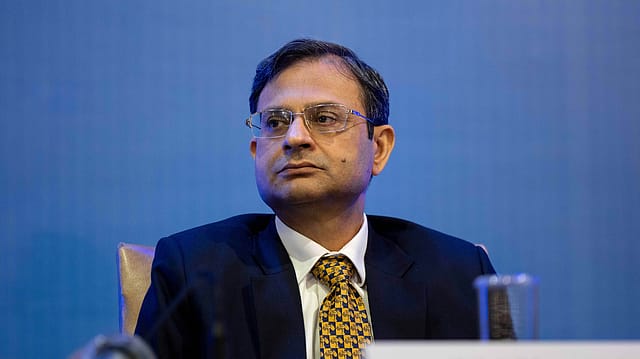
Artificial intelligence could have an impact on banking similar to what liberalisation did in the 1990s and digitalisation did in the 2010s, Reserve Bank of India Governor Sanjay Malhotra said at the FICCI FIBAC conference held today in Mumbai.
“It’s a shift in how we evaluate risk, serve customers, price capital, organise institutions. I’m happy to know many of the banks are already doing it or considering doing it. The only question now before us is whether you shape the AI journey or you let it shape you by default,” he said.
Malhotra said AI is different from earlier technological transformations because it can multiply intelligence. “We have had many technological transformations previously. We had the steam engine, it multiplied muscle power; electricity multiplied energy; computers multiplied calculations; the internet multiplied connectivity. But how this is different is that it actually multiplies intelligence,” he said.
India, he said, is in a strong position to leverage AI because of its public digital infrastructure. “We in India stand at a unique vantage point to leverage AI. We have the most advanced public digital infrastructure, whether it is Aadhaar, UPI, DigiLocker, ONDC. We are trying to build and improve and expand the Unified Lending Interface, the Account Aggregator. These are all public goods on top of which the private sector can build,” Malhotra said.
“AI has the potential to do for financial judgement what UPI did for financial transactions, that is, make it instant, granular and available to the last mile,” he said.
Malhotra said AI could help expand financial inclusion, but its deployment would also have to be handled carefully. "AI, well deployed, can close existing gaps in financial inclusion faster than any preceding technological innovation. Deployed carelessly, it can at the same time entrench new forms of exclusion and instability at a pace that regulators and banks may struggle to keep up with,” he said.
AI can change the economics of credit delivery
Malhotra said AI could change how banks assess borrowers, particularly those with limited formal financial histories.
“First, it changes the economics of credit delivery fundamentally. Traditional underwriting relies on financial history, precisely the data that is thin or absent for new-to-credit borrowers, for gig workers, for those underserved sections of our society because they do not have formal books,” he said.
“AI models on alternative data, which we have a lot of now, cash flows, GST filings, utility payment bills, digital platforms, can all extend the frontier of bankable India considerably,” Malhotra said.
AI could also help banks improve customer service, he said. “Secondly, AI allows banks to serve customers better. Customer centricity, experience, customer delight, is what everyone is now looking at and this has the scope to enable it,” he said.
“It is used to augment rather than merely to replace human judgement. A relationship manager assisted by an AI system that presents the right product, the right risk flag, can serve a higher number of customers more efficiently,” Malhotra said.
“Similarly, AI-assisted grievance resolution and personalised financial guidance can enhance the quality of customer service,” he said.
Malhotra also pointed to AI’s potential to make banking more accessible. “Third, and perhaps most important for a country of this size, AI has the potential to be a profoundly inclusive technology. Voice interfaces in Indian languages can simplify banking by removing the language barrier, for instance,” he said.
AI could help banks fight digital fraud
Malhotra said AI could also play a role in improving operational efficiency and tackling digital fraud. “There is scope. Some figures were given in the presentation. Forty-seven to 49% of operational costs vis-à-vis income need to be reduced, and AI can certainly help us in this regard,” he said.
“Fifth, it is AI and AI alone that can beat AI-delivered fraud. Fraud today moves at speeds of an API call. Rules-based fraud engines, however well-designed, are perpetually one step behind the fraudsters who adapt more frequently,” Malhotra said.
“It is only AI and machine learning models, which continuously learn from transaction patterns, that can identify anomalies in real time rather than after the loss,” he said.
Malhotra said banks would need to develop their own AI strategies rather than follow a single model. “While this list is only illustrative, we do not offer it as a mandate. Every bank’s playbook has to be its own. It has to be shaped by its customer base, its risk appetite, and its capacity to govern what it deploys,” he said.
He urged banks to consider where they stand in their AI adoption journey and what they can do to accelerate it. “You will obviously need to invest in technology, IT infrastructure, talent, skilling, reskilling. You’ll have to forge sustainable partnerships because you may not be able to do all of it on your own, and you will have to build the right governance structures,” he said.
“None of this will happen overnight and none of this will happen by accident. It will require a deliberate, driven strategy backed by sustained investment and, most importantly, a strong intent rather than a series of disconnected projects,” Malhotra said.