
APSEZ doubles Colombo terminal capacity to 3.2 million TEUs with $750 million investment
ADVERTISEMENT
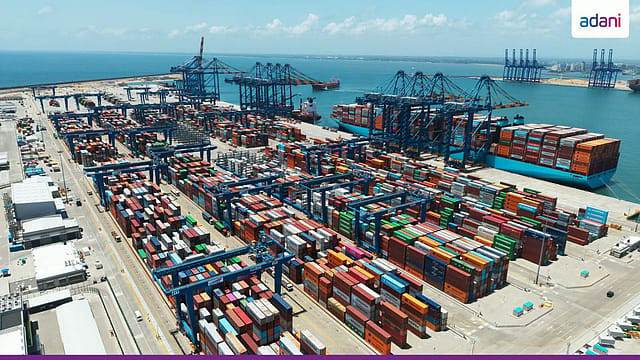
Adani Ports and Special Economic Zone (APSEZ) has doubled the capacity of its Colombo West International Terminal (CWIT) to 3.2 million twenty-foot equivalent units (TEUs) following a $750 million Phase II expansion, as Sri Lankan Prime Minister Dr Harini Amarasuriya inaugurated the expanded facility on October 1. The capacity has risen from 1.6 million TEUs, with CWIT now targeting nearly 25% of the Port of Colombo’s targeted 13 million TEU capacity by 2028.
The expanded terminal will be capable of simultaneously berthing three ultra-large container vessels, strengthening its positioning on the East-West trade route. CWIT is Sri Lanka’s first fully automated deep-water container terminal and has been developed by APSEZ, John Keells Holdings and the Sri Lanka Ports Authority under a 35-year build-operate-transfer (BOT) concession. The project has generated more than 3,000 direct and indirect jobs, according to the company.
Terminal crosses 2 million-TEU milestone
The capacity expansion comes after CWIT crossed 2 million TEUs within its first 18 months of operations, adding to its earlier milestone of becoming the fastest terminal at the Port of Colombo to handle 1 million TEUs within its inaugural year in 2024.
“This is a direct statement of confidence from APSEZ and from the global shipping lines,” said Ashwani Gupta, Whole-Time Director and CEO, APSEZ, adding that the combination of expanded capacity, automation and deep-water infrastructure would strengthen CWIT’s role as a transshipment gateway and support Sri Lanka’s EXIM cargo.
Automated terminal targets larger vessels
CWIT has been designed to handle the world’s largest container vessels through fully electrified operations and zero tailpipe emissions. The terminal has also recorded 17 million safe working hours, according to the release.
John Keells Group Chairperson Krishan Balendra said the terminal’s 2 million-TEU milestone in 18 months reflected the partnership’s progress and that the expansion could further strengthen Colombo’s role as a regional transshipment hub.
APSEZ currently operates 16 ports and terminals in India, alongside 136 vessels, 12 multimodal logistics parks, 3.1 million sq. ft. of warehouses and more than 25,000 trucks. Its overall cargo-handling capacity stands at 653 million tonnes per annum, with the company targeting 1 billion tonnes of throughput by 2030. APSEZ also operates four international ports across Australia, Colombo, Israel and Tanzania.