
BRICS effect: Delhi hotel rates surge as five-star rooms touch ₹2.4 lakh
ADVERTISEMENT
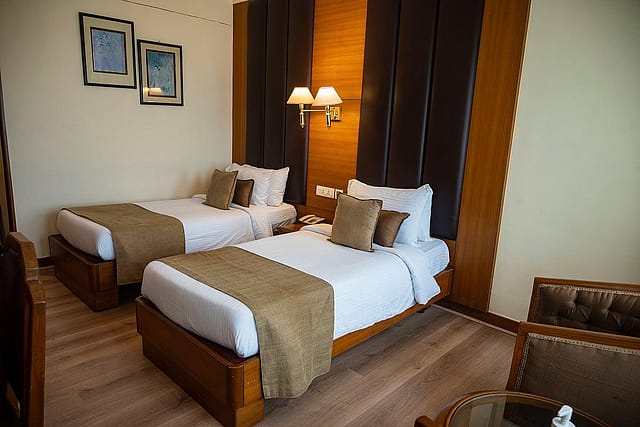
Delhi is getting a taste of the BRICS effect even before the summit begins just like during the AI Summit in February, with hotel demand climbing sharply and room rates surging across categories. Five-star hotel searches have risen 50%, while rates at some properties have more than doubled week-on-week, with rooms for the September 12–13 peak dates now starting at around ₹1 lakh and going up to ₹2.4 lakh a night.
The surge is being driven not just by official delegates, but also by business travellers, international media and other visitors linked to the event, according to data from travel platforms and hotel operators. The concentrated demand around the summit is also spilling into air travel and prompting a sizeable share of visitors to extend their Delhi stays beyond the event.
“We are seeing a sharp surge in demand for premium accommodation in New Delhi in the run-up to the BRICS Summit, with searches for five-star properties in the city increasing by 50%,” said Aloke Bajpai, co-founder and group CEO of ixigo. “Hotel rates have risen by more than 100% week-on-week, with several already sold out for September 12–13.”
“The rise in demand has also been accompanied by higher travel costs. Overall airfares increased by 39% year-on-year, driven by a 45% increase in domestic airfares and a 29% rise in international fares. The average airfare for international travellers flying into Delhi stood at approximately ₹28,500,” shared Pallavi Saxena, chief marketing and revenue officer, Cleartrip.
Hotel demand rises across segments, but luxury pays the biggest premium
The pricing spike is particularly pronounced at the upper end of the market. Data from Cleartrip shows hotel bookings in Delhi rising 25% year-on-year around the BRICS Summit weekend. While budget hotels recorded the sharpest increase in bookings, at 138% year-on-year, premium properties saw bookings rise 25%.
However, luxury hotels are seeing a different dynamic. Booking volumes remain selective, but prices have climbed 59% year-on-year. Rates at four-star properties are up 113%, while five-star hotel rates have risen 53%.
“It's a clear signal that for marquee global events, premium and luxury inventory commands a significant premium regardless of volume,” added Saxena.
To exemplify, Radisson Hotel Group's portfolio is recording average room rates more than 25% higher year-on-year in September.
“September is showing stronger momentum, with average room rates across our portfolio pacing more than 25% higher year-on-year,” said Nikhil Sharma, managing director and COO, South Asia, Radisson Hotel Group. He added that the BRICS Summit was contributing to heightened demand, particularly around the event, with shorter booking windows further supporting rate growth.
And the demand is coming from a mix of international and domestic markets both. Ho Chi Minh City, Kathmandu, London, Bangkok, Hanoi and Kazakhstan are among the key international origin points, while Bengaluru, Mumbai, Pune, Hyderabad, Chennai and Leh are the major domestic sources.
What is particularly notable is that the summit is not simply creating a short-lived spike around the event dates. According to Cleartrip, 39% of international return bookings are scheduled for after September 14, suggesting that a sizeable number of visitors are extending their stays. Among domestic travellers, the share is even higher at 49%.
Business travellers, international media and other visitors associated with the event are also contributing to the demand pool. Events of this scale have a wider multiplier effect, with the impact extending beyond hotels to airlines, ground transportation, restaurants and the broader tourism ecosystem. It also highlights Delhi’s growing importance as a hub for international business and high-value travel.”
What is interesting is that the demand is not limited to official delegations; the wider impact is extending beyond hotels. Rikant Pittie, CEO and co-founder of EaseMyTrip, said large international events create a concentrated travel cycle, with the effect extending to airlines, ground transportation, restaurants and the broader tourism ecosystem.
“Events of this scale have a wider multiplier effect,” Pittie said, adding that the summit also highlights Delhi’s growing importance as a hub for international business and high-value travel.
With more travellers expected to book closer to the summit dates, the pressure on Delhi’s hotel inventory could remain elevated through the event and, given the stay extensions already being seen, potentially beyond it.