
Can lab-grown diamonds complicate the natural diamond recovery
ADVERTISEMENT
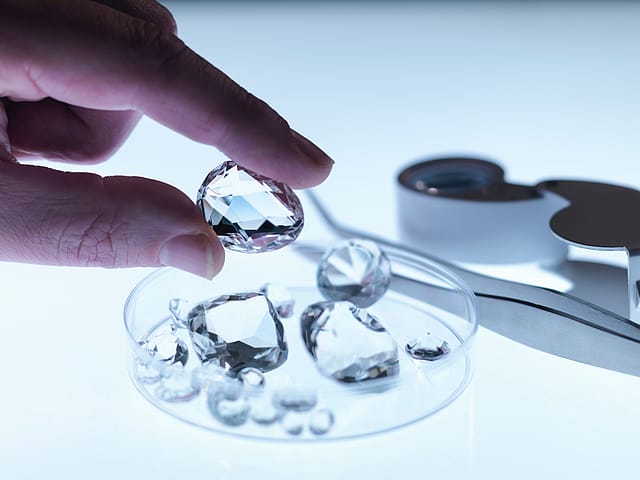
India’s natural diamond industry is hoping for a revival, but the growing popularity of lab-grown diamonds (LGDs) is making that recovery harder to secure. While natural diamond prices and exports remain under pressure, lab-grown stones are pulling buyers with lower prices, raising questions about how quickly demand for mined diamonds can return.
The challenge is visible in India’s export numbers. Natural cut and polished diamond exports fell to $12.16 billion in FY26, less than half the $24 billion recorded in FY22. ICRA expects exports to grow 6-8% in FY27, supported by stabilising prices, a potential improvement in US trade conditions and retailer restocking. However, it has retained a negative outlook for the sector, citing continued pricing pressure and competition from lab-grown diamonds.
“Over the next couple of years, both natural diamonds and lab-grown diamonds will grow,” opines Shweta Harit, senior vice president at De Beers and Forevermark Global. However, she points to the sharp correction in LGD prices as a concern. “They're currently below $100 per carat, so it feels like a short-term play.”
A cheaper entry into diamonds
ICRA’s March 2026 report highlights how quickly the LGD business has expanded in India. Exports grew nearly six-fold from $225 million in FY19 to $1.21 billion in FY25. Their share of India’s polished diamond exports rose from 0.9% in FY19 to 8.5% in the first 10 months of FY26, and ICRA expects it to reach 10-12% over the next two to three years. The agency attributes the shift to LGDs’ attractive pricing, with discounts against natural diamonds reaching as much as 90% in FY25.
Yet, De Beers’ 2025 India Diamond Acquisition Study suggests the two categories may not be entirely competing for the same consumer. While 76% of Indian women surveyed had heard of LGDs, only 20% said they understood exactly what they were. The average price paid for an LGD jewellery piece was ₹1.04 lakh, around 26% below the ₹1.41 lakh average for natural diamond jewellery.
The study also found that LGD acquisitions were concentrated among SEC A households, which accounted for 88% of acquisitions, and tier-one cities, which contributed 60% of the market. Delhi and Mumbai together represented 39% of LGD market value. Sustainability perceptions, sales-assistant recommendations and budget considerations were among the leading purchase drivers.
Importantly, 90% of consumers who bought an LGD as their first diamond said they wanted to acquire a natural diamond in the future. This suggests lab-grown stones could introduce some buyers to diamond jewellery, although future intentions do not guarantee a subsequent natural-diamond purchase.
For natural diamonds, the task is to preserve their distinct value proposition while rebuilding demand. Harit says retailers must follow Bureau of Indian Standards norms and clearly distinguish between the two categories.
“What you don't want is a natural diamond being sold as lab-grown. Or perhaps the other way around is even worse: a lab-grown or synthetic diamond being sold as natural,” she remarked.