
From 4G stack to 6G standards, India charts next telecom phase: Scindia
ADVERTISEMENT
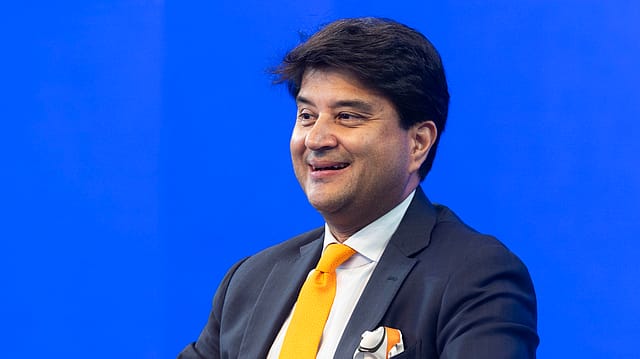
India has crossed 550 million 5G users and achieved 5G coverage across 99.9% of its districts, while the telecom production-linked incentive (PLI) scheme has generated close to ₹1.10 lakh crore in incremental sales, Communications Minister Jyotiraditya Scindia said at the India Mobile Congress 2026.
Scindia said India now has more than 1.35 billion telecom subscribers and around 1.1 billion broadband connections, with the country’s telecom sector moving into its next phase of growth after a decade focused primarily on expanding coverage and affordability. “The last 10 years has been about spreading the network, increasing penetration, proliferation. The next 10 years will be about usage,” Scindia said during a media briefing at IMC.
The minister said the government’s focus would now shift towards developing use cases around 5G, artificial intelligence and next-generation networks, with 100 5G use-case labs already established.
India is also targeting one billion 5G users by 2030, with Scindia saying the rapid rollout had created the foundation for the next stage of telecom development.
From telecom importer to technology contributor
Scindia said India had also made a significant shift in telecom equipment manufacturing, moving from dependence on imported technology towards developing indigenous products and intellectual property.
“India built its own 4G stack,” he said, adding that the indigenous technology had been deployed across around 110,000 sites across the country.
He said India was now preparing for the transition from 5G to 5G standalone and eventually 6G, with the country increasingly participating in global standards-setting. “We were always a buyer of telecom equipment from abroad. We were always an adopter of technology standards. But we have turned full circle,” Scindia said.
The minister said telecom majors including Ericsson, Nokia, Cisco and others had large research and development operations in India, while Indian institutions and companies were increasingly contributing to next-generation technology development.
Scindia also pointed to the Bharat 6G Alliance’s work on global standards. He said a proposal on ubiquitous connectivity had been accepted by the International Telecommunication Union as an agenda item for 6G discussions. He added that India was targeting at least 10% of global 6G patents and standards as it seeks a larger role in shaping the next generation of telecom technology.
On manufacturing, Scindia said the telecom PLI scheme had generated close to ₹1.10 lakh crore in incremental sales, ₹25,000 crore in incremental exports and 30,000 incremental jobs. He also highlighted the broader mobile manufacturing ecosystem, with India producing around ₹6.27 lakh crore worth of mobile phones in 2025-26. Mobile-phone production has risen sharply over the past decade, while the segment has emerged as India’s largest export product.
Scindia said the next objective was to move beyond manufacturing products for the domestic market towards designing and developing technology in India for global markets. “The first decade was about bringing the world to India. The next decade is about taking India to the world,” he said.
The minister also announced the proposed Telecom Manufacturing Zone in Madhya Pradesh, where around 31 companies have committed to setting up facilities. The zone is expected to create an ecosystem around telecom manufacturing, testing and certification.
Scindia said the broader objective was to create an end-to-end telecom value chain in India, spanning equipment, semiconductors, networks, applications and emerging technologies. “India has moved the paradigm and the curve monumentally and exponentially, not incrementally,” Scindia said.