
Haier warns of post-Diwali price hikes as crude, commodities squeeze margins; ACs may get costlier by over 10%
ADVERTISEMENT
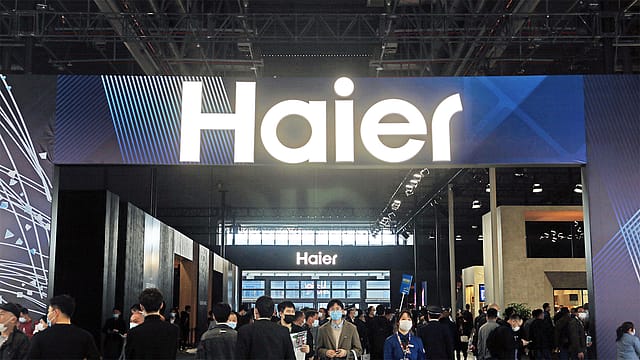
Consumers buying air conditioners, refrigerators and other home appliances may have to pay more after Diwali, as manufacturers prepare for another round of price increases to offset rising input costs. Haier Appliances India CEO NS Satish expects air-conditioner prices to rise by more than 10%, while other appliance categories could see increases of 2-3%, as crude oil prices, commodity costs and currency movements continue to squeeze margins.
“Post Diwali again, definitely it will be another hike. It's a must,” Satish told Fortune India, adding that the industry has little room to absorb further cost increases. He expects the overall price increase across the sector to average 6-8%, although the extent of the increase will vary by category.
Consumer durables manufacturers have already raised prices ahead of the festive season starting October 1, but Satish said companies are holding off on further increases to avoid disrupting demand during Diwali. The relief may be temporary, however, as the factors driving up manufacturing costs have yet to ease.
“The input cost which has gone up because of three fundamental reasons. One is the crude and derivative of crude, the commodity and the exchange rate,” he said.
Manufacturers initially tried to absorb part of the increase rather than pass it on to consumers, but that has become increasingly difficult. “Hurting margins is okay, but losing margin, it doesn't make any business sense,” Satish said.
He added that neither commodity prices nor crude oil and exchange-rate pressures had eased sufficiently to make another price revision avoidable. For appliance makers, the challenge is to protect profitability without weakening demand at a time when households are also weighing affordability against the need to replace ageing products.
Higher prices could push up sales value even if unit sales do not rise at the same pace, making volume growth an important indicator of the strength of the consumption recovery.
Festive demand holds up as costs rise
Despite the pricing pressure, Haier has seen a strong start to the festive season. Satish said the company's sales grew around 65-70% during the three days of Navratri compared with the same period last year. Demand was broad-based across categories and sales channels, including e-commerce and modern trade partners such as Reliance Retail and Croma.
Air conditioners have been performing particularly well amid high temperatures due to the El Nino effect, while refrigerators remain Haier's largest product portfolio by contribution. Looking ahead, the company sees washing machines, air conditioners and LED televisions as key growth drivers. Kitchen appliances and smaller appliances are emerging as additional categories it wants to build over the coming years.
The festive performance comes as the industry navigates a more complicated cost environment. While higher prices could support revenue growth, manufacturers will have to ensure that the increases do not deter consumers, particularly in the entry and mid-market segments.
Satish believes affordability schemes and financing options will remain important in sustaining demand. As consumers become more willing to pay for convenience and better features, companies will also need to move customers towards higher-value products to ease pressure on margins.
“Create a value to the consumer and then keep pushing up the ladder,” he said, pointing to the role of convenience and easy-financing schemes in driving growth. The strategy, he added, can help consumers access better products while allowing manufacturers to partly offset margin pressures.
Industry growth to remain in double digits
Satish expects India's consumer durables industry to grow by 10-12% annually over the next 10-15 years, supported by low penetration in several categories, technology upgrades and replacement demand.
Air conditioners remain under-penetrated, leaving room for expansion as more households seek cooling solutions. Television sales, meanwhile, could benefit from consumers replacing older sets with smart televisions and newer models.
“Growth in this sector at10 to 12%, at least for the next 10-15 years, is a given,” he said. The bigger challenge for manufacturers, he added, is determining how to capture that growth.
From ₹1,100 crore revenue last fiscal, Haier is targeting to close at around ₹14,000 crore this year.
For Haier, this will involve expanding manufacturing, strengthening its distribution network and introducing products that address specific consumer needs. The company currently reaches around 30,000 retail outlets and manufactures products at its facilities in Pune and Noida.
Satish said the company's existing manufacturing facilities represent a combined investment of around ₹2,700 crore. It is also planning a third manufacturing plant, with construction expected to begin partly this year and the facility targeted to be ready by 2029.
Greater localisation, he said, allows the company to respond faster to changes in market conditions, improve quality control and accelerate product innovation. At its Noida facility, Haier manufactures components such as printed circuit boards for air conditioners, plastic injection-moulded parts and copper pipes in-house.
Technology is another area the company is looking to build on. Satish said Haier is incorporating artificial intelligence into many of its mid-range and premium products, with the aim of connecting appliances such as televisions, refrigerators and robotic vacuum cleaners. However, the challenge is getting consumers to use these features rather than simply buy AI-enabled products.
He estimated that the AI-enabled segment was growing by around 30-35%, or potentially more in some products, although its overall market size remains small. Current usage penetration is below 10%, he said, pointing to the gap between purchasing connected appliances and actually using their smart features.