
IMC 2026: Telecom’s next billion will need investment, predictable regulation and digital skills
ADVERTISEMENT
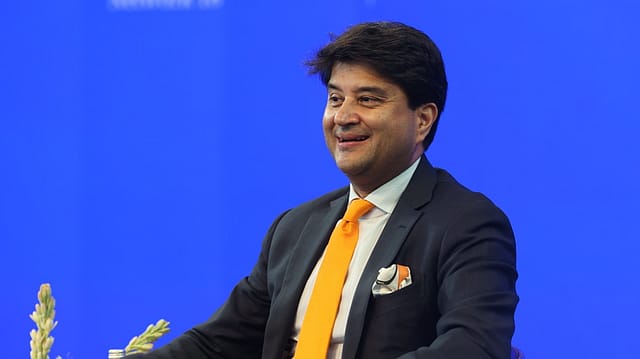
Connecting the next billion people to the internet will require more than putting up telecom towers and laying fibre, with governments, operators and technology companies calling for predictable regulation, resilient infrastructure, international standards and greater investment in digital skills.
The message emerged from a ministerial discussion at India Mobile Congress 2026 in New Delhi, where Communications Minister Jyotiraditya Scindia was joined by Estonia’s Minister of Justice and Digital Affairs Liisa-Ly Pakosta, Japan’s Vice-Minister for International Affairs Hideo Fuseda, ITU Telecommunication Standardization Bureau Director Seizo Onoe and GSMA Chief Regulatory Officer John Giusti.
Scindia said the next phase of connectivity would have to move beyond simply measuring how many people had access to a network. “Connectivity is not our destination. It needs to expand human capability,” he said.
He said the first decade of India’s digital expansion had focused largely on scale and coverage, while the next phase would have to focus on usage. The challenge is particularly important as AI becomes embedded across education, healthcare, enterprise and other parts of the economy.
Industry seeks predictable rules as investment requirements rise
Giusti said the policy environment would be critical in determining whether telecom companies were willing to make the long-term investments required for the next generation of networks. “Predictability is key to attract investment. India has provided that,” Giusti said, pointing to what he described as the fastest and farthest-reaching 5G rollout in the world.
He said regulation doesn't necessarily mean removing rules altogether, but should be proportionate and aligned with clear policy objectives. “Proportionality in regulation is also important. The objective should be not just to remove regulation. Policy coherence is also important,” Giusti said.
He also stressed the need for different parts of the digital economy to work together as telecom networks increasingly underpin cloud services, digital transactions and other critical infrastructure. For the GSMA, the next challenge is not simply whether people are covered by a mobile network but whether they are actually able to use it.
Giusti said around 97% of the world’s population is covered by mobile broadband, but about 3.1 billion people remain covered but do not use mobile internet. Skills and device affordability remain major barriers, he said. That creates a new question for the industry--whether the rapid development of AI will narrow the digital divide or create another layer of exclusion.
Japan’s Fuseda said the answer would also depend on investment in resilient digital infrastructure. He said Japan had been using government financial support and partnerships with the private sector to encourage investment in infrastructure, including data centres and networks. Japan is also focused on ensuring that digital infrastructure remains resilient against natural disasters and other disruptions, he said.
Estonia’s Pakosta brought the discussion back to digital skills and the ability of people to become active participants in the digital economy. She pointed to Estonia’s experience of integrating digital education into schools and the country’s growing use of AI tools by teachers and students.
The objective, she said, was not merely to make people users of AI but also creators. “We see it as a numerous possibility, so that every citizen in Estonia would not only be the very good user of the AI, but also a creator within the AI,” Pakosta said.
She also argued that digital systems could reduce the importance of physical borders, drawing a parallel between the free movement of people and the need for digital documents, businesses and services to work across borders. “We need it literally. We need it also for all these digital documents. We need it also for all the companies,” she said.
For the ITU’s Onoe, interoperability and common standards will be important as countries build increasingly complex digital ecosystems. The discussion also touched on the need for international cooperation as technologies such as AI, 5G, 6G and satellite connectivity develop.
Scindia said countries would need to find a balance between encouraging innovation and protecting citizens from the negative effects of emerging technologies. “We need a common minimum programme, if you will, between nations,” he said, arguing that common safeguards could provide a framework for innovation while protecting society from the risks associated with AI.
The broader challenge, he said, is to ensure that the next phase of connectivity does not simply reproduce existing inequalities.
The next billion users are likely to be harder to reach because many will live in remote, geographically difficult or economically underserved areas. “The next billion to come online will not necessarily be the easiest billion to connect,” Scindia said.